What happens to your muscles when you take protein powder? In short: you feed the repair-and-build machinery that turns training into lean muscle. What happens to your muscles when you take protein powder also depends on total daily protein, how much you take per meal, and whether you’re consistently lifting.
When you lift (or do any hard resistance work), you create tiny micro-tears in muscle fibers. Your body repairs those with muscle protein synthesis (MPS)—a process “turned on” by essential amino acids, especially leucine. Protein powders (whey, casein, or quality plant blends) deliver those amino acids fast and conveniently.
Daily protein target (most lifters): roughly 1.4–2.0 g/kg/day, with many seeing a plateau near 1.6 g/kg/day. Hitting this consistently matters more than any single shake.
Per-meal sweet spot: about 0.25–0.40 g/kg (20–40 g for most adults). This amount typically provides ~2–3 g leucine, crossing the “leucine threshold” that maximally stimulates MPS.
Timing reality: the “30-minute anabolic window” is more like a wide doorway. A protein-rich meal before or after training within a few hours works similarly—as long as your daily total is on point.
Bottom line: Protein powder doesn’t build muscle by itself; it makes it easier to hit evidence-based protein targets that, paired with progressive training and sleep, build muscle over weeks and months.
What you’ll actually notice (and when)
Hours to days: Less soreness and faster bounce-back between sessions. Convenience means you’ll stop under-eating protein on busy days.
Weeks: Paired with progressive overload and enough calories, strength and lean mass trend up; recovery “feels” smoother.
Months: Consistency wins. Hitting the target daily beats obsessing over brands or minute-by-minute timing.
Whey vs. casein vs. plant: which protein powder is best?
Whey protein: Fast-digesting, naturally high in leucine; great post-workout or any time you want quick absorption.
Casein protein: Slow-digesting “drip feed.” Excellent before long gaps (e.g., bedtime) to keep amino acids elevated.
Plant blends (soy/pea, pea-rice): Effective when the total protein and essential amino acids match dairy. Choose blends or soy for a strong leucine profile, and check that a single serving lands you in the 20–30 g range.
Pro tip: You’re aiming for 2–3 g leucine and 20–40 g total protein per serving. Most whey/casein scoops (25–30 g protein) cover this; plant powders may need a slightly larger scoop.
Best time to take protein powder (without overthinking)
- Post-workout is convenient, especially if you won’t eat a solid meal for a while.
- Pre-workout (60–90 minutes) also works, especially if you like training with something in your stomach.
- Before bed (casein or a mixed meal) can help if you often go 6–8 hours overnight with no protein.
As long as your daily total and per-meal dose are solid, timing becomes a preference, use what you’ll adhere to.
How much protein do you actually need?
- Set a daily goal: Start with 1.4–1.8 g/kg/day (e.g., 98–126 g for a 70-kg person). If you’re cutting calories, older, or training hard, you may benefit toward the upper end (up to 2.0 g/kg/day).
- Distribute it: Aim for 3–4 “protein hits” of 20–40 g each across the day.
- Use powder as a tool: Fill gaps when whole foods aren’t practical; keep a shaker in your bag to avoid missed targets.
Safety, digestion & common myths
- Kidneys: In healthy people, higher protein intakes within athletic guidelines do not harm kidneys. If you have kidney disease or risk factors, follow your clinician’s advice.
- Bones: Adequate protein supports bone health when calcium/vitamin D needs are met.
- Digestion: New to shakes? Start with ½ scoop and increase. Consider lactase-treated whey or plant blends if you’re dairy-sensitive. Hydrate well.
5 fast, real-world ways to hit 20–40 g (no chef skills required)
Whey + Oats Workout Shake (≈ 30–35 g)
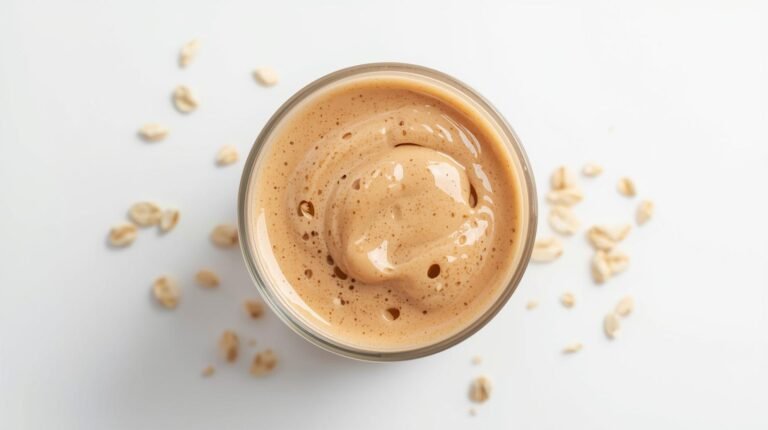
1 scoop whey + ½ cup milk (or soy milk) + ¼ cup quick oats + ½ banana + ice + pinch cinnamon.
Why: Easy carbs plus fast protein = recovery win.
Casein Choco-PB Pudding (≈ 25–30 g; rest 10 min)
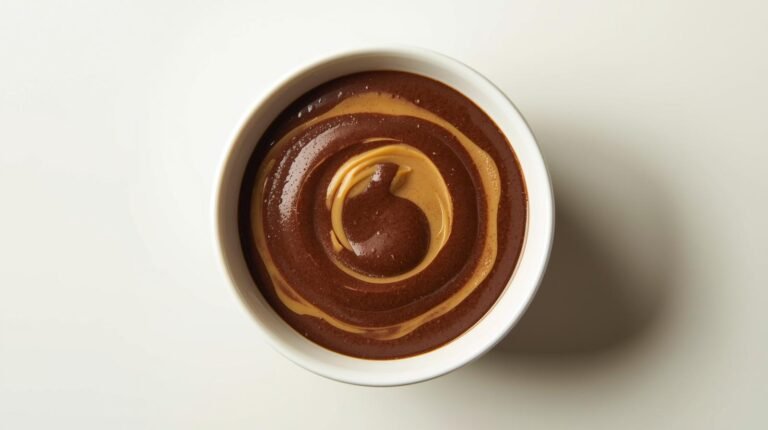
1 scoop casein + ½ cup milk + 1 tsp cocoa + 1 tsp PB (or PB powder) + pinch salt.
Why: Slow release—great before bed or long work blocks.
Plant Power Smoothie (25–30 g, vegan)
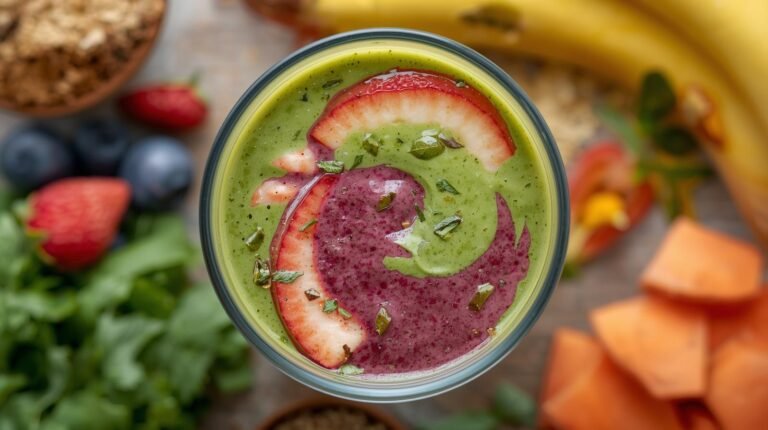
1 scoop soy/pea blend + 1 cup soy milk + ½ cup frozen berries + 1 Tbsp chia + ice.
Why: Complete protein + fiber for steady energy.
Greek Yogurt Mocha Frappe (28–32 g)

1 scoop soy/pea blend + 1 cup soy milk + ½ cup frozen berries + 1 Tbsp chia + ice.
Why: Complete protein + fiber for steady energy.
Protein Brownie Mug (20–24 g; 60–90 sec)

FAQs
Does protein powder build muscle without working out?
No. Protein supplies amino acids, but resistance training is the signal for growth. You need both.
How much protein should I take after a workout?
Aim 20–40 g (0.25–0.40 g/kg). If you trained hard or you’re older, lean toward the higher end.
What’s better for muscle: whey or casein?
Both work. Whey is fast; casein is slow. Choose based on when you’ll drink it. Plant blends are effective if total protein and essential amino acids are comparable.
Leave a Reply