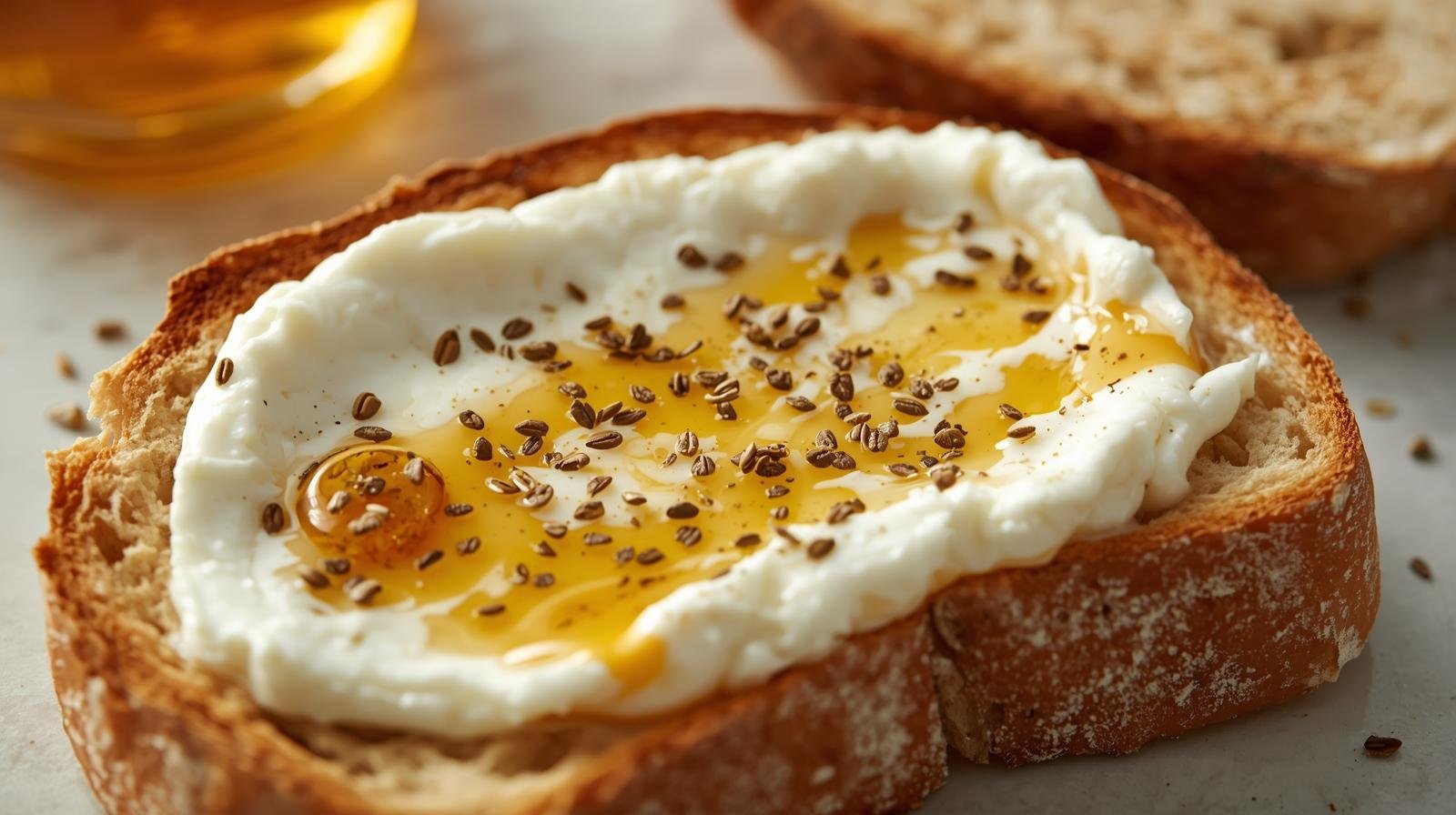
The #1 high-protein upgrade for your morning toast is surprisingly not peanut butter—it’s cottage cheese. Per cup, cottage cheese delivers roughly 28 g protein, along with calcium, potassium and vitamin B12, and its casein-rich profile digests more slowly than whey or egg proteins, helping you stay fuller for longer.
- Serious protein density. A typical slice of toast with jam or avocado offers modest protein. Swap in cottage cheese and you add a meaningful protein bump that supports appetite control and training goals. Casein’s slower digestion curve also smooths energy through the morning.
- Micronutrients that matter. Beyond protein, cottage cheese provides calcium (bone), potassium (blood pressure) and B12 (nerve and red-blood-cell health)—nutrients many breakfasts lack.
- Customizable for any diet. Low-fat and lower-sodium options exist, and you can keep it vegetarian, pescatarian, or fully plant-forward (see vegan swaps below).
A standard slice of whole-grain toast contributes 3–5 g protein. Spreading ½ cup cottage cheese adds 12–14 g more (a full cup 28 g). Pair that with an additional topper (smoked salmon, beans, seeds) and you’re easily hitting the 20–30 g “per-meal” sweet spot many lifters aim for. (Most adults target 0.25–0.40 g/kg per meal, or 20–40 g.)


Cottage cheese + cherry tomatoes + balsamic + basil. Add hemp seeds to push protein higher without changing flavor much.

A pescatarian powerhouse: omega-3s with high protein. Great on dense rye or seeded sourdough.


What is the #1 high-protein topping for toast (not peanut butter)?
Cottage cheese, thanks to 28 g protein per cup and slow-digesting casein that supports fullness.
Is cottage cheese on toast good for weight loss?
It can be. Higher protein + fiber-rich bread improves satiety, which helps adherence to a calorie deficit.
How can I make cottage cheese toast taste better?
Whip it smooth, add acid (lemon/balsamic), fresh herbs, or spicy crunch. Use robust breads (rye, seeded sourdough).
Leave a Reply