- Most adults only get 15 g fiber per day, while guidelines suggest around 25–30+ g/day depending on sex and age.
- Fiber (especially from fruits, vegetables, whole grains and legumes) adds bulk and absorbs water, making stool softer and easier to pass.
- A higher fiber intake is linked to lower constipation risk and better long-term gut and overall health.
Always remind readers: increase fiber gradually and drink plenty of water to avoid gas and bloating.
Why this helps
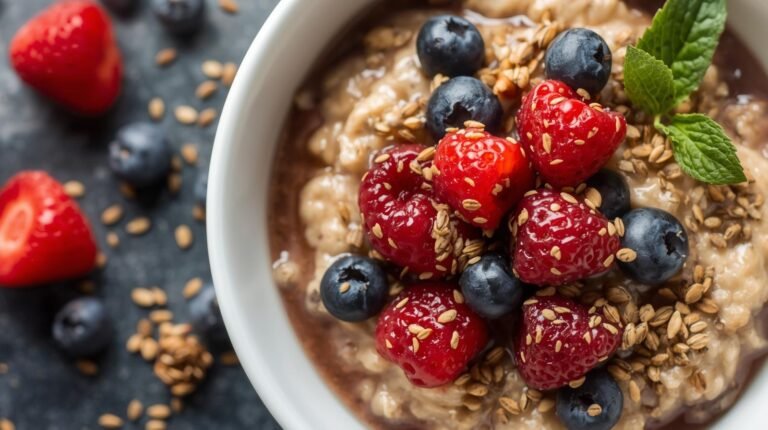
- Oats provide soluble fiber (beta-glucan) which forms a gel, softens stool and supports gut motility. A cup of cooked oatmeal has about 4 g of fiber
- Berries are among the highest-fiber fruits; adding 1 cup of raspberries to oatmeal with nuts or seeds can bring the bowl to 13.5 g fiber.
- Ground flaxseed adds extra fiber and healthy fats, helping stool pass more easily.
Ingredients (1 serving)
- ½ cup rolled oats
- 1 cup water or milk (dairy or fortified plant milk)
- ½–1 cup mixed berries (fresh or frozen – raspberries, blueberries, strawberries)
- 1 tbsp ground flaxseed
- 1 tsp chia seeds (optional, extra fiber)
- ½ tsp cinnamon
- Small pinch of salt
- 1–2 tsp honey or maple syrup (optional)
Step-by-step: How to make it
Cook the oats
In a small pot, add oats, water/milk, salt and cinnamon.
Bring to a gentle boil, then reduce to low and simmer 5–7 minutes, stirring often, until creamy.
Add fiber boosters
Stir in ground flaxseed and chia seeds in the last 1–2 minutes of cooking so they absorb liquid and thicken the porridge.
Top with berries
Remove from heat.
Transfer to a bowl and top with berries (if using frozen, they’ll naturally cool and slightly thicken the oatmeal).
Lightly sweeten (optional)
Drizzle with a bit of honey or maple syrup if you prefer a sweeter taste.

Why this helps
- Lentils are fiber superstars. Around 1 cup cooked lentils provides 15–16 g of fiber and nearly 18 g of protein.
- Legumes are consistently listed as top high fiber foods for constipation in dietitian guides and constipation diet plans.
- Vegetables like carrots, celery, spinach or peas add both soluble and insoluble fiber and more bulk.
Step-by-step: How to make it
- Sauté aromatics
- In a pot, heat olive oil over medium heat.
- Add onion, carrot and celery. Cook 5–7 minutes, stirring, until softened.
- Add garlic and sauté 30 seconds until fragrant.
- Add lentils and liquids
- Stir in rinsed lentils, diced tomatoes, cumin and smoked paprika.
- Pour in broth/water, stir and bring to a boil.
Simmer
- Lower heat, cover partly and simmer 25–30 minutes, until lentils are tender.
- Add greens
- Stir in chopped greens and cook another 3–5 minutes until wilted.
- Season & serve
- Adjust salt and pepper.
- Serve hot with a squeeze of lemon for extra flavor and vitamin C.

Why this helps
- Prunes (dried plums) are one of the most researched foods for constipation. Trials show prunes can be more effective than psyllium for mild-to-moderate constipation.
- They provide both fiber and sorbitol (a sugar alcohol) that draws water into the bowel and has a mild laxative effect.
- A small portion of prunes plus a high-fiber fruit like apple makes a gentle, “old school” digestive remedy.
Ingredients (2 small servings)
- 10 prunes (about 50–60 g)
- 1 medium apple, diced (keep the skin for extra fiber)
- 1 cup water
- ½ cup unsweetened apple juice or orange juice (optional)
- ¼ tsp cinnamon
- ½ tsp lemon juice
Optional: 1 tsp chia seeds or ground flaxseed stirred in after cooking
Step-by-step: How to make it
Prep fruit
- Pit prunes if needed and roughly chop.
- Dice the apple into small cubes (keep the peel).
Simmer
- In a small saucepan, add prunes, apple, water, juice (if using), cinnamon and lemon juice.
- Bring to a gentle boil, then reduce heat and simmer 10–15 minutes, stirring occasionally, until fruits are soft and the liquid thickens into a light syrup.
Optional fiber boost
- Remove from heat and stir in chia or ground flaxseed. Let stand 5 minutes to thicken.
Serve warm or chilled
- Enjoy alone, over yogurt, or on top of oatmeal.
Approximate nutrition per serving (½ batch, without seeds)
- Calories: 150–190 kcal
- Fiber: 7–9 g
- About 3.4 g fiber per 5 prunes (50 g)
4–5 g fiber from one medium apple with skin - Protein: 1–2 g
- Carbs: 40–45 g
- Fat: 0–1 g

Why this helps
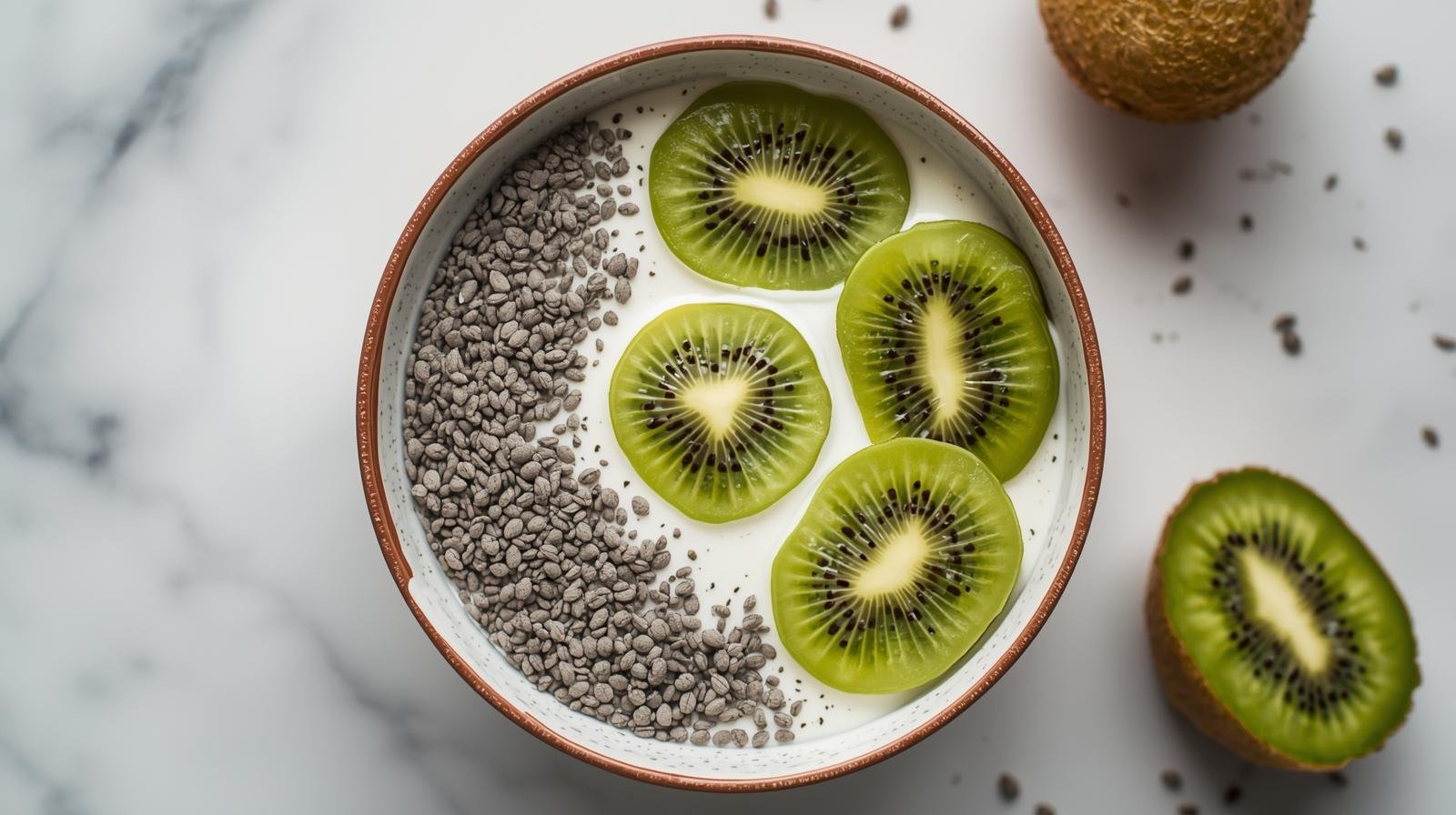
- Kiwifruit contains about 3–4 g fiber per serving with a mix of soluble and insoluble fiber and a special enzyme (actinidin) that may support digestion.
- Studies and expert reviews highlight kiwis as a gut-friendly fruit that may improve stool frequency in constipated adults.
- Chia seeds are extremely fiber-dense: ~10–11 g fiber in 2 tbsp, around 30–40% of daily needs.
- Combined with yogurt (for probiotics), this bowl hits fiber + prebiotics + probiotics—a powerful combo for constipation.
Ingredients (1 serving)
- ¾ cup plain yogurt (dairy or unsweetened plant yogurt with live cultures)
- 2 tbsp chia seeds
- 2 kiwis, peeled and sliced or diced
- 2–3 tbsp rolled oats or a spoon of high-fiber granola (optional)
- 1 tsp honey or maple syrup (optional)
- ¼ tsp vanilla extract (optional)
Step-by-step: How to make it
- Soak the chia
- In a small bowl, mix chia seeds with 3–4 tbsp water or a bit of yogurt.
- Let sit 5–10 minutes (or overnight in the fridge) until it forms a gel. This makes them easier to digest and more soothing for the gut.
- Build the bowl
- In a serving bowl, add yogurt.
- Stir in the chia gel.
- Fold in oats or granola if using.
- Add fruit & flavor
- Top with kiwi slices.
- Add vanilla and a light drizzle of honey if desired.
Serve chilled
- Enjoy as a high fiber breakfast or snack for constipation relief.
Approximate nutrition per serving
- Calories: 280–340 kcal
- Fiber: ~12–15 g
- Chia (2 tbsp): ~10 g fiber
2 kiwis: ~3–4 g fiber
Plus small amounts from oats/granola if added - Protein: 10–15 g (depending on yogurt type)
- Carbs: 30–35 g
- Fat: 10–15 g (mostly healthy fats from chia)
1. How much fiber per day helps relieve constipation naturally?
Most guidelines suggest about 25–30+ g of fiber per day for adults, depending on sex and age.
If someone is far below this, gradually increasing intake with high fiber foods for constipation like oats, lentils, fruits, nuts and seeds can help.
2. What is the best high fiber breakfast for constipation?
Great options include:
- Oatmeal with berries and seeds
- Kiwi chia yogurt bowl
- Whole-grain toast with nut butter and sliced fruit
A good target is 8–12 g of fiber at breakfast, which you can reach with the oatmeal or kiwi-chia recipes above.
3. Can high fiber foods make constipation worse?
Sometimes, yes, if:
- Fiber is increased too quickly
- There’s not enough water intake
- There’s an underlying digestive condition (like active diverticulitis or severe IBS) where high fiber may be temporarily contraindicated.
Leave a Reply