Diet anti inflammatory is one of the most searched phrases by people tired of feeling puffy, achy, and low on energy. Choosing the right anti inflammatory food every single day can gently turn down the “silent inflammation” linked with heart disease, diabetes, arthritis and even some cancers.
Large reviews show that a Mediterranean-style anti inflammatory diet rich in fatty fish, olive oil, berries and leafy greens can lower key inflammatory markers like CRP and IL-6 compared with low-fat patterns.
Below you’ll find 4 famous anti inflammatory foods turned into simple recipes with:
step-by-step instructions
- realistic nutrition estimates
- short science-backed notes on why they fit a diet anti inflammatory plan
- Use these as core meals in an anti inflammatory diet for beginners.
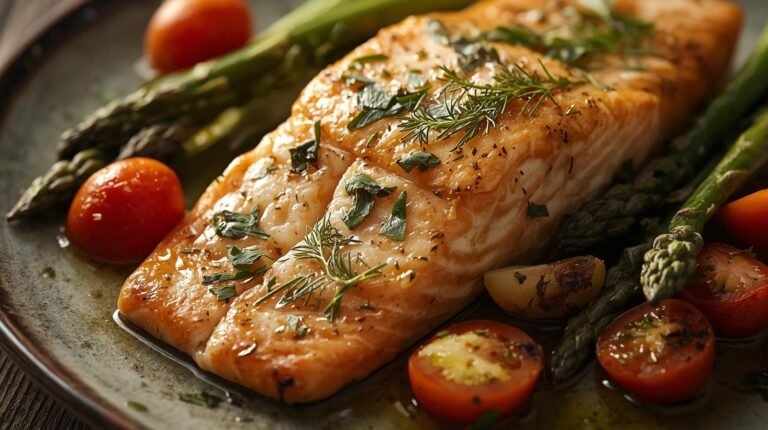
Why salmon is a top anti inflammatory food
Fatty fish like salmon, sardines and mackerel are rich in the omega-3s EPA and DHA. These fats help your body make fewer pro-inflammatory compounds and are linked with lower inflammatory markers and better heart health.
Many anti inflammatory diet guides put fatty fish at the top of the list of foods to eat at least 2 times per week.
Ingredients (1 serving)
- 120 g (about 4 oz) salmon fillet, skin on or off
- 1 tsp extra virgin olive oil
- Juice of ½ lemon
- 1 small garlic clove, very finely minced (skip if garlic bothers you)
- Salt and black pepper to taste
- 1 cup mixed vegetables: broccoli florets + sliced carrots or zucchini
- Optional: fresh parsley or dill to finish
Step-by-step
Preheat & prep
- Preheat oven to 200°C / 400°F.
- Line a small tray with baking paper.
Season the salmon
- Place salmon on the tray.
- Drizzle with olive oil and lemon juice.
- Sprinkle garlic, salt and pepper on top.
Add the veggies
- Toss broccoli and other veggies in any leftover oil/lemon on the tray.
- Spread around the salmon in a single layer.
Bake
- Bake 12–15 minutes, until salmon flakes easily with a fork and veggies are tender-crisp.
Finish & serve
- Garnish with chopped parsley or dill.
- Serve immediately as a complete anti inflammatory dinner plate.
Approximate nutrition (per serving)
Calories: 380–430 kcal
Protein: 30–32 g
Fat: 22–25 g (mostly unsaturated)
Carbs: 12–18 g
Omega-3s: 1.2–1.8 g EPA + DHA (for a 120 g Atlantic salmon portion, approx.)

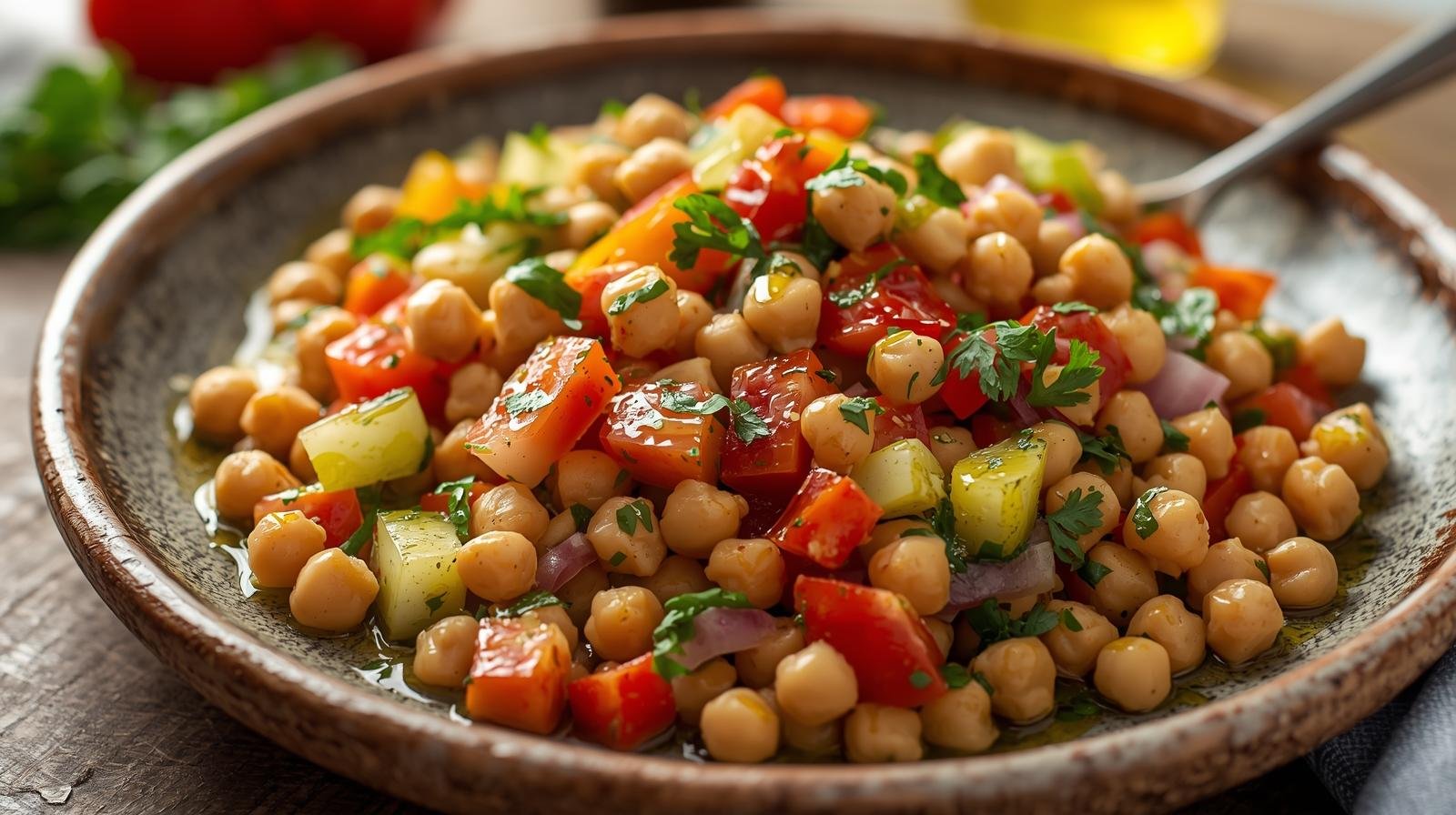
Why olive oil and chickpeas are anti inflammatory heroes
- Extra virgin olive oil (EVOO) provides monounsaturated fat and polyphenols like oleocanthal, which can act on similar pathways as mild anti-inflammatory drugs and are linked with lower CRP and IL-6 in Mediterranean diet trials.
- Chickpeas and other legumes give fiber and plant compounds that improve gut health and reduce oxidative stress and inflammation over time.
Ingredients (1 large meal salad)
- 1 cup cooked chickpeas (or canned, drained & rinsed)
- ½ cup cucumber, diced
- ½ cup cherry tomatoes, halved
- ¼ cup red onion, very finely sliced
- 2 tbsp chopped fresh parsley
- 1 tbsp crumbled feta (optional)
Dressing (EVOO-based):
- 1½ tbsp extra virgin olive oil
- 1 tbsp lemon juice
- ½ tsp dried oregano
- Pinch of salt and pepper
Step-by-step
Make the dressing
- In a small bowl, whisk olive oil, lemon juice, oregano, salt and pepper until emulsified.
Assemble the salad
- In a larger bowl, combine chickpeas, cucumber, tomatoes, red onion and parsley.
Dress & toss
- Pour dressing over the salad.
- Toss gently until everything is coated and glossy.
Add feta & serve
- Sprinkle feta on top if using.
- Serve immediately or chill 30 minutes for flavors to blend.
Approximate nutrition (whole bowl, with feta)
Calories: 420–480 kcal
Protein: 15–18 g
Fat: 24–28 g (mostly from EVOO)
Carbs: 40–45 g
Fiber: 10–12 g
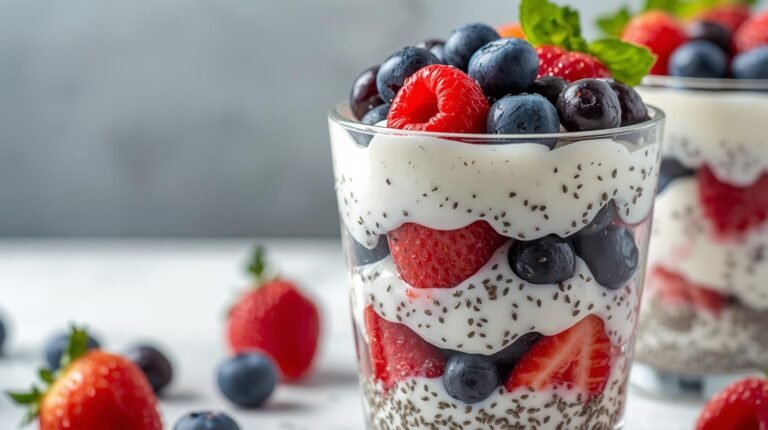
Why berries and chia are anti inflammatory
Berries (blueberries, strawberries, raspberries) are rich in anthocyanins and other polyphenols, which human trials link to lower inflammatory markers and improved vascular function.
Chia seeds add fiber and plant omega-3 (ALA), both important pieces of an anti inflammatory diet. Yogurt provides protein and beneficial bacteria to support gut balance (a key player in chronic inflammation).
Ingredients (1 serving)
- ¾ cup plain Greek yogurt (or high-protein plant yogurt)
- ½–¾ cup mixed berries (fresh or frozen)
- 1 tbsp chia seeds
- 1–2 tsp honey or maple syrup (optional)
- ½ tsp vanilla extract (optional)
Step-by-step
Hydrate the chia
- Stir chia into 2–3 tbsp water or a spoon of yogurt.
- Let sit 5–10 minutes until it forms a soft gel.
Flavor the yogurt
- In a bowl, mix yogurt with vanilla and a little honey/maple syrup if you want sweetness.
Layer the parfait
- In a glass or jar, add a layer of yogurt, then berries, then a little chia gel.
- Repeat until the jar is full, finishing with berries on top.
Chill (optional)
- You can enjoy immediately or let it chill 15–30 minutes to thicken and let flavors mingle.
Approximate nutrition
Calories: 250–320 kcal
Protein: 14–18 g
Fat: 7–10 g
Carbs: 30–35 g
Fiber: 7–10 g (berries + chia)

Why leafy greens + turmeric matter
- Dark leafy greens (spinach, kale, chard) are loaded with vitamins A, C, K, folate, fiber and carotenoids. They are repeatedly highlighted as core anti inflammatory diet foods.
- Turmeric contains curcumin, a compound studied in hundreds of trials for its ability to modulate inflammatory pathways; several clinical studies show it can lower inflammatory markers in conditions like osteoarthritis when used in concentrated forms.
Ingredients (1 hearty bowl)
- ½ cup cooked quinoa (from ~¼ cup dry)
- 1 cup fresh spinach or chopped kale
- ¼ cup chickpeas (leftover from salad above works great)
- 1 tsp extra virgin olive oil
- ¼ tsp ground turmeric
- Pinch of black pepper (improves curcumin absorption; skip if it irritates)
- 1–2 tbsp water or broth
- Salt to taste
- Optional: squeeze of lemon and 1 tbsp pumpkin seeds or walnuts on top
Step-by-step
Warm the quinoa
- If using leftover quinoa, reheat it in a small pan with a spoon of water until warm and fluffy.
- Wilt the greens with turmeric
- In a separate pan, heat olive oil over low-medium heat.
- Add turmeric and quickly stir (10–15 seconds) so it doesn’t burn.
- Add greens and a spoon of water/broth; cook 2–3 minutes until wilted and tender.
Combine
- Stir chickpeas into the greens to warm through.
- Add salt and a tiny pinch of black pepper if tolerated.
Build the bowl
- Add quinoa to a bowl, top with turmeric greens and chickpeas.
- Finish with a squeeze of lemon and sprinkle pumpkin seeds or walnuts if you want extra crunch and healthy fats.
Approximate nutrition
Calories: 320–380 kcal
Protein: 12–15 g
Fat: 10–14 g
Carbs: 45–50 g
Fiber: 7–9 g (quinoa + greens + chickpeas + seeds)
1. What is an anti inflammatory diet in simple terms?
An anti inflammatory diet is a long-term way of eating that focuses on:
- whole plant foods (vegetables, fruits, legumes, whole grains)
- healthy fats (olive oil, nuts, seeds, fatty fish)
- fewer ultra-processed foods, sugary drinks and processed meats
Large reviews show these patterns lower blood markers of inflammation and are linked with reduced risk of heart disease, diabetes and other chronic conditions.
2. What is the best anti inflammatory food to eat every day?
There is no single magic food, but daily staples that research keeps supporting include:
- A handful of berries
- Some form of leafy greens
- Olive oil as your main cooking fat
- Legumes or nuts most days
Adding fatty fish a few times a week is one of the most evidence-backed moves in a diet anti inflammatory plan.
3. How long does it take for an anti inflammatory diet to work?
It varies. Some people notice less bloating or more stable energy within 1–2 weeks, but measurable changes in inflammatory markers in studies often show up after several weeks to a few months of consistent eating.
Leave a Reply