Foods high in potassium do a lot more than prevent muscle cramps. When you consistently eat foods with the most potassium, you help your body balance sodium, support normal blood pressure, and keep your heart and muscles working properly.
Many adults still fall short of the recommended potassium intake: around 3,400 mg/day for men and 2,600 mg/day for women.
That’s why building meals around a few potassium-rich staples is such a smart move.
Below are 4 famous, evidence-backed high-potassium foods turned into simple recipes, each with:
- Step-by-step instructions
- Approximate potassium content per serving
- Extra nutrition context so your blog reads like a real expert resource
Important: People with kidney disease or on certain blood pressure/heart medicines may need to limit potassium. Your article should clearly tell readers to check with their doctor or kidney dietitian before increasing high-potassium foods.
General recommendations: 3,400 mg/day (men) and 2,600 mg/day (women).
Most people don’t reach these targets, especially in Western diets heavy in processed foods.
Potassium helps:
- Offset sodium’s blood-pressure–raising effect
- Support normal heart rhythm and muscle contraction
- Maintain fluid balance in and around cells
Now, let’s turn four top foods high in potassium into real-world meals.
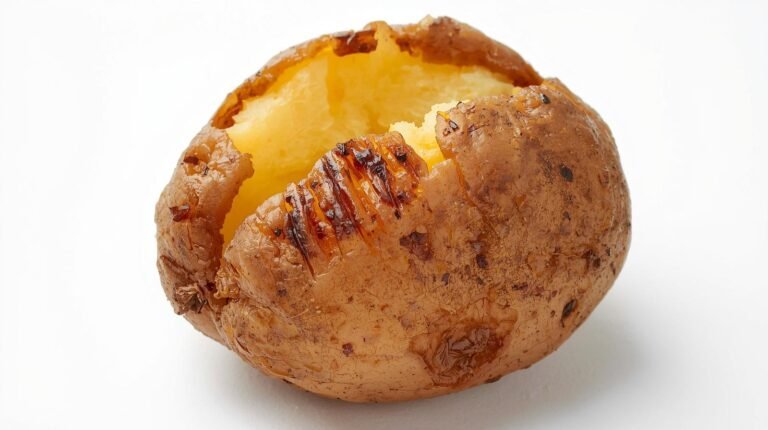
Why potatoes are potassium powerhouses
A medium baked potato with skin can provide 620–900 mg of potassium depending on size—often more than a banana and among the top everyday foods with the most potassium.
Potatoes also offer vitamin C, B6, and fiber (if you keep the skin), and they’re naturally sodium-free until you start salting and adding toppings.
Ingredients (1 serving)
- 1 medium russet potato, scrubbed (leave the skin on)
- 1 tsp extra virgin olive oil
- 2 tbsp plain Greek yogurt or low-fat cottage cheese
- 1 tbsp chopped chives or green onion
- Black pepper to taste
- Skip or minimize salt to keep it heart-friendly
Step-by-step
Prep the potato
- Scrub the potato under running water; pat dry.
- Pierce it several times with a fork.
Bake
- Rub with olive oil.
- Bake at 200°C / 400°F for 45–60 minutes, until the skin is crisp and a knife slides in easily.
Split and top
- Cut a slit down the middle and gently press the ends to fluff the inside.
- Top with Greek yogurt or cottage cheese, chives and black pepper.
- Avoid heavy salty toppings like bacon bits or lots of cheese if you’re targeting blood pressure.
Approximate nutrition (1 medium potato + toppings)
Calories: 260–320 kcal
Protein: 9–12 g
Carbs: 45–50 g
Fat: 6–8 g
Fiber: 4–5 g
Potassium: 620–900 mg (about 15–25% of daily needs)
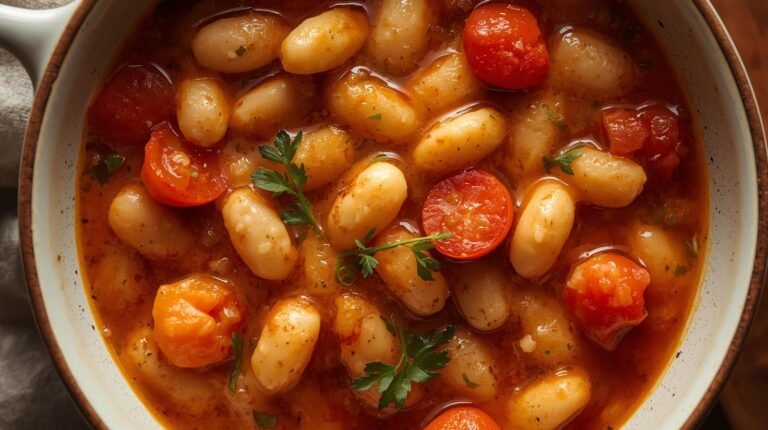
Why beans are among the foods with the most potassium
Cooked white beans / lima beans are near the top of almost every foods high in potassium chart: about 955–969 mg potassium per 1 cup cooked.
They also provide plant protein, fiber, magnesium and iron, all helpful in a heart-healthy way of eating.
Ingredients (2 servings)
- 1 cup cooked white beans (or canned low-sodium, drained and rinsed)
- 1 cup no-salt-added chopped tomatoes (canned or fresh)
- ½ cup onion, finely chopped
- 1 small carrot, diced
- 1–2 cloves garlic, minced
- 1 tbsp olive oil
- ½ tsp smoked paprika
- ½ tsp dried thyme or oregano
- Black pepper to taste
- Optional: a tiny pinch of salt if your doctor hasn’t restricted sodium
Step-by-step
Sauté aromatics
- Heat olive oil in a small pot over medium heat.
- Add onion and carrot; cook 5–7 minutes until softened.
- Add garlic, paprika and thyme and cook 30 seconds.
Add beans & tomatoes
- Stir in beans and chopped tomatoes.
- Add a splash of water if you prefer it more soupy.
Simmer
- Simmer on low 10–15 minutes to let flavors blend.
Season and serve
- Add pepper and only a small pinch of salt if needed.
- Serve as a stew, over brown rice, or with a slice of whole-grain bread (if potassium and sodium limits allow).
Approximate nutrition (per serving – half the pot)
Calories: 270–320 kcal
Protein: 12–15 g
Carbs: 40–45 g
Fat: 7–9 g
Fiber: 9–11 g
Potassium: 450–550+ mg (varies with bean brand and portion)
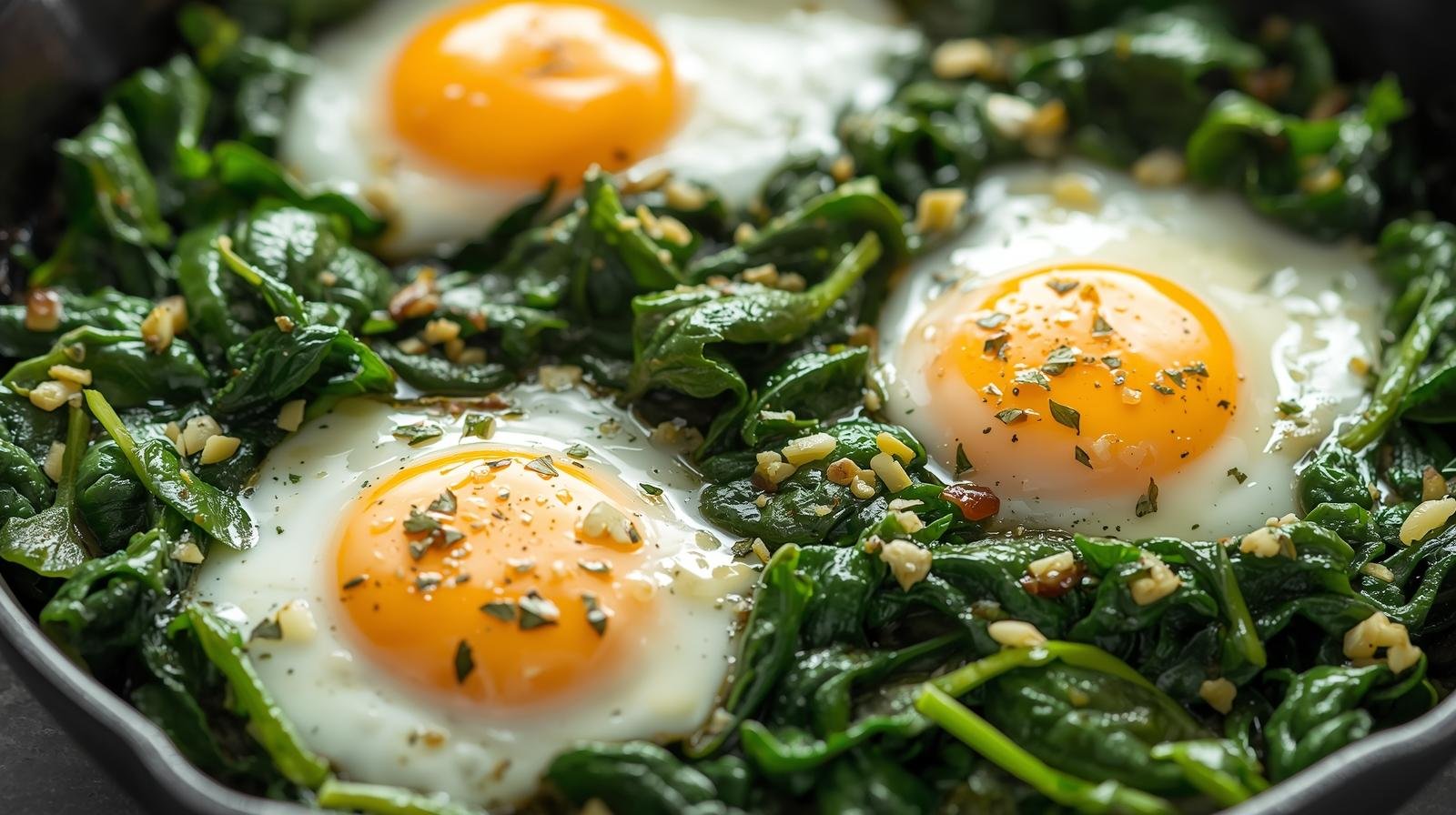
Why spinach is a top vegetable high in potassium
Cooked leafy greens, especially spinach, pack serious potassium: about 839 mg per cup cooked.
Cleveland Clinic’s list of potassium-rich foods puts cooked spinach among the standout foods high in potassium, also noting beet greens and Swiss chard as similar powerhouses.
Ingredients (1 serving)
- 1–1½ cups fresh spinach (will shrink a lot when cooked)
- 1 tsp olive oil
- 1 small garlic clove, thinly sliced or minced
- 1–2 large eggs
- Black pepper to taste
Optional: a sprinkle of chili flakes (if tolerated)
(Skip extra salt or use just a small pinch.)
Step-by-step
Wilt the spinach
- Heat olive oil in a non-stick pan over medium heat.
- Add garlic and cook 20–30 seconds until fragrant (not browned).
- Add spinach and stir 1–2 minutes until wilted and bright green.
- Make “nests” for the eggs
- Push spinach aside to create 1–2 small wells in the pan.
Cook the eggs
- Crack an egg into each well.
- Cover the pan and cook on low heat 3–5 minutes until whites are set and yolks are cooked to your liking.
Season and serve
- Top with black pepper (and chili flakes if you like).
- Slide everything onto a plate and enjoy as a low-sodium, high-potassium breakfast.
Approximate nutrition (2 eggs + ~1 cup cooked spinach equivalent)
Calories: 220–260 kcal
Protein: 16–18 g
Carbs: 5–7 g
Fat: 15–18 g
Potassium: 900–1,000 mg (mostly from spinach; eggs also contribute a little)

Why bananas still deserve their potassium reputation
A medium banana has around 400–425 mg of potassium, about 9–12% of the daily value.
Even though many foods with the most potassium actually beat bananas, they’re still an easy, portable, and family-friendly source of potassium, vitamin B6 and fiber.
Ingredients (1 smoothie)
- 1 medium banana
- ½–¾ cup low-fat plain yogurt (or high-protein Greek yogurt)
- ½ cup water or unsweetened milk/plant milk
- 1 tbsp oats or chia seeds (optional, for fiber)
- ½ tsp cinnamon (optional)
- Ice cubes if you like it colder
Step-by-step
Add to blender
- Add banana, yogurt, water/milk, and optional oats/chia and cinnamon to a blender.
Blend
- Blend until completely smooth and creamy.
Adjust texture
- Add more liquid if it’s too thick, or a few ice cubes for a colder, thicker smoothie.
Serve immediately
- Drink as a mid-morning snack, light breakfast, or post-workout drink.
Approximate nutrition
Calories: 230–280 kcal
Protein: 10–14 g (depending on yogurt type)
Carbs: 35–40 g
Fat: 3–5 g
Potassium: 550–700 mg (banana 400+ mg plus yogurt contribution)
1. What are the foods with the most potassium per serving?
Top foods with the most potassium per typical serving include:
- Baked potato with skin (around 900 mg per medium)
- Cooked leafy greens like spinach (around 800–840 mg per cup cooked)
- White/lima beans (about 950+ mg per cup cooked)
Other heavy hitters: sweet potatoes, Swiss chard, beet greens, some dried fruits and salmon.
2. How much potassium should I eat in a day?
Most adults are advised to aim for about 3,400 mg/day (men) and 2,600 mg/day (women) from food, unless they have kidney disease or other conditions requiring restriction.
3. Can eating more high-potassium foods lower blood pressure?
Yes—when kidneys are healthy, higher potassium intake from foods high in potassium can help counteract sodium and support lower blood pressure and reduced stroke risk.
Leave a Reply