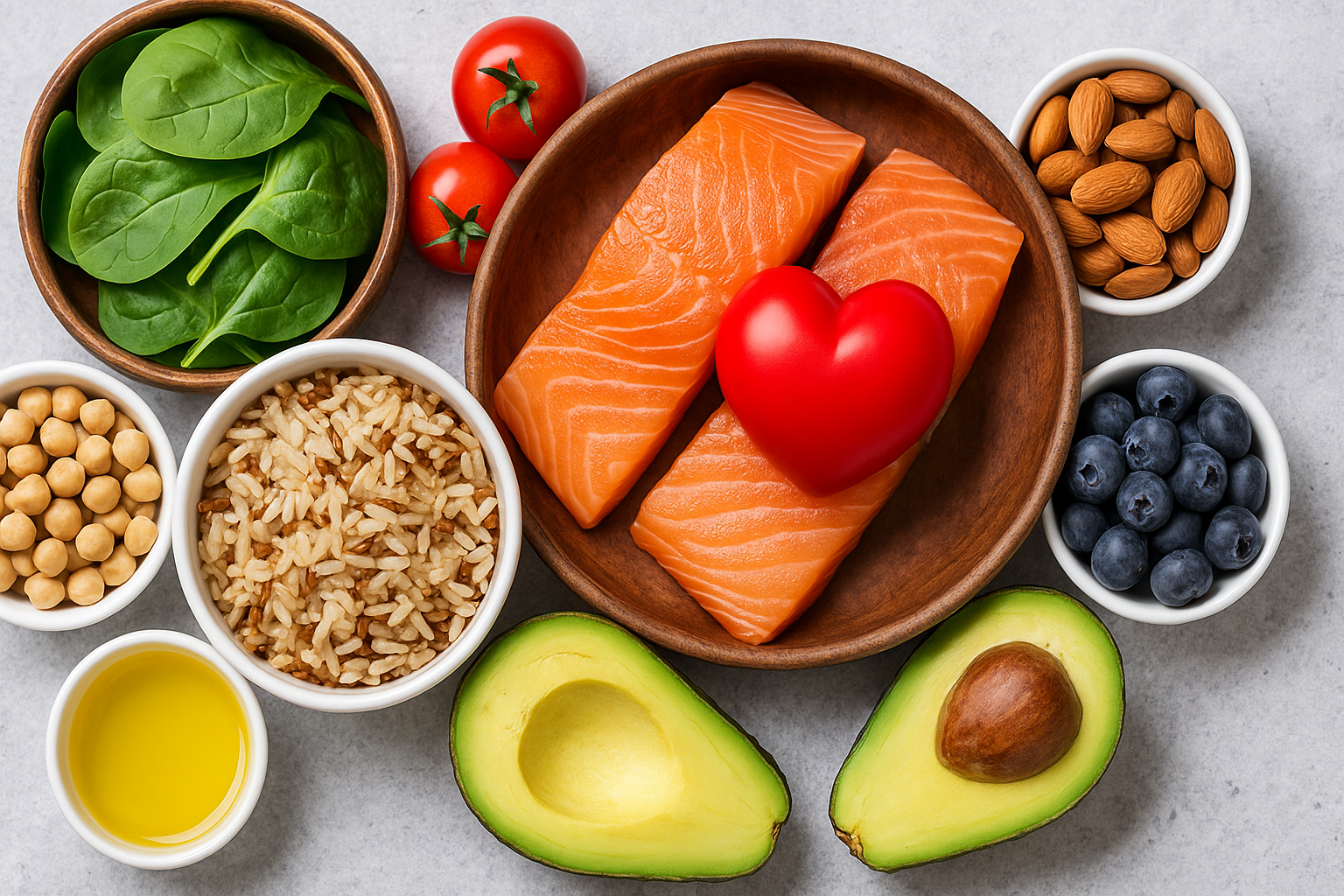
Heart healthy diet isn’t a trend—it’s a proven way to lower blood pressure, improve cholesterol, and protect your arteries. If you want heart friendly diet guidance that’s simple, tasty, and realistic, this is your step-by-step playbook for heart healthy eating and healthy eating for heart health that actually moves your numbers.
The big picture (why this works)
Your evidence-based targets (pin these to your fridge)
- Sodium: aim ≤2,300 mg/day; going toward 1,500 mg/day lowers BP even more (DASH).
- Saturated fat: <6% of calories (about 13 g/day on 2,000 kcal). Swap butter/cream/tropical oils for olive or other non-tropical oils.
- Fiber: 25–30 g/day total; include 5–10 g/day soluble fiber (oats, beans, barley, chia) to reduce LDL. Meta-analyses show ~5–10 mg/dL LDL drops with 5–10 g soluble fiber.
- Omega-3 fish: 2 servings/week (e.g., salmon, sardines) within an AHA-style pattern.
- Plant sterols (optional): about 2 g/day from enriched foods may lower LDL ~8–15%—use with clinician guidance.
Step-by-step: build a heart-healthy plate
1) Start with plants (half your plate)
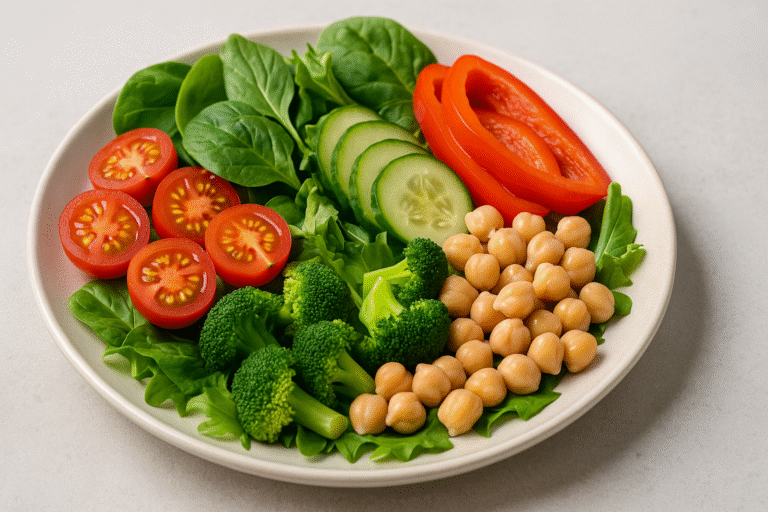
2) Choose smart proteins (quarter plate)
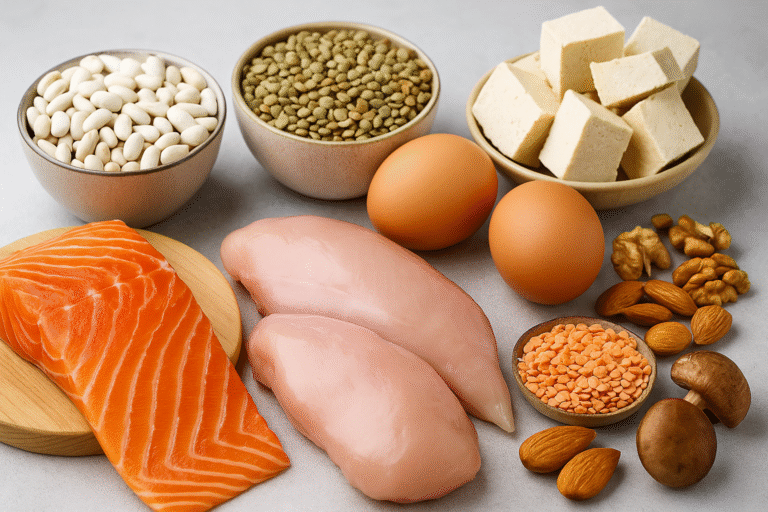
- Most days: beans/lentils, tofu/tempeh, fish/seafood.
- Sometimes: skinless poultry, low-fat or unsweetened yogurt/kefir.
- Limit: processed meats and high-sat-fat cuts.
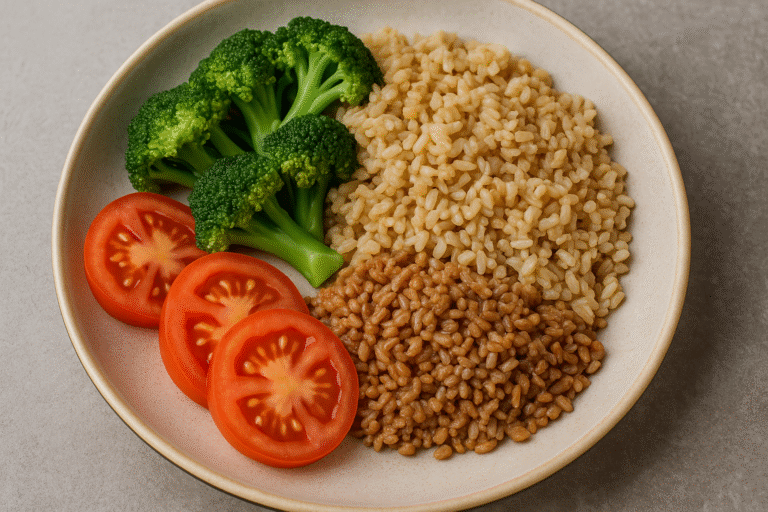
3) Pick whole-grain carbs (quarter plate)
4) Cook with the right fats
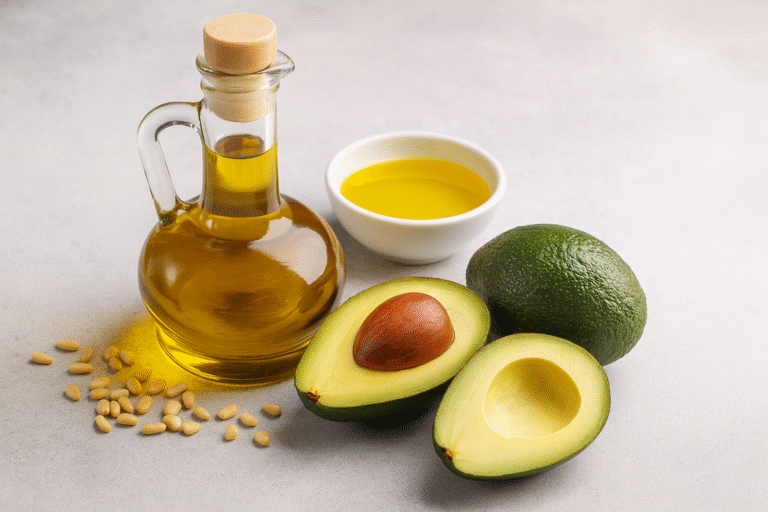
Use extra-virgin olive oil or other non-tropical oils (canola, sunflower). Keep butter/cream for rare occasions, this is how you hit <6% sat fat.
5) Season smart (slash sodium)
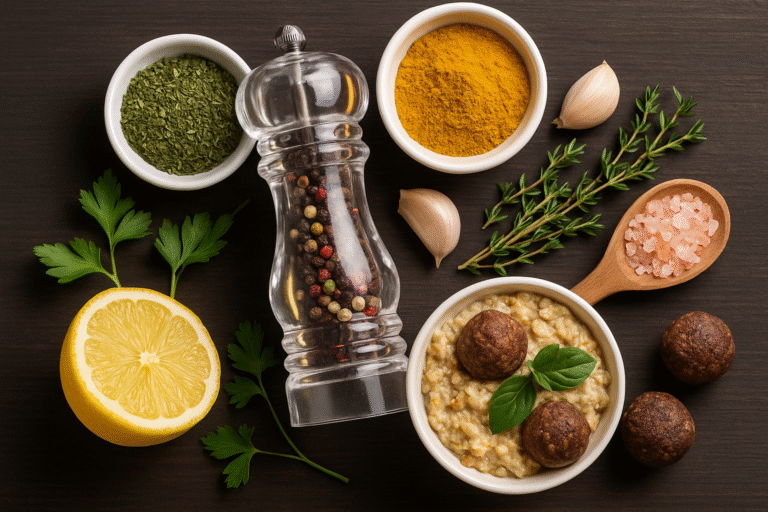
A simple 7-day heart-friendly pattern (mix & match)
Breakfast options (rotate):
- DASH oats: oatmeal + berries + chia + a dollop of yogurt.
- Mediterranean toast: whole-grain toast + smashed white beans + olive oil + tomato.
- Smoothie: spinach, frozen berries, soy or dairy milk, oats.
Lunch options:
- Lentil-quinoa bowl with roasted veggies + lemon-olive oil.
- Tuna or chickpea salad (olive-oil vinaigrette), fruit on the side.
- Hearty soup: tomato-white bean + whole-grain roll.
Dinner options:
Salmon + barley + greens with vinaigrette.
Tofu-vegetable stir-fry (low-sodium soy/tamari) + brown rice.
Mediterranean sheet-pan: chicken, peppers, onions, olives; serve with whole-grain couscous.
Snack ideas:
A small handful of unsalted nuts; fruit + 2 Tbsp hummus; plain yogurt + cinnamon.
This weeklong rhythm checks every box: lower sodium, higher fiber, better fats, and built-in soluble fiber and omega-3s to nudge LDL and BP in the right direction.
Original, actionable insights (with numbers you can use)
- Soluble fiber goal: Add 5–10 g/day (e.g., ½ cup oats ≈ 2 g; ½ cup beans ≈ 2 g; 2 Tbsp chia ≈ 2 g). Expect ~5–10 mg/dL LDL reduction over weeks.
- Plant sterols: If your clinician agrees, 2 g/day from fortified yogurts, spreads, or beverages can lower LDL an extra ~8–15%—handy when diet alone isn’t enough.
- Sodium quick wins: Swapping one canned soup or frozen entrée for a homemade pot can save 500–1,000 mg sodium in a single meal (DASH target).
- Fat quality > fat quantity: Replace (don’t just add) olive oil for butter—this is how you stay under the <6% saturated fat ceiling that AHA recommends.
- Outcomes matter: A large randomized trial (PREDIMED) linked a Mediterranean diet enriched with olive oil or nuts to fewer major cardiovascular events. It’s not a fad; it’s prevention.
FAQs
What is the best heart-healthy diet—DASH or Mediterranean?
Both work. DASH excels for blood pressure (via lower sodium, higher potassium/magnesium). Mediterranean shines for cholesterol and long-term heart outcomes. Many people blend them.
How much sodium should I eat for heart health?
Stay ≤2,300 mg/day; moving toward 1,500 mg/day lowers BP more. Read labels—restaurant and packaged foods are the biggest sources.
What oil is best for a heart friendly diet?
Extra-virgin olive oil (and other non-tropical oils) in place of butter/cream. Keeping saturated fat <6% is a key AHA recommendation.
Which foods lower LDL naturally?
Soluble fiber (oats, barley, beans, chia), nuts, olive oil, omega-3 fish, and optionally plant sterols (2 g/day) with clinician guidance.
Leave a Reply