Why choose high-protein yogurt (and how much to eat)
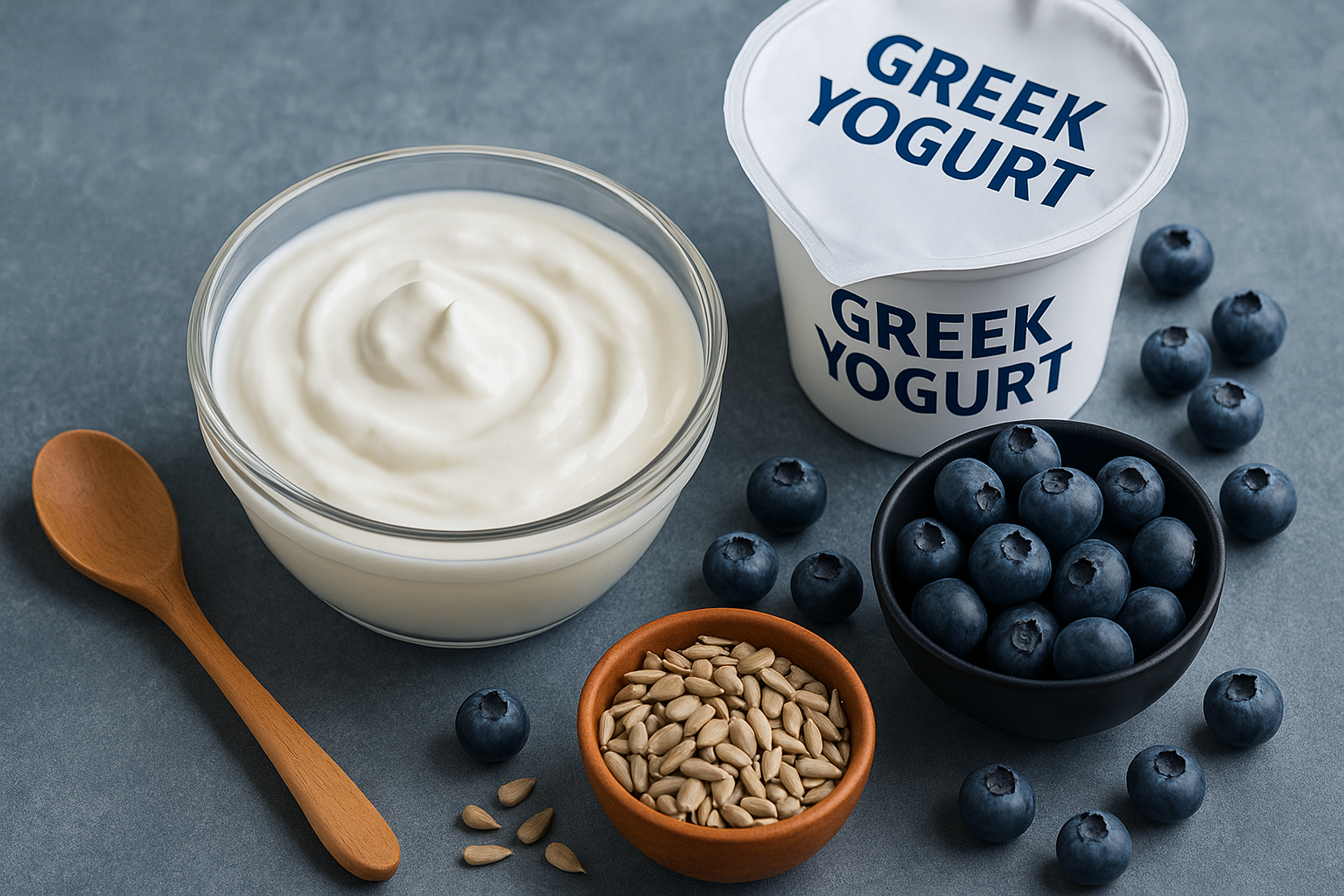
Greek yogurt and skyr are naturally concentrated (strained), so they deliver 16–20 g protein per 150–170 g cup with less sugar (much of it lactose).
For readers with lactose sensitivity, strained yogurts are typically lower in lactose than regular yogurt.
Want probiotics? Look for labels that state “live and active cultures” (or similar). FDA now requires products without live cultures to say “does not contain live and active cultures.”
Bottom line: One single-serve Greek yogurt or skyr plus a small protein “booster” easily gets you into the 20–35 g sweet spot.
Which yogurt has the most protein?
- Plain nonfat or low-fat Greek yogurt: 17 g per 6 oz (170 g).
- Plain skyr (Icelandic-style): commonly 16–20 g per cup; example: 17 g per 170 g serving.
- Some fortified “high-protein dairy snacks” go higher (20–25 g) but may use added milk proteins and sweeteners; great if you like them, but not essential.
5 famous, fast recipes using high-protein yogurt (20–35 g each)
1) Power Parfait (20–28 g)
You’ll need:
1 cup plain Greek yogurt or skyr (16–20 g protein), ½ cup berries, 2 Tbsp high-fiber granola or oats, 1 Tbsp chopped walnuts, cinnamon.
How: Layer yogurt, fruit, and crunchy bits; dust with cinnamon.
Why it works: Strained yogurt + nut crunch = protein + fiber for steady energy. (Greek/skyr typical protein: 16–20 g/cup.)
2) Savory Yogurt Bowl (Mediterranean Style) (22–30 g)
You’ll need:
1 cup plain Greek yogurt or skyr (16–20 g protein), ½ cup berries, 2 Tbsp high-fiber granola or oats, 1 Tbsp chopped walnuts, cinnamon.
How: Layer yogurt, fruit, and crunchy bits; dust with cinnamon.
Why it works: Strained yogurt + nut crunch = protein + fiber for steady energy. (Greek/skyr typical protein: 16–20 g/cup.)
3) High-Protein Tzatziki Pita (25–32 g)
You’ll need:
¾ cup Greek yogurt, grated cucumber (squeezed dry), garlic, lemon, dill + a warm whole-wheat pita and 3–4 falafel balls or a 3–4 oz grilled chicken/tempeh strip.
How: Stir yogurt, cucumber, garlic, lemon, dill; tuck into pita with protein of choice and greens.
Why it works: Protein-rich dip transforms a simple wrap; easy lunch.
4) 60-Second Yogurt “Cheesecake” Bowl (23–30 g)
You’ll need:
1 cup skyr, ½ scoop whey/plant protein (optional), ½ tsp vanilla, pinch salt, 1 tsp maple, ½ crumbled high-fiber cracker, sliced strawberries.
How: Stir skyr with vanilla/salt; top with maple, crumbs, and berries.
Notes: Add the half scoop only if you need to push toward ~30–35 g per meal (athletes/older adults).
5) Green Yogurt Smoothie (25–35 g)
You’ll need:
¾ cup Greek yogurt, 1 cup soy milk (or dairy milk), big handful spinach, ½ frozen banana, 1 Tbsp peanut butter or PB powder, ice.
How: Blend until thick.
Why it works: Complete proteins from yogurt (and soy, if used) + fiber for fullness.
Step-by-step: build a high-protein yogurt habit
Step 1 — Pick your base
Choose plain Greek yogurt or skyr (16–20 g protein per 150–170 g cup) for a versatile, low-sugar foundation. Greek yogurt or skyr (16–20 g protein per 150–170 g cup) for a versatile, low-sugar foundation
Step 2 — Add a booster
Step 3 — Sweeten smart
Step 4 — Mind lactose (if needed)
FAQs
Which yogurt has the most protein but low sugar?
Plain Greek yogurt and skyr typically deliver 16–20 g protein per serving with little natural sugar (lactose). Add fruit for flavor instead of buying sweetened cups.
How much high-protein yogurt should I eat for breakfast?
One cup of Greek/skyr plus a small booster (hemp seeds or half scoop protein) gets you into the 20–35 g range many adults benefit from per meal.
Is skyr better than Greek yogurt?
They’re similar: both are strained and high in protein. Choose the taste/texture you prefer and prioritize plain, live-culture versions.
Leave a Reply