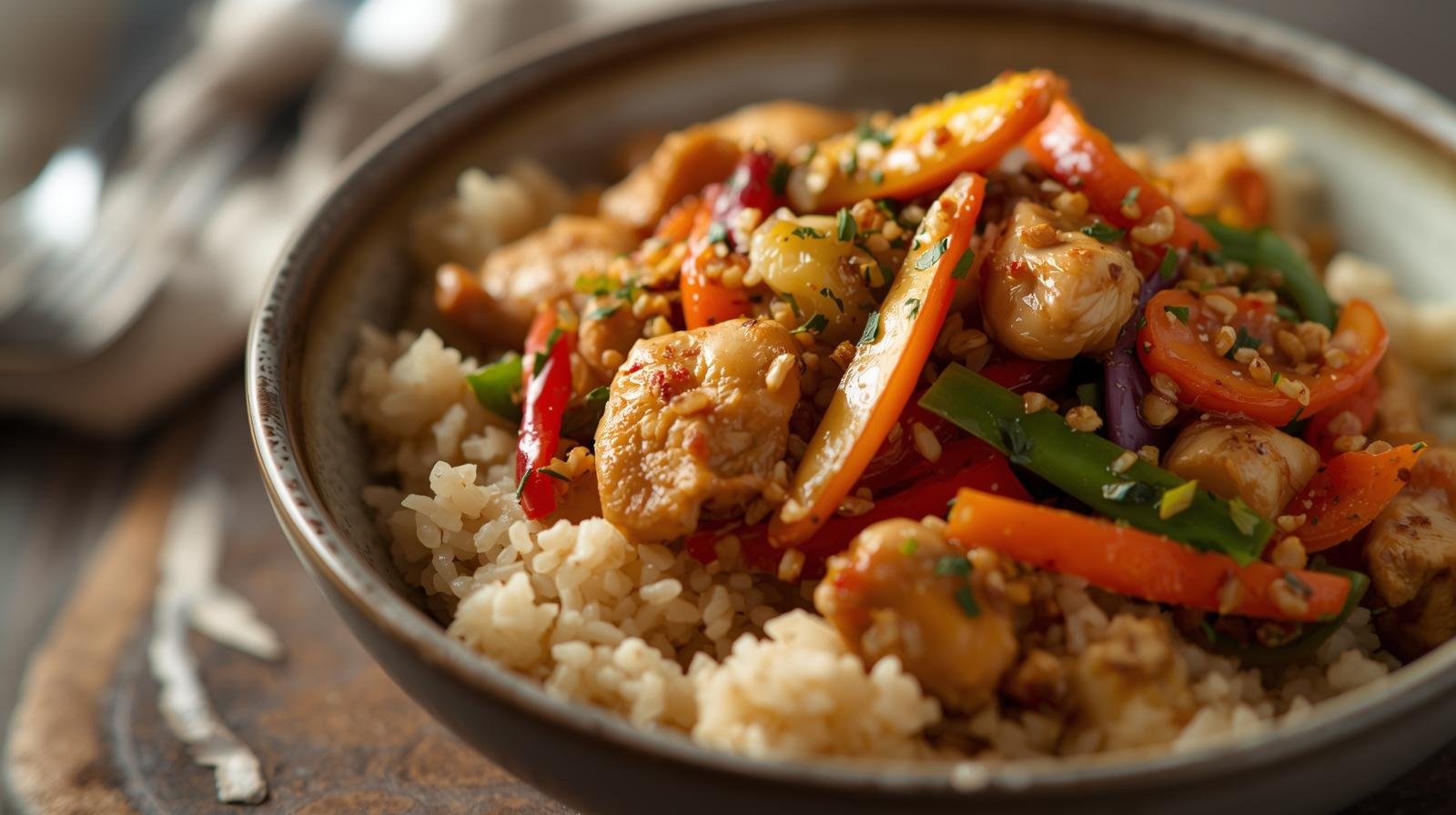
A balanced diet for weight loss isn’t about cutting everything you love. It’s about steady fat loss, good energy, and meals you can actually stick to. When you follow a balanced diet for weight loss, you protect your metabolism, your mood, and your long-term health, rather than just shrinking the number on the scale for a few weeks.
Worldwide, roughly 43% of adults were overweight in 2022 and 16% were obese, and those numbers are still rising.
Health agencies like the CDC, Mayo Clinic, NHS and others all say broadly the same thing:
- A safe, sustainable weight loss rate = 0.5–1 kg (1–2 lb) per week, which usually means a daily deficit of 500–750 kcal.
- Even losing 5% or less of your body weight can improve blood pressure, blood sugar, and other risk factors.
Crash diets work against you: you lose water, muscle, and sanity. A balanced meal plan for weight loss focuses on:
- Enough protein to protect muscle
- Enough fiber to stay full
- Healthy fats for hormones and satisfaction
- Calorie control without extremes
Macros below are approximate per serving using typical ingredients. Use your own labels or a calculator if you need exact numbers.
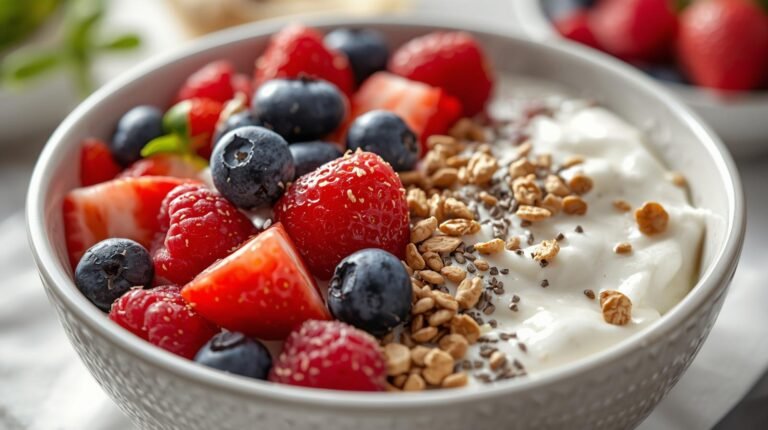
Why it works for weight loss:
- High protein + fiber → keeps you full all morning
- Uses slow-digesting carbs, no added sugar required
Ingredients (1 serving)
- ¾–1 cup plain 0–2% Greek yogurt
- ½ cup mixed berries (fresh or frozen)
- 2 tbsp rolled oats or sugar-free muesli
- 1 tsp chia seeds
- 5–10 almonds, chopped
Optional: ½ tsp honey or stevia, cinnamon, vanilla extract
How to make it
- Add Greek yogurt to a bowl.
- Top with berries, oats/muesli, chia seeds, and almonds.
- Add cinnamon/vanilla; sweeten lightly if needed.
- Stir or layer it parfait-style.
Approx. nutrition
- 300–350 kcal
- 25–30 g protein (Greek yogurt is the star)
- 30–35 g carbs, 6–8 g fiber
- 10–14 g fat (mostly unsaturated from nuts & seeds)
This fits beautifully into a balanced diet for weight loss breakfast: high protein, moderate carbs, high fiber, slow energy.
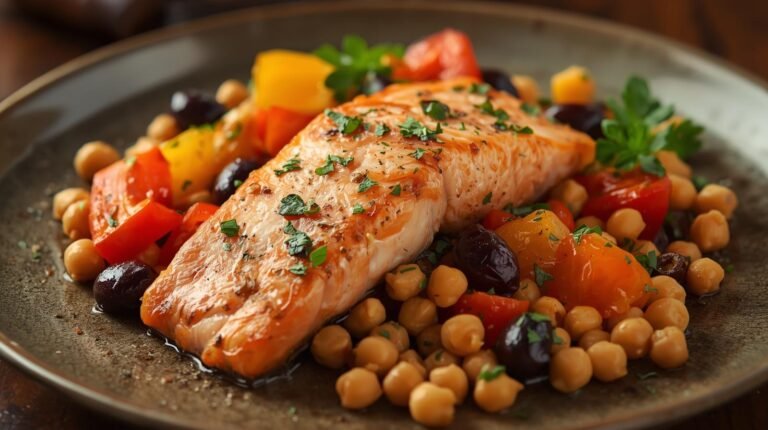
Why it works:
- Combines lean protein + healthy fats from salmon
- Chickpeas and veg supply complex carbs and fiber
- Mediterranean pattern is linked with heart and metabolic benefits
Ingredients (2 servings)
- 2 salmon fillets (~120 g each)
- 1 cup cooked chickpeas (drained, rinsed if canned)
- 1–1½ cups cherry tomatoes, halved
- 1 small zucchini, sliced
- 1 small red onion, sliced
- 1½ tbsp olive oil
- 1 tsp dried oregano or mixed Italian herbs
- Juice of ½ lemon
- Salt & pepper
How to make it
- Preheat oven to 200 °C / 400 °F.
- Toss chickpeas and vegetables with 1 tbsp olive oil, herbs, salt and pepper; spread on a tray.
- Nestle salmon fillets on top; drizzle remaining ½ tbsp olive oil and lemon juice over salmon.
- Bake 12–15 minutes until salmon is just cooked and flakes easily, veggies are tender.
Approx. nutrition per serving
- 450–500 kcal
- 33–36 g protein
- 22–25 g fat (mostly unsaturated)
- 30–35 g carbs, 8–10 g fiber
This is a textbook balanced plate: half veg + legumes, quarter protein, quarter carbs, with high-quality fat.
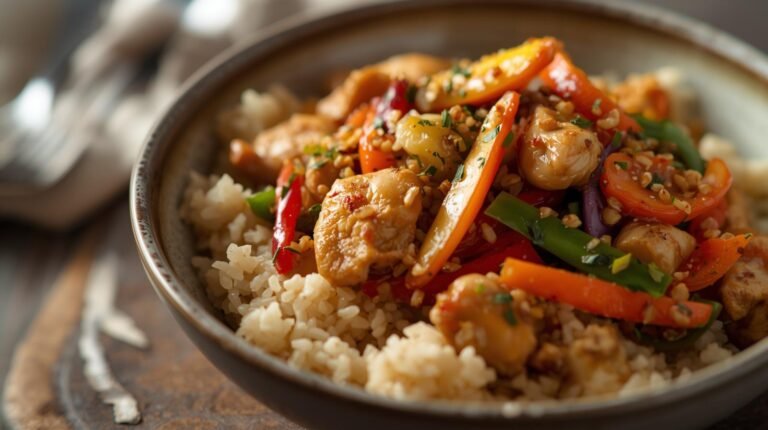
Why it works:
- Stir-frying uses little oil but high flavor.
- Lots of vegetables = volume and fiber.
- Brown rice gives slow, steady energy.
Ingredients (2 servings)
- 200 g skinless chicken breast, sliced thin
- 2 cups mixed stir-fry vegetables (broccoli, bell pepper, snap peas, carrots)
- 1 tbsp olive or canola oil, divided
- 2 tbsp reduced-sodium soy sauce or tamari
- 1 tbsp rice vinegar or lime juice
- 1 tsp grated ginger
- 1 garlic clove, minced
- 1 cup cooked brown rice (½ cup per serving)
Optional: chili flakes, sesame seeds
How to make it
- Heat ½ tbsp oil in a wok/pan on medium-high.
- Stir-fry chicken 4–6 minutes until cooked through; remove to a plate.
- Add remaining oil; stir-fry vegetables 3–4 minutes until crisp-tender.
- Return chicken to the pan. Add soy, vinegar, ginger, and garlic. Toss 1–2 minutes to heat through.
- Serve over ½ cup brown rice per person.
Approx. nutrition per serving
- 420–470 kcal
- 32–35 g protein
- 12–14 g fat
- 45–50 g carbs, 5–7 g fiber
Increase veg and slightly reduce rice to turn this into a lower-calorie, high-protein dinner.
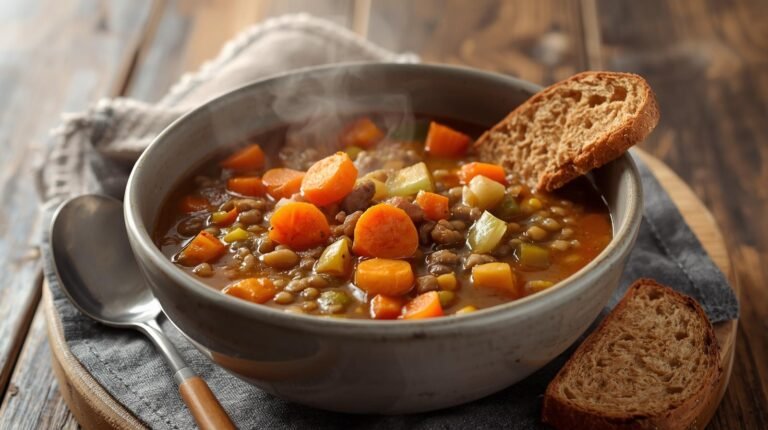
Why it works:
- Lentils = plant protein + fiber.
- Soup adds volume for relatively few calories.
- Wholegrain toast rounds out complex carbs.
Ingredients (3 servings)
- ¾ cup dry lentils (green or brown), rinsed
- 1 tbsp olive oil
- 1 medium onion, diced
- 2 carrots, diced
- 2 celery stalks, diced
- 2 garlic cloves, minced
- 1 can (400 g) diced tomatoes
- 4 cups low-sodium vegetable broth or water
- 1 tsp ground cumin or Italian herbs
- Salt & pepper
- 1–2 slices wholegrain bread per serving
How to make it
- Heat oil in a pot over medium; sauté onion, carrot, and celery 5–7 minutes until softened.
- Add garlic and cumin/herbs; cook 30 seconds until fragrant.
- Add lentils, tomatoes, broth/water. Bring to a boil, then simmer 25–30 minutes until lentils are tender.
- Season to taste. Optionally blend half the soup for a creamier texture, then return to the pot.
- Serve with 1 slice of wholegrain toast (or 2 if your calories allow).
Approx. nutrition per serving (soup + 1 slice bread)
- 350–400 kcal
- 18–22 g protein
- 7–10 g fat
- 55–60 g carbs, 12–15 g fiber
This is a great balanced diet for weight loss dinner on plant-based days.
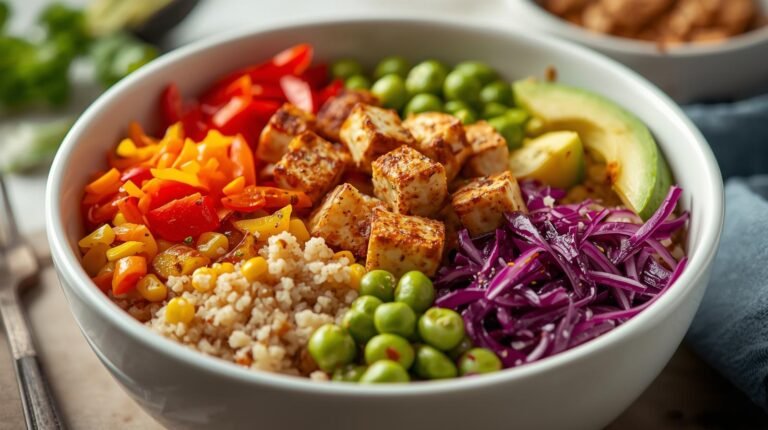
Why it works:
- Smart mix of plant protein (tofu + quinoa).
- High in fiber and micronutrients.
- Great for meal prep—adjust portion size to your calorie target.
Ingredients (2 bowls)
- 200 g firm tofu, pressed and cubed
- 1 tbsp olive or avocado oil
- 1 cup cooked quinoa
- 1 cup roasted or raw veggies (e.g., capsicum, carrots, broccoli, beetroot)
- ½ small avocado, sliced
- 2 tbsp hummus or light tahini-lemon sauce
- Lemon juice, salt, pepper, paprika
How to make it
- Season tofu with salt, pepper, and paprika.
- Heat oil in a pan; cook tofu cubes 6–8 minutes, turning until golden on most sides.
- Prepare bowl: divide quinoa between two bowls. Add veggies and tofu.
- Top each with ¼ avocado and 1 tbsp hummus or tahini sauce.
- Finish with a squeeze of lemon.
Approx. nutrition per bowl
- 450–520 kcal
- 22–26 g protein
- 20–24 g fat (mostly unsaturated)
- 45–50 g carbs, 8–10 g fiber
Adjust quinoa or avocado portions to fit your calorie needs.
Leave a Reply