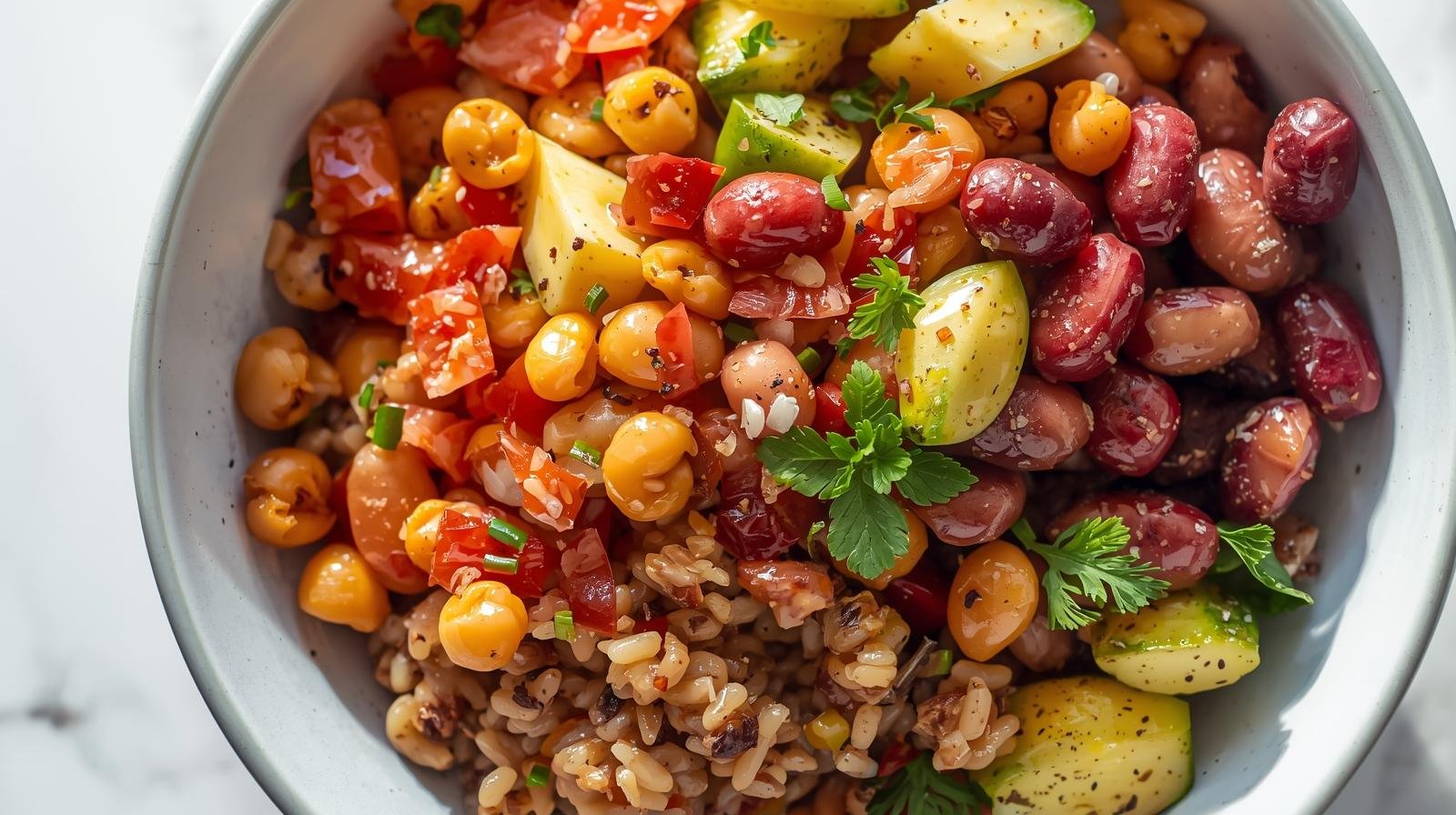
Best diet for high blood pressure isn’t a mystery anymore. Decades of research point to the same pattern: more whole, plant-based foods, low sodium, and the right kind of fats. When you build a healthy diet for high blood pressure around a few smart staples, you can gently lower blood pressure and protect your heart long term.
The encouraging part? Eating in a “DASH-style” way (the best diet for hypertension in most guidelines) can lower systolic blood pressure by ~5–7 mmHg in randomized trials—enough to meaningfully cut stroke and heart attack risk.
Below are 4 famous, research-backed foods turned into simple recipes that fit perfectly into the best diet for high blood pressure: DASH-style oatmeal, salmon with greens, a bean & whole-grain bowl, and a potassium-rich yogurt parfait.
Most guidelines agree that the best diet for hypertension has three big nutrition moves:
- Less sodium: Aim for <2,300 mg sodium/day, with an ideal target of 1,500 mg/day for people with high blood pressure. Even cutting just 1,000 mg/day can improve BP.
- More potassium: Higher potassium intake from foods (beans, greens, fruits) significantly lowers blood pressure in adults.
- DASH pattern: Lots of fruits, vegetables, whole grains, beans, nuts, low-fat dairy, and limited red/processed meat, sugar, and saturated fat. DASH-style diets repeatedly reduce systolic blood pressure by ~5–7 mmHg in clinical trials.
The four recipes below tick all three boxes.
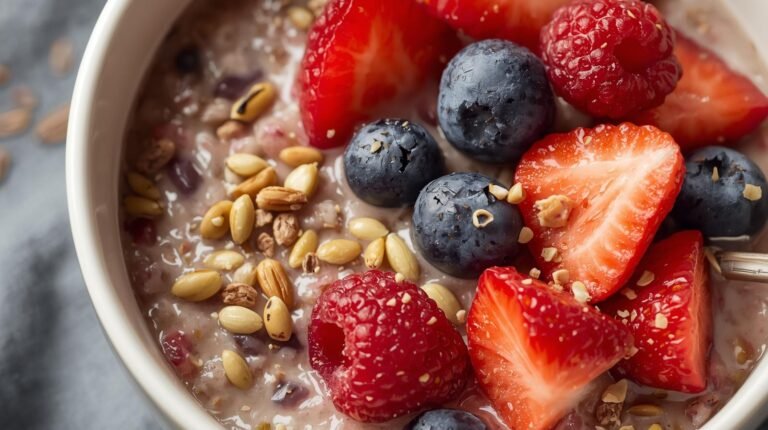
A whole-grain, high-fiber breakfast for hypertension
Why this helps blood pressure
- Oats are a whole grain rich in soluble fiber (beta-glucan), which can improve cholesterol and support healthier blood pressure.
- Berries add antioxidants and potassium with very few calories.
- Chia or flax seeds provide fiber and plant omega-3s.
- This combo appears in many “DASH breakfast” examples and in lists of foods that support healthy blood pressure.
Ingredients (1 serving)
- ½ cup rolled oats
- 1 cup water or low-fat milk / fortified plant milk
- ½ cup mixed berries (fresh or frozen)
- 1 tbsp chia seeds or ground flaxseed
- ½ tsp cinnamon
- Tiny pinch of salt (optional – skip if you’re really watching sodium)
- 1–2 tsp honey or maple syrup (optional)
Step-by-step
Cook the oats
- Add oats, water/milk, cinnamon and optional tiny pinch of salt to a small pot.
- Bring to a gentle boil, then simmer 5–7 minutes, stirring, until creamy.
Add the seeds
- Stir in chia or ground flax during the last 1–2 minutes so they can thicken the oatmeal.
Top with berries
- Remove from heat, pour into a bowl, and top with berries (frozen berries will help cool and slightly thicken).
Sweeten lightly (optional)
- Add a teaspoon of honey or maple if you need sweetness—keep it modest for weight and blood sugar control.
Approximate nutrition (with water, chia, berries, no honey)
Calories: 270–320 kcal
Protein: 9–11 g
Carbs: 45–50 g
Fat: 7–9 g
Fiber: 8–10 g
Actionable tip: Swapping a refined-cereal breakfast for this DASH-friendly oatmeal introduces whole grains and potassium right at the start of the day.

Omega-3 dinner in a healthy diet for high blood pressure
Why this helps blood pressure
- Fatty fish (like salmon) provide EPA and DHA omega-3s, which can reduce inflammation and improve blood vessel function—both important for blood pressure control.
- Leafy greens (spinach, kale, chard) are rich in nitrates and potassium; they’re core foods in DASH-style, blood-pressure-friendly eating.
- Boiled or steamed potatoes with skin give potassium and fiber if you avoid adding lots of salt and butter.
Ingredients (1 serving)
- 120 g (about 4 oz) salmon fillet
- 1 tsp extra virgin olive oil
- Juice of ½ lemon
- 1 small garlic clove, minced
- Black pepper, dried herbs (oregano or dill)
- No added salt, or just a tiny pinch if your doctor hasn’t advised strict sodium limits
Sides:
- 1 cup leafy greens (spinach, kale, or Swiss chard)
- 1 small potato, boiled or steamed with skin
- Extra lemon wedges
Step-by-step
Season the salmon
- Place salmon on a lined baking tray.
- Drizzle with olive oil and lemon juice.
- Sprinkle garlic, pepper and herbs (skip salt or use very little).
Bake or pan-sear
- Oven: Bake at 200°C / 400°F for 12–15 minutes, until it flakes.
- Pan: Sear 4–5 minutes per side on medium heat.
Steam the greens & potato
- Steam or microwave the potato until tender.
- Steam greens for 2–3 minutes until wilted but still bright green.
Serve
- Plate salmon with greens and potato.
- Add extra lemon instead of salty sauces.
Approximate nutrition (baked salmon, plain potato & greens)
Calories: 420–470 kcal
Protein: 32–35 g
Carbs: 30–35 g
Fat: 18–22 g (mostly unsaturated)
Sodium: Very low if you avoid adding salt
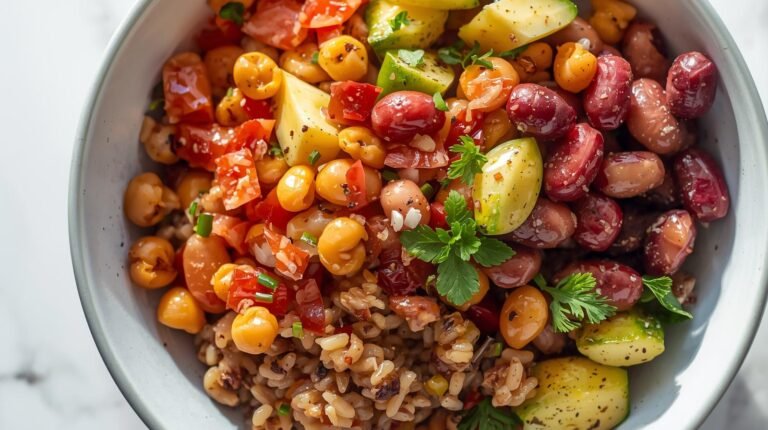
Potassium-rich, high-fiber bowl for hypertension
Why this helps blood pressure
- Beans are naturally rich in potassium, magnesium and fiber—nutrients repeatedly linked with better blood pressure control.
- Brown rice and other whole grains are associated with lower hypertension risk and improved cardiovascular risk factors compared with refined grains.
- This bowl is very DASH-like: beans + whole grains + veggies + olive oil.
Ingredients (1 large bowl)
- ½ cup cooked brown rice (from ~¼ cup dry)
- ½ cup low-sodium or home-cooked beans (kidney, black, or chickpeas), rinsed
- ½ cup chopped cucumber
- ½ cup cherry tomatoes, halved
- ¼ cup grated carrot or red cabbage
- 1 tbsp chopped fresh parsley or cilantro
Lemon-olive oil dressing:
- 1 tbsp extra virgin olive oil
- 1 tbsp lemon juice
- ½ tsp dried oregano or cumin
- Black pepper
- No or minimal salt
Step-by-step
- Cook the brown rice
- Rinse rice.
- Cook with water (about 1:2 ratio) until tender (roughly 25–30 minutes).
- Prep vegetables & beans
- Rinse beans well (especially canned) to remove extra sodium.
- Chop vegetables and herbs.
Make dressing
- Whisk olive oil, lemon juice, spices and pepper.
Assemble the bowl
- Add warm rice to a bowl.
- Top with beans and vegetables.
- Pour dressing over the top and toss gently.
Approximate nutrition
Calories: 400–460 kcal
Protein: 14–18 g
Carbs: 60–65 g
Fat: 10–14 g
Fiber: 10–14 g
Sodium: Low, if using low-sodium beans and minimal salt
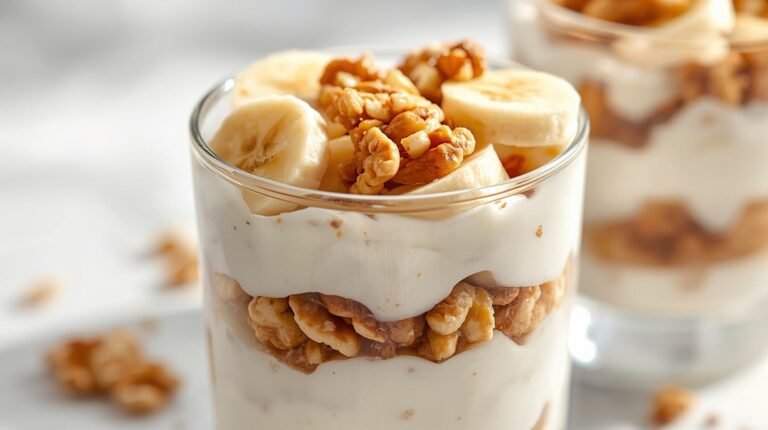
Potassium + dairy in the best diet for hypertension
Why this helps blood pressure
- Bananas are a well-known potassium source; increasing potassium intake alongside reducing sodium can lower blood pressure.
- Low-fat yogurt adds protein and calcium; low-fat dairy features strongly in the DASH diet, which reduced systolic BP by ~5–7 mmHg in trials.
- Walnuts provide heart-healthy fats and a bit of plant omega-3.
Ingredients (1 serving)
- ¾ cup low-fat plain yogurt (or unsweetened plant yogurt with calcium)
- 1 small banana, sliced
- 1 tbsp chopped walnuts
- 1 tsp chia or ground flaxseed (optional)
- A dash of cinnamon
- 1 tsp honey (optional)
Step-by-step
Base
- Add yogurt to a glass or bowl.
Layer
- Add half the banana slices and half the walnuts.
- Sprinkle a little chia/flax and cinnamon.
Repeat
- Add remaining yogurt on top if you like layers.
- Finish with the rest of the banana, walnuts and cinnamon.
Serve
- Enjoy as a snack, light breakfast, or evening dessert instead of salty or sugary treats.
Approximate nutrition
Calories: 260–310 kcal
Protein: 12–16 g
Carbs: 35–40 g
Fat: 8–11 g
Fiber: 4–6 g
Sodium: Very low (check yogurt label)
1. What is the best diet for high blood pressure?
Most major organizations recommend a DASH-style or Mediterranean-style eating pattern as the best diet for hypertension:
- Lots of fruits, vegetables, whole grains, beans, nuts and seeds
- Low-fat dairy, fish and limited lean meats
- Very little processed foods, added sugar and saturated fat
Meta-analyses show the DASH diet can reduce systolic blood pressure by about 5–7 mmHg and diastolic by ~3–4 mmHg on average.
2. How much salt is safe if I have high blood pressure?
For most adults (especially with hypertension), the ideal limit is ≤1,500 mg sodium/day, and you should stay under 2,300 mg/day at most.
Over 70% of sodium in typical diets comes from packaged and restaurant foods, not the salt shaker, so reading labels and cooking at home is key.
3. Which foods are best to lower blood pressure naturally?
- Research consistently highlights:
- Leafy greens (spinach, kale)
- Potassium-rich fruits (bananas, avocados)
- Beets
- Oats and other whole grains
- Fatty fish (salmon, sardines)
These appear in many expert lists of foods that support healthy blood pressure.
Leave a Reply