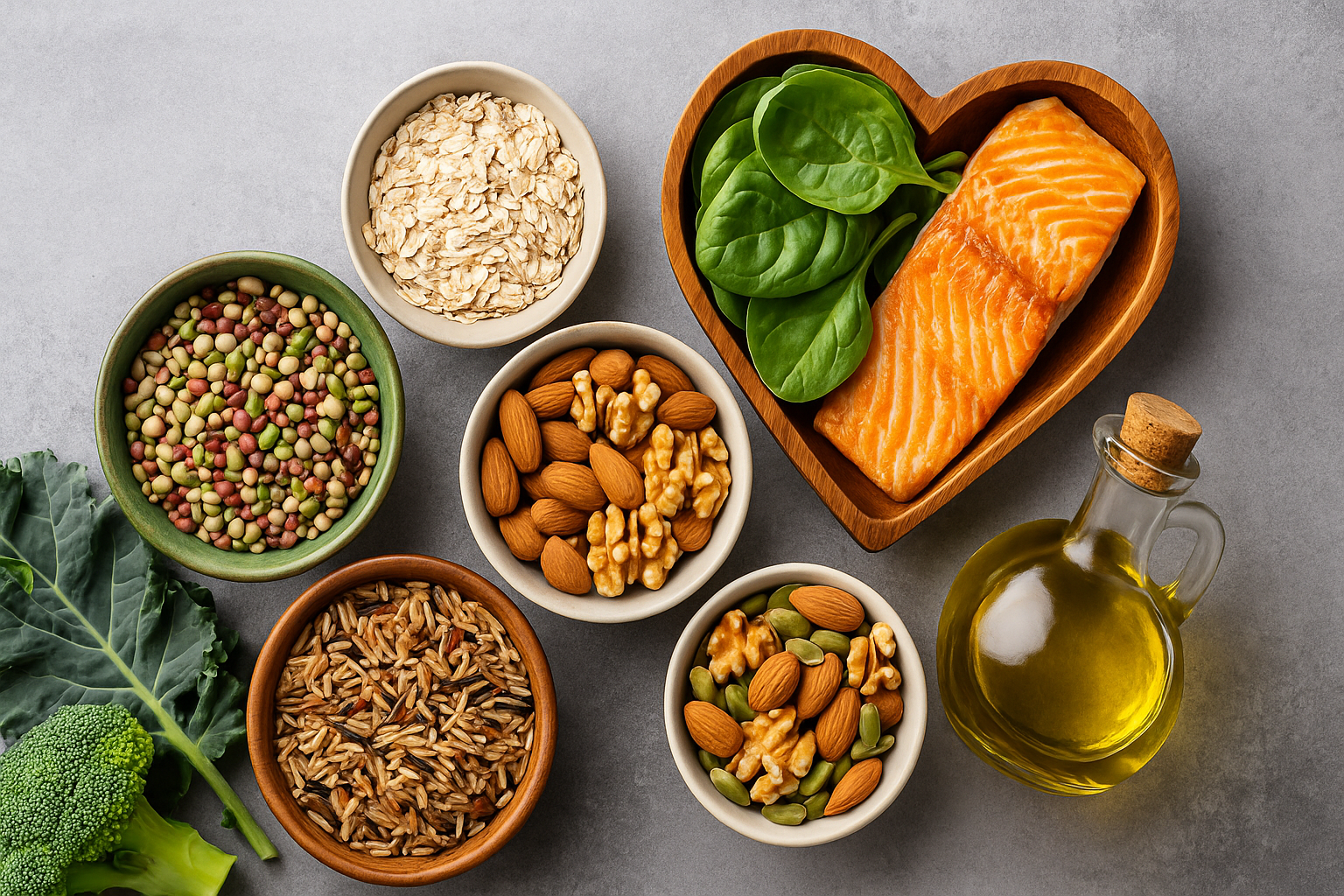
Heart-healthy foods are more than a list, they’re a pattern that steadily lowers blood pressure, improves cholesterol, and protects arteries. If you’re searching for good food for the heart or a cardio health diet, this guide gives you precise targets, smart swaps, and science-backed picks for healthy eating for heart health that actually moves your numbers.
The pattern that works (and why)
The strongest long-term cardiometabolic benefits come from Mediterranean and DASH-style eating: lots of vegetables and fruit, beans and lentils, whole grains, nuts, olive oil, and regular fish, while lowering sodium, added sugar, and saturated fat. That combo is the backbone of modern heart guidance and pairs with 150+ minutes/week of physical activity.
Your evidence-based targets
- Sodium: stay ≤2,300 mg/day; going toward 1,500 mg/day drops BP even more.
- Saturated fat: <6% of calories (11–13 g/day on a 2,000-kcal diet). Replace butter/cream with non-tropical oils.
- Soluble fiber: 5–10 g/day (from oats/barley/beans) can lower LDL by 5–15 mg/dL (5–10%).
- Fish (omega-3): 2 servings/week of fatty fish (e.g., salmon, sardines).
The top heart-healthy foods (and exactly how to use them)
1) Fatty fish (EPA/DHA for triglycerides & rhythm)
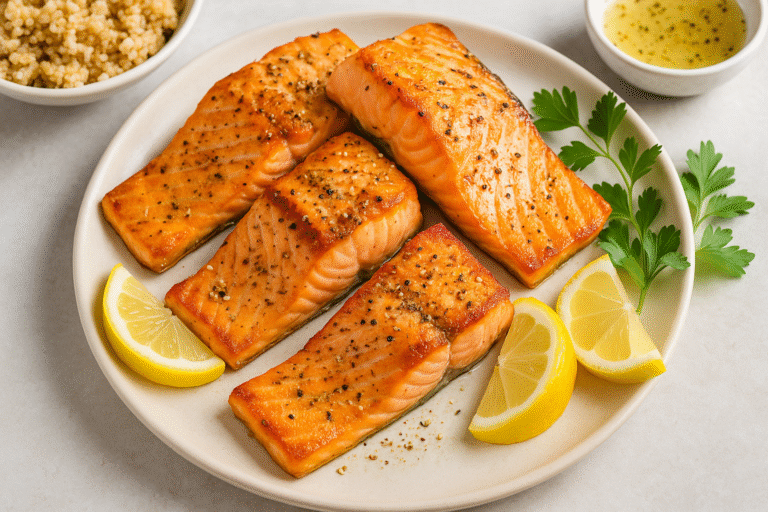
Aim for two 3-oz cooked servings weekly: salmon, sardines, herring, mackerel. Grill or roast with olive oil and lemon; add to grain bowls or tacos.
2) Oats & barley (β-glucan for LDL)
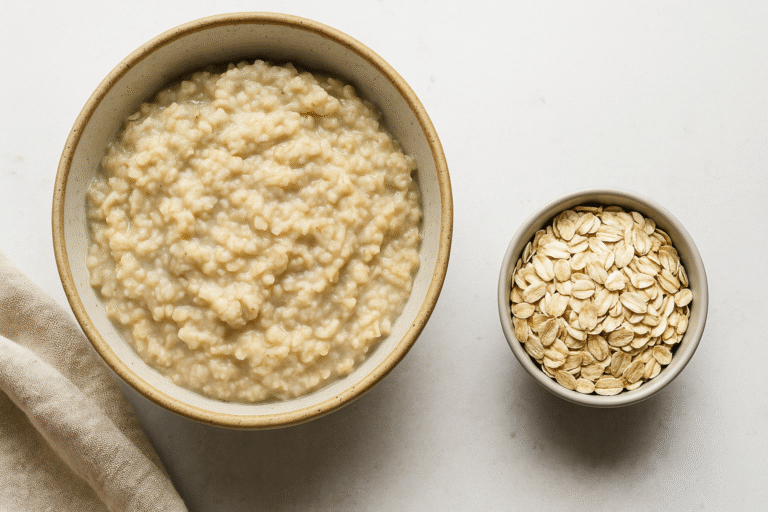
Just 3–4 g/day of oat β-glucan, about a generous bowl of oats or barley, can cut LDL 6–10%. Use oatmeal, overnight oats, or swap barley for rice in stews.
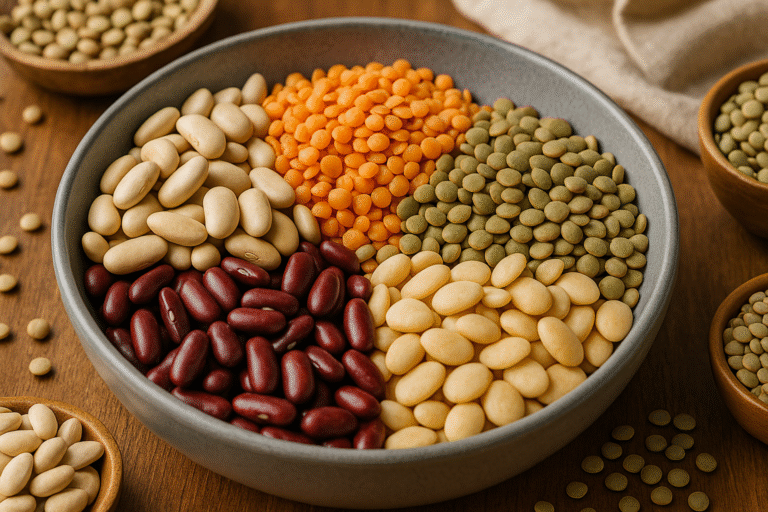
3) Beans & lentils (fiber + plant protein)
4) Nuts & seeds (unsalted)
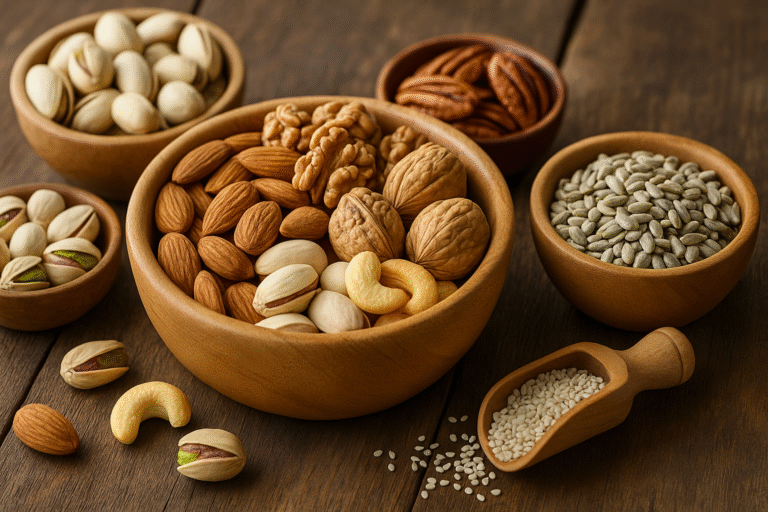
A small handful (about 1 oz) of walnuts/almonds/pistachios adds cardioprotective fats and fiber. Sprinkle on oats, yogurt, or salads to level up satiety and swap out croutons (refined). (Nuts are a key component in Mediterranean outcomes data.)
5) Extra-virgin olive oil (replace, don’t add)
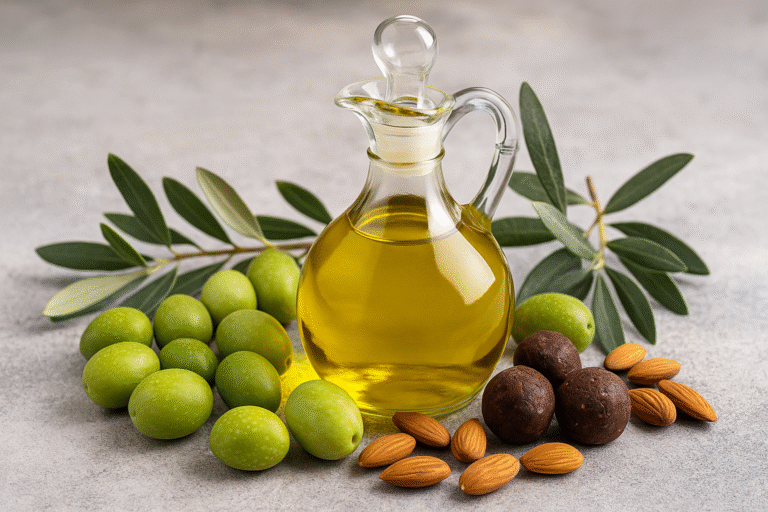
Use EVOO as your default cooking and dressing fat. The win isn’t “more fat,” it’s better fat instead of saturated fat, how you stay under the <6% sat-fat ceiling.
6) Leafy greens & potassium-rich produce
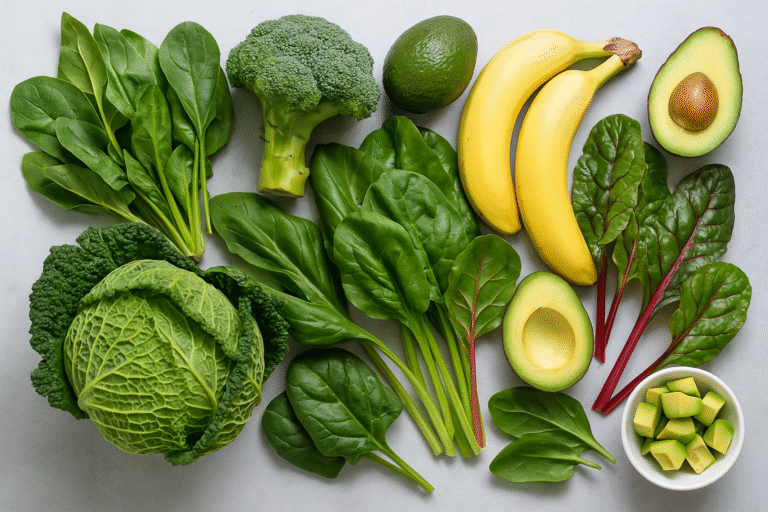
Spinach, kale, arugula, tomatoes, citrus, berries, and roasted veg deliver potassium, magnesium, and polyphenols that support blood pressure and endothelial function, especially when you’re also cutting sodium (DASH synergy).
7) Whole grains beyond oats
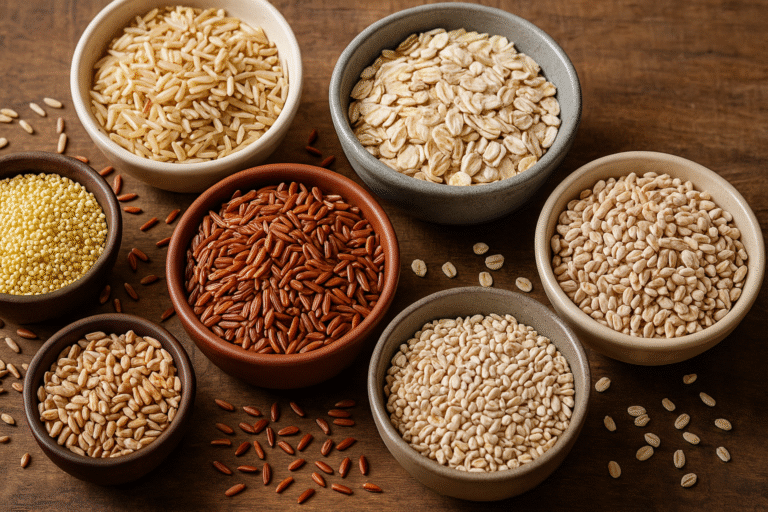
Quinoa, brown rice, 100% whole-grain bread/pasta raise fiber intake and improve lipid profile when they displace refined grains. Keep labels clean; aim for ≥3 g fiber per serving.
Step-by-step: build a cardio health diet this week
Step 1 — Rework breakfast (5-minute wins)
- Oat bowl: oats + chia + walnuts + berries (adds 2–4 g soluble fiber).
- Mediterranean toast: whole-grain + smashed white beans + EVOO + tomato. These crowd in fiber and unsaturated fat while pushing out sugar-heavy options.
Step 2 — Make lunch do the heart work
- Lentil-quinoa bowl with roasted peppers/onions, olives, EVOO-lemon.
- Tuna-bean salad over greens; capers, herbs, and vinegar for big flavor with low sodium.
Step 3 — Set two “anchor” dinners
Salmon + barley + greens (EVOO vinaigrette).
Bean-vegetable chili (batch cook; freeze portions).
Anchor meals reduce decision fatigue and ensure you hit your omega-3 and soluble-fiber targets.
Step 4 — Sodium & sat-fat audit (10 minutes)
Scan your most-eaten packaged foods; swap the highest-sodium item for a lower-sodium alternative (goal ≤140 mg/serving when possible). Replace butter/cream with EVOO or canola in daily cooking.
Original, actionable insights (numbers you can use)
- Soluble fiber math: Hit 5–10 g/day with ½ cup oats (2 g) + ½ cup beans (2 g) + 2 Tbsp chia (2 g) + a pear (2 g). Expect 5–15 mg/dL LDL drop over weeks when combined with sat-fat lowering.
- BP reality check: Moving from 3,400 mg sodium/day (typical) toward 1,500–2,300 mg lowers BP in most people, even those on medication.
- Don’t just add—swap: EVOO helps when it replaces butter/tropical oils; fish helps when it replaces processed meat. That’s how risk actually shifts.
5-minute heart-healthy grocery list
- Fish: salmon, sardines (canned in water/olive oil).
- Pantry fiber: old-fashioned oats, barley, lentils, chickpeas, black beans.
- Fats: extra-virgin olive oil; unsalted walnuts/almonds.
- Produce: leafy greens, tomatoes, berries, citrus, onions/garlic.
- Optional: sterol-enriched yogurt/spread (if clinician approves).
FAQs
What are the best heart-healthy foods to lower LDL naturally?
Oats and barley (β-glucan), beans/lentils, nuts, olive oil, and fish. Consider a Portfolio-style approach (viscous fiber + nuts + soy + plant sterols) if LDL is stubborn.
How much sodium is safe for a low sodium heart diet?
Aim ≤2,300 mg/day and trend toward 1,500 mg/day for bigger BP reductions; use herbs, citrus, and vinegar for flavor.
Is olive oil really better than butter for heart health?
Yes, major heart groups advise limiting saturated fat to <6% of calories and using non-tropical oils like EVOO instead.
How often should I eat fish on a cardio health diet?
Twice weekly (fatty fish) for omega-3s EPA/DHA, linked with lower heart disease and stroke risk.
Leave a Reply