Hooded eyelids are extremely common—and for many people, they’re simply a normal eyelid shape or an age-related change.
Hooded eyelids usually describe when upper-eyelid skin folds over the natural crease, making the lid look heavier or the crease less visible.
You’ll also see hooded eyelids discussed alongside medical terms like dermatochalasis (extra upper-lid skin) and ptosis/blepharoptosis (a drooping eyelid margin). These terms are related, but not the same thing—and mixing them up is one reason this topic can feel confusing.
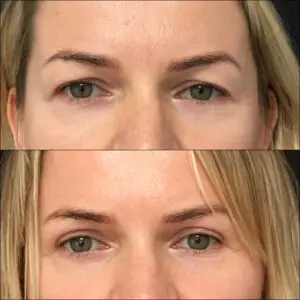
“Hooded eyelids” is a descriptive phrase, not a diagnosis. It usually means redundant upper-eyelid skin (often called dermatochalasis) that drapes down from the brow area and covers some or all of the upper lid crease.
Dermatochalasis (hooded eyelids): extra skin/fat creates a fold that can hide the crease.
Ptosis (blepharoptosis): the eyelid margin itself sits lower than normal due to issues with the lid-lifting mechanism (muscle/tendon/nerve).
Why this matters: two people can both look “hooded,” but the underlying cause can be different—and that changes how clinicians evaluate it.
Some people naturally have a lower or less visible eyelid crease, different brow structure, or more soft tissue around the eyes. This can make the eyelid look “hooded” even in youth (and it may be completely normal for that person).
With age, skin gradually loses elasticity and support. In medical references, dermatochalasis is described as loose, redundant eyelid skin and is considered a common feature of peri-orbital aging.
As the forehead and brow position change with age, the soft tissues above the eyelid can shift, making the upper lid appear heavier.
Some “hooded eyelids” are actually ptosis, where the eyelid margin sits low. A review in Eye notes that estimates of adult ptosis prevalence vary by study, with reported rates roughly 4.7% to 13.5% in adult populations, and it increases with age.
Because “hooded eyelids” isn’t a strict diagnosis, prevalence is often discussed using related medical categories like dermatochalasis and ptosis.
A 2025 study of older individuals (published in an open-access medical journal) reported eyelid disorders in 41% of participants; blepharoptosis (ptosis) was noted in 25%, and severe dermatochalasis in 16%.
Another study (2024, elderly health-center sample) reported blepharoptosis prevalence of 27.16% in that population.
For many people, hooded eyelids are mainly an appearance feature. For others, they can affect comfort or function.
Makeup application can feel harder because the crease is hidden.
Photos may show less visible lid space, changing the look of the eyes.
Some clinical sources describe associations between dermatochalasis and symptoms like ocular irritation or a heavy-lid sensation.
Medical references also discuss overlap with dry-eye complaints in some patients with dermatochalasis (dry eye is multi-factorial, so this isn’t a one-cause explanation).
When hooding is substantial, it can contribute to superior (upper) visual field obstruction. Ophthalmology references describe documenting functional impact using photos and visual field testing (sometimes with the lid gently elevated for comparison).
If you’re reading about hooded eyelids online, these terms come up a lot:
Dermatochalasis: redundant upper eyelid skin (often the “classic” hooded-lid description).
- Blepharoptosis / ptosis: drooping eyelid margin due to the lifting apparatus.
Brow ptosis: brow sits lower and adds to the appearance of hooding (can coexist with dermatochalasis).
Asymmetry: one side often changes faster than the other; mild asymmetry is common and not automatically “abnormal.”
This post is informational (not treatment-focused), but it’s still helpful to know when a check-in matters. Consider professional evaluation if you notice:
A new or rapidly worsening droop (especially one-sided)
Vision changes (upper field feels blocked, needing to raise brows to see)
Headaches or eye strain from constantly lifting the brows
Drooping with other symptoms (double vision, pupil changes, weakness)
Clinicians may evaluate with measurements and, when needed, visual field testing for functional impact.
1) What exactly are hooded eyelids?
Hooded eyelids usually refer to excess upper-eyelid skin folding over the crease, often described medically as dermatochalasis.
2) Are hooded eyelids the same as ptosis?
Not always. Ptosis is when the eyelid margin droops due to the lifting mechanism, while hooding often refers to extra skin. They can also occur together.
3) Do hooded eyelids get worse with age?
Often, yes. Aging changes in skin and soft tissue support can make upper lids look heavier over time.
Leave a Reply