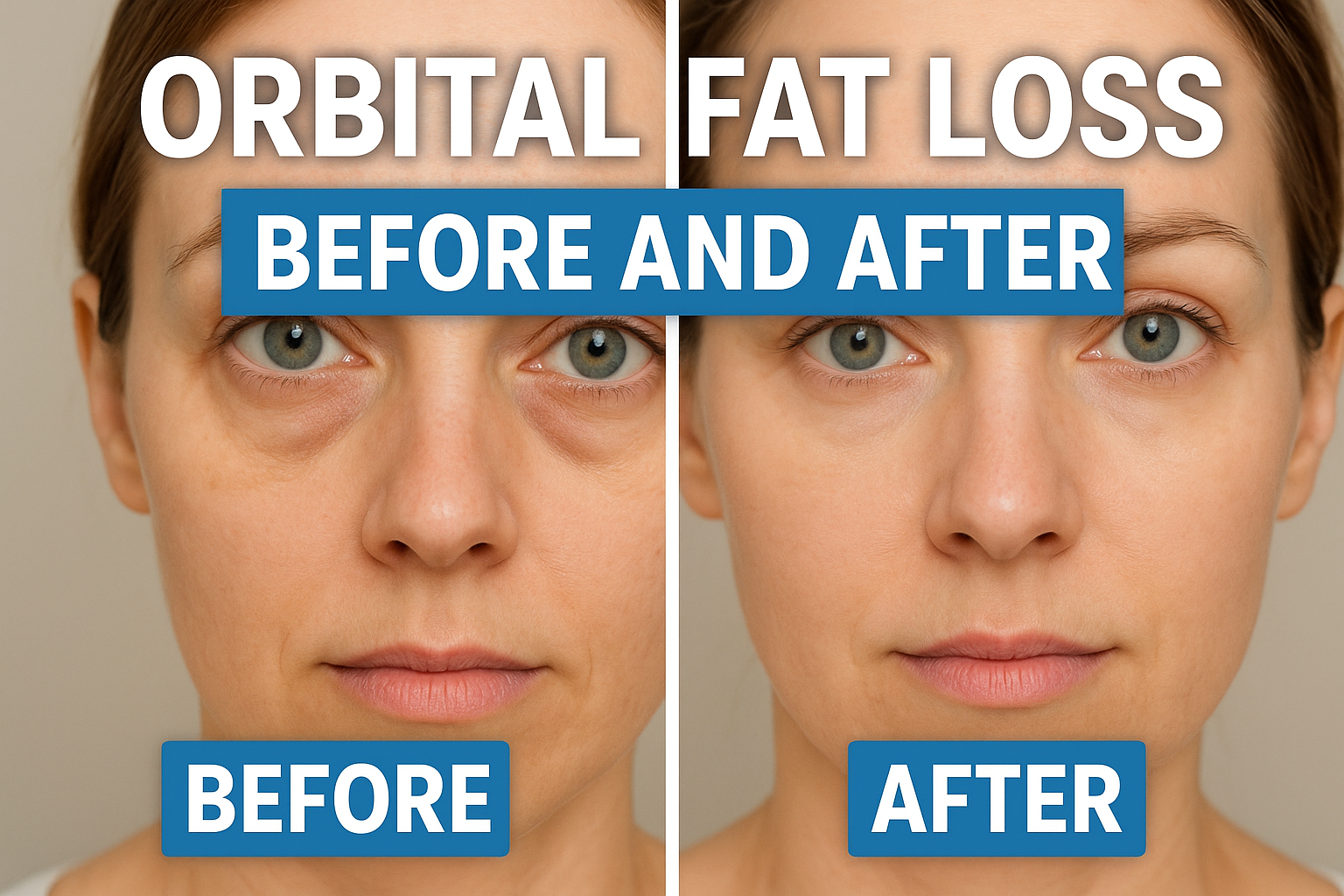
People frequently notice our eyes before anything else about us. But when the natural fat pads around the eyes shrink or thin out, it can lead to orbital fat loss, commonly called hollow or sunken eyes. Even if a person feels great, this change can make them appear tired, older, or even unwell.
In this article, we’ll explain what orbital fat loss is, what causes it, and what you can realistically expect before and after treatment.
Table of Contents
What is Orbital Fat Loss?
It happens when the protective fat pads around the eyes become thinner. These fat pads normally support the eyes and give them a healthy, youthful appearance. When they reduce, the eyes look sunken, shadowed, and hollow.
Common causes include:
Aging – natural fat pads shrink over time.
Genetics – some people are naturally prone to hollow eyes.
Rapid weight loss – losing weight too quickly reduces facial fat.
Medical factors – certain conditions or treatments may play a role.
Before Treatment: How Orbital Fat Loss Looks
People experiencing orbital fat loss often notice:
- Hollow or deep-set eyes.
- Dark circles that appear worse due to shadowing.
- A tired or aged appearance, even with enough rest.
- Loss of facial fullness, especially in the mid-face.
For many, these changes impact not only their look but also their confidence and self-image.
After Treatment: What to Expect
The good news is that orbital fat loss can be improved with cosmetic treatments. Here’s what typically happens afterward:
- Restored volume around the eyes, creating a fuller, smoother look.
- Reduced hollow shadows, making dark circles less noticeable.
- A younger, refreshed appearance.
- Many people feel more confident and energized.
Treatment Options
A cosmetic specialist may recommend one or more of the following treatments:
- Adds instant volume under the eyes.
- Results last 6–18 months.
- Minimal downtime and quick procedure.
2. Fat Grafting (Fat Transfer)
- Uses your own body fat for a natural, longer-lasting result.
- Recovery takes longer compared to fillers.
3. PRP (Platelet-Rich Plasma)
- Improves skin texture and supports healing.
- Often used with fillers for enhanced results.
4. Laser or Skin Tightening
- Stimulates collagen production.
- Improves overall under-eye skin quality.
Things to Keep in Mind
- Results vary – everyone’s anatomy and needs are different.
- Swelling and bruising are normal after treatment but fade in a few days.
- Fillers are temporary and need maintenance.
- Always choose a skilled cosmetic physician for safety and natural-looking results.
- Ask for before-and-after photos to set realistic expectations.
Key Takeaway
Orbital fat loss can make eyes appear tired, hollow, and aged. But with treatments like fillers, fat transfer, PRP, and skin tightening, it’s possible to restore a more youthful, refreshed look.
- Before treatment: expect sunken, shadowed eyes.
- After treatment: expect smoother, fuller, and more vibrant eyes.
With the right approach and an experienced provider, treatments can restore not just your under-eye area, but also your confidence and overall appearance.
FAQ
1. What does orbital fat loss before and after treatment really look like?
Before treatment, orbital fat loss can make eyes appear hollow, sunken, and shadowed. After treatments like fillers or fat transfer, most people notice smoother under-eyes, restored volume, and a refreshed, youthful look.
2. How long do orbital fat loss treatments last?
Results depend on the procedure. Dermal fillers for orbital fat loss before and after can last 6–18 months, while fat grafting may provide longer-lasting results. PRP and laser treatments usually require multiple sessions but support long-term skin health.
3. Is orbital fat loss treatment safe for everyone?
Most healthy adults can consider orbital fat loss treatment, but safety depends on your medical history. Consulting a licensed cosmetic provider is the best way to know if procedures like fillers or PRP are right for you.
4. Can lifestyle changes improve orbital fat loss before and after results?
Yes! Eating a balanced diet, staying hydrated, managing weight loss gradually, and protecting your skin can enhance the results of orbital fat loss treatment and help maintain smoother, healthier-looking eyes.
Leave a Reply