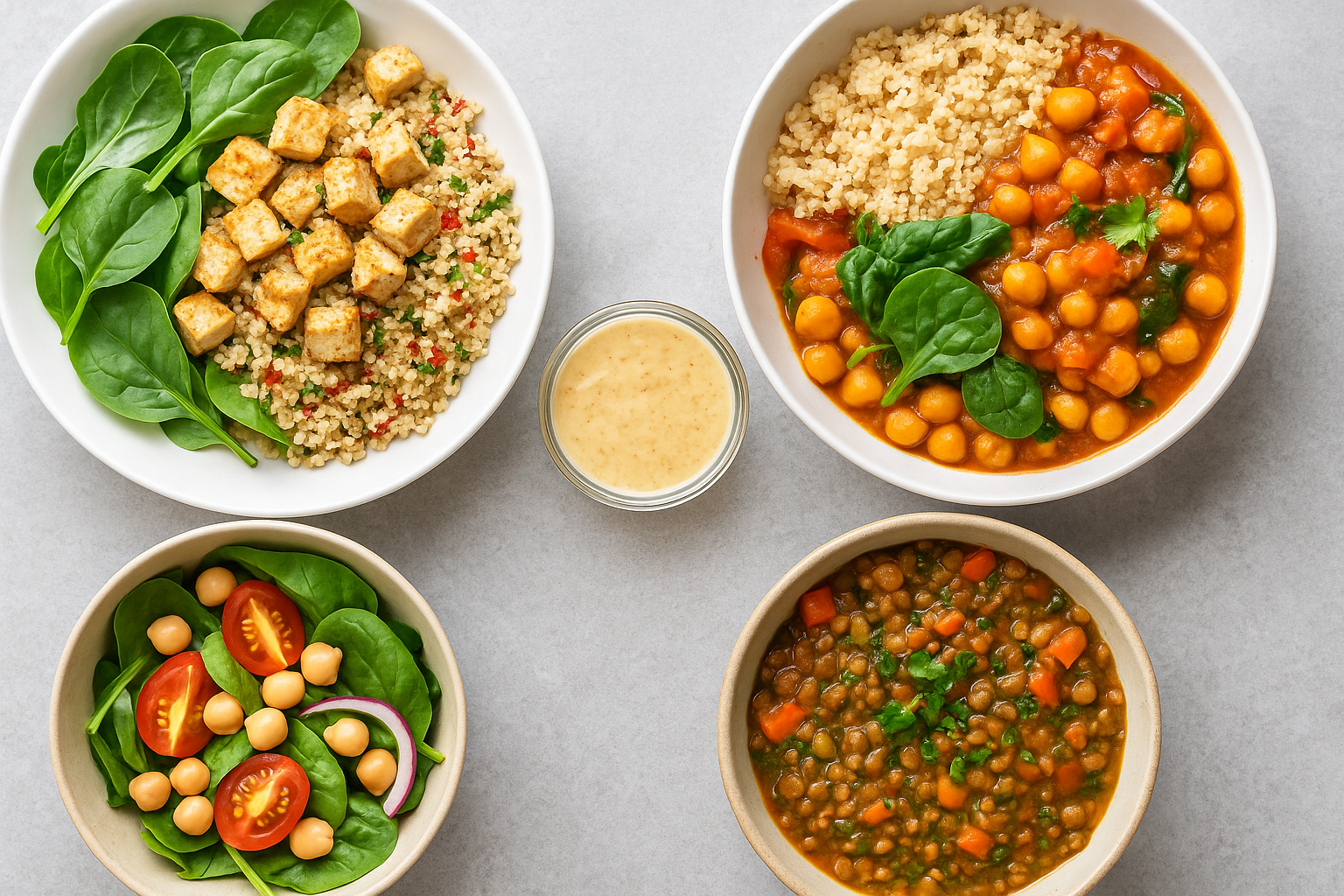
Plant based protein meals are no longer “nice to try”, they’re the easiest way to hit protein targets and feel full on fewer calories. If you’re searching for vegan high protein meals, this guide gives you smart basics, low-effort meal prep, and five vegan recipes high protein enough for active days.
Meta title (60 chars): 5 Plant-Based Protein Meals for Easy High-Protein Vegan
Meta description (160 chars): Vegan high-protein made simple: label rules, quick prep, and 5 plant-based protein meals with macros. Affordable, delicious, and dietitian-friendly.
Why protein on a vegan diet isn’t hard (and why it matters)
You don’t need meat to nail protein. A cup of cooked lentils provides about 18 g protein, with bonus fiber for satiety. Edamame clocks in around 18 g per cup, and quinoa adds ~8 g per cooked cup—and brings all nine essential amino acids. Add tofu or tempeh and you’re set for balanced meals that support strength, recovery, and appetite control.
For daily needs, a practical starting point is the RDA, 0.8 g/kg body weight (≈0.36 g/lb). Many adults meet this easily; active folks may aim higher. Use your meals to distribute protein across the day for better fullness and muscle maintenance.
- Good news: reputable nutrition bodies agree well-planned vegetarian/vegan diets can supply all essential amino acids—no need to “combine” proteins at every meal. Variety across the day is what counts.
Label rules that make plant protein effortless
- Aim per meal: 20–30 g protein + fiber.
- Build from staples: tofu, tempeh, lentils, edamame, beans, quinoa, hemp/chia, whole-grain pasta.
- Shop by numbers: choose soy or legume bases (e.g., tempeh ~17–18 g per 3 oz; lentils ~18 g per cooked cup; tofu ~20–23 g per 8 oz).
5 Vegan High-Protein Meals (30 minutes or less)
1) 20-Minute Tempeh-Veg Stir-Fry (32 g protein)
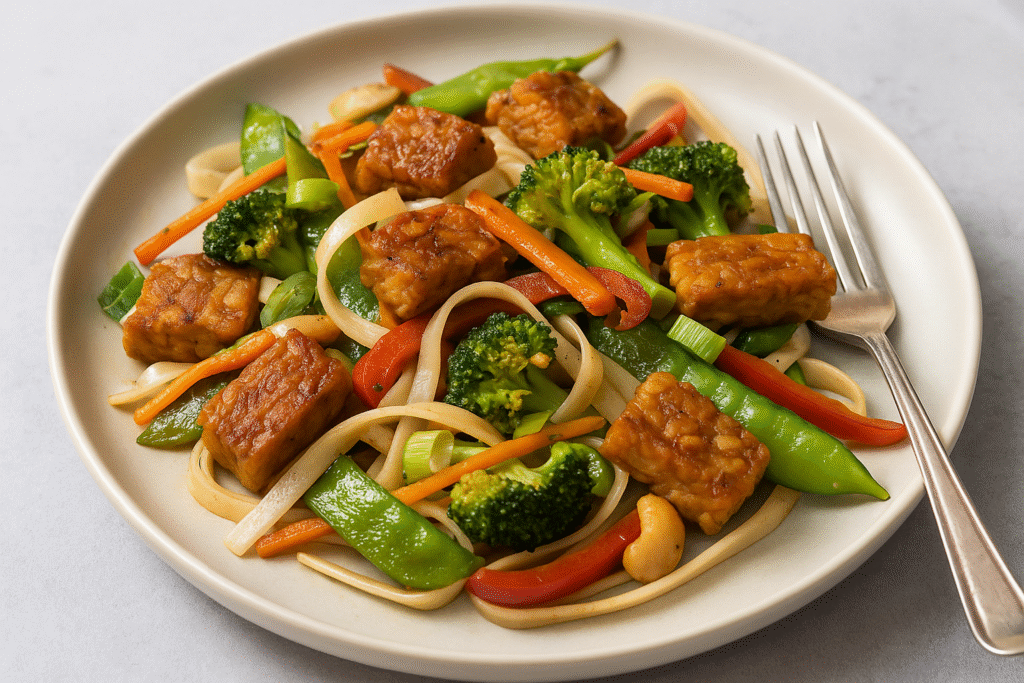
You’ll need (2 servings):
- 8 oz tempeh (cubed)
- 3 cups mixed veg (broccoli, bell pepper, snap peas)
- 1 tbsp avocado oil
- Sauce: 2 tbsp low-sodium soy or tamari + 1 tbsp rice vinegar + 1 tsp grated ginger + chili flakes
- 1 cup cooked brown rice (for serving)
Method:
- Sear tempeh in hot oil 3–4 min per side.
- Add veg; stir-fry 3–4 min.
- Pour in sauce; toss 1–2 min. Serve over rice.
Why it works: Tempeh (fermented soy) delivers complete protein and great texture.
2) Lentil-Pasta Bolognese with Spinach (28 g protein)
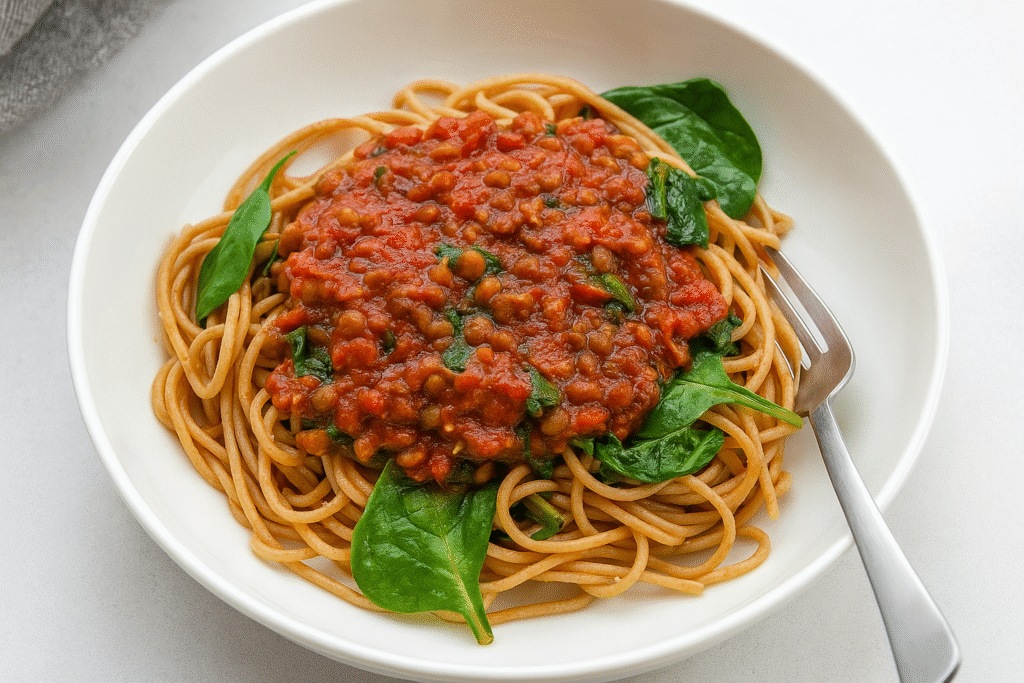
You’ll need (2 servings):
- 4 oz dry lentil pasta (or chickpea pasta)
- 1 cup cooked brown or green lentils (or canned, rinsed)
- 1 cup marinara (low-sugar)
- 2 cups baby spinach
- 1 tbsp olive oil, garlic, basil, salt/pepper
Method:
- Boil pasta; reserve ¼ cup cooking water.
- Warm oil and garlic; add marinara + lentils; simmer 3–4 min.
- Toss in spinach to wilt; adjust with pasta water.
- Combine with pasta; season with basil.
Why it works: Legume-based pasta + lentils stacks plant protein and fiber for long-lasting fullness. Lentils deliver ~18 g protein per cup cooked.
3) Edamame–Quinoa Power Bowl (30 g protein)
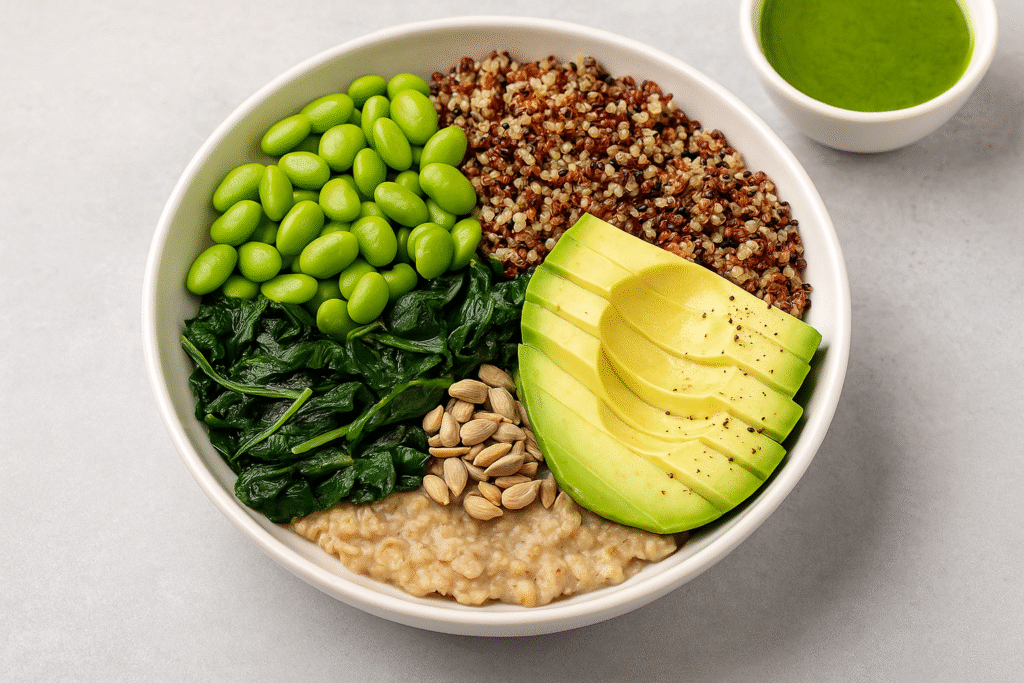
You’ll need (2 bowls):
- 2 cups cooked quinoa (warm)
- 2 cups edamame, shelled (steamed)
- 1 cup diced cucumber, 1 cup shredded carrot, ½ avocado
- Dressing: 1 tbsp sesame oil + 1 tbsp rice vinegar + 1 tsp low-sodium soy + grated ginger
Method:
- Divide quinoa into bowls.
- Top with edamame, veg, avocado.
- Whisk dressing; drizzle and toss.
Why it works: Edamame provides ~18 g per cup and is a complete protein; quinoa adds ~8 g per cup plus all nine essential amino acids.
4) Crispy Tofu Sheet-Pan with Chili-Lime Corn & Peppers (27 g protein)
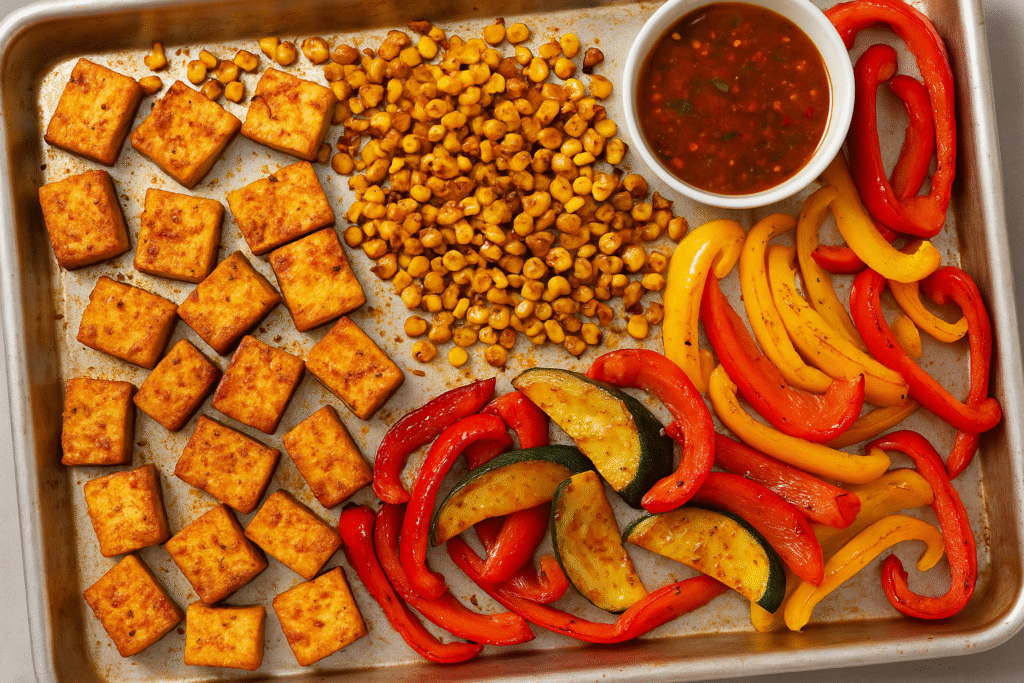
You’ll need (2 servings):
- 14 oz extra-firm tofu (pressed, cubed)
- 2 cups bell pepper strips + 1 cup corn kernels
- 1 tbsp olive oil, 1 tbsp cornstarch
- Spice mix: 1 tsp smoked paprika, ½ tsp chili powder, ½ tsp garlic powder, salt
- Lime wedges + cilantro
Method:
- Toss tofu with oil + cornstarch + spices; spread on sheet pan.
- Add peppers and corn; roast 425°F (220°C) for 20–22 min, turning once.
- Finish with lime and cilantro.
Why it works: Extra-firm tofu is versatile and delivers ~20–23 g protein per 8 oz; oven-crisping adds bite without deep-frying.
5) Chickpea “Tuna” Salad Wrap (24 g protein)
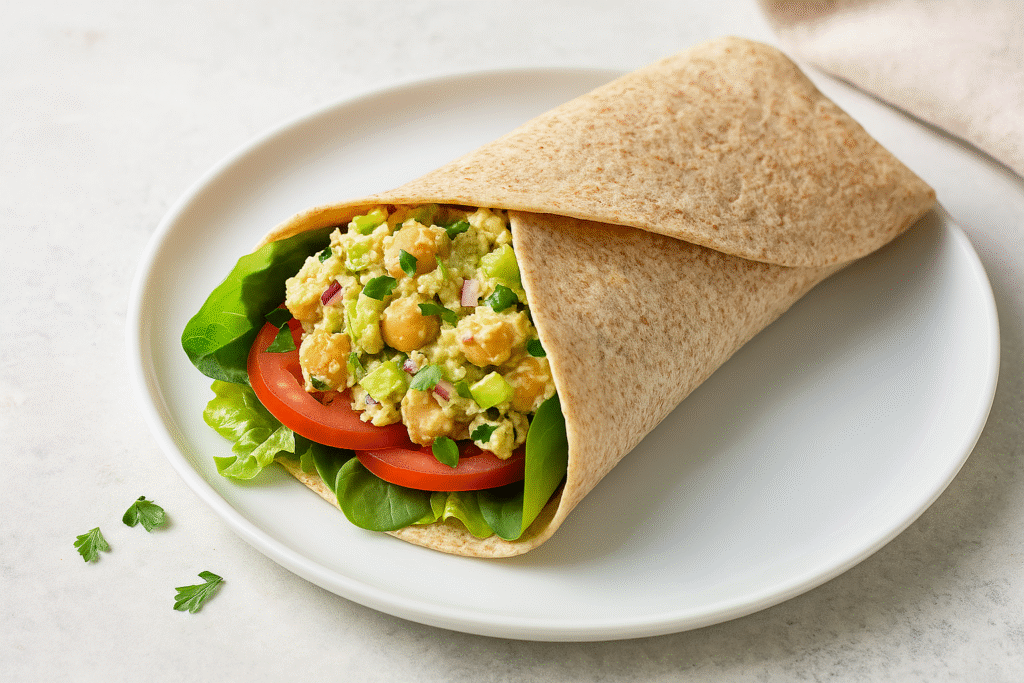
You’ll need (1–2 wraps):
- 1½ cups cooked chickpeas (or canned, rinsed)
- ¼ cup diced celery + ¼ cup diced red onion
- 2 tbsp dill pickle (optional)
- 3 tbsp hummus + 1 tsp Dijon + lemon to taste
- 2 tbsp nutritional yeast (optional, cheesy umami)
- Whole-grain tortillas or lettuce wraps
Method:
- Mash chickpeas with hummus, Dijon, lemon.
- Fold in veg + nooch; season.
- Wrap and roll.
Why it works: Chickpeas + nutritional yeast push protein up; nooch adds ~5–8 g per 2 tbsp and a B-vitamin boost.
Meal-prep game plan (so you actually do this)
- Weekend batch: cook 2 cups dry quinoa and a pot of lentils; press a block of tofu; pre-chop stir-fry veg.
- Protein station: keep edamame, tempeh, tofu, canned beans ready to go.
- Flavor boosters: nutritional yeast, sesame oil, soy/tamari, citrus, fresh herbs.
- Macro rhythm: aim for 20–30 g protein at breakfast, lunch, and dinner to manage hunger and support muscle.
FAQs
Are plant-based protein meals enough for muscle?
Yes. Soy (tofu/tempeh/edamame) is complete protein; lentils/beans + grains cover the rest over the day. Consistency and total daily protein matter most.
How much protein should a vegan eat per day?
Start with 0.8 g/kg (RDA). Many active people aim higher; distribute protein evenly across meals for best results.
What are the highest-protein vegan foods I can buy cheap?
Dry lentils, beans, and soy (tofu/tempeh/edamame). Lentils give ~18 g/cup cooked; edamame ~18 g/cup.
Do I need to combine plant proteins in one meal?
No. Eat a variety across the day; your body maintains an amino-acid pool and uses what you provide.
Leave a Reply