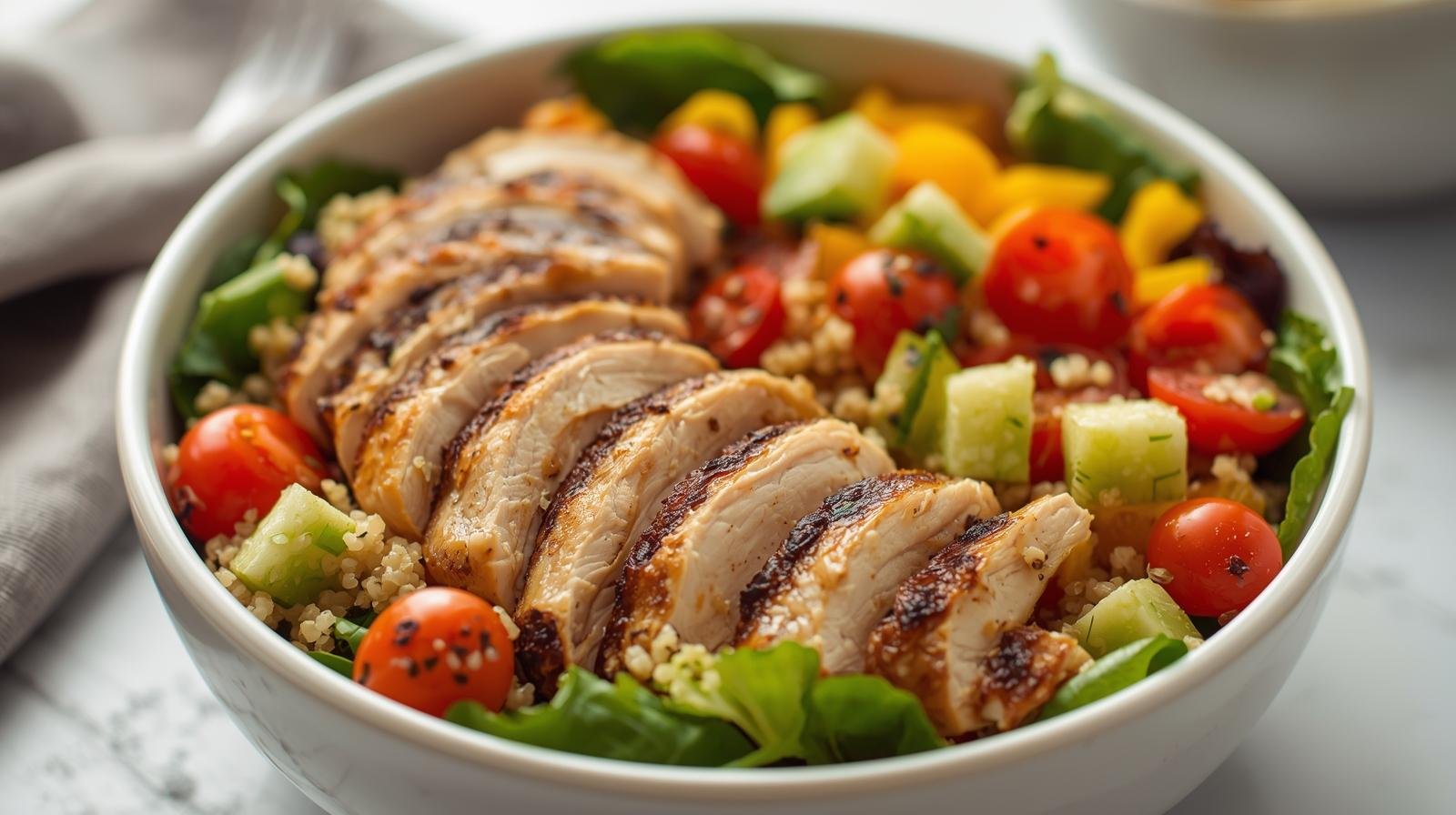
Protein salads are the fastest way to turn “just a bowl of veggies” into a real meal. Add smart pasta salad protein and suddenly lunch is satisfying, macro-balanced, and actually keeps you full till dinner.
Higher-protein meals are linked with better satiety and easier weight management compared with lower-protein, high-carb meals. Most adults need at least 0.8 g of protein per kg body weight per day just to meet basic needs, and many active people feel better slightly above that.
In this post you’ll get 4 high-protein salad ideas (including 2 pasta salads) with:
- Step-by-step instructions
- Approximate protein and calorie ranges
- Simple ingredient swaps for vegetarians or extra protein
Quick context you can mention in your blog:
Protein = fullness: High-protein meals increase satiety signals and reduce hunger more than high-fat or high-carb meals.
Weight management: Higher-protein diets (around 25–30% of calories) help preserve lean mass and can slightly boost calorie burn.
Easy wins: Chickpeas give ~8–9 g protein per 100 g cooked, and cooked whole-wheat pasta ~5–7 g per 100 g, so it’s not hard to hit 20–30 g protein in a single salad.
Now, onto the recipes.
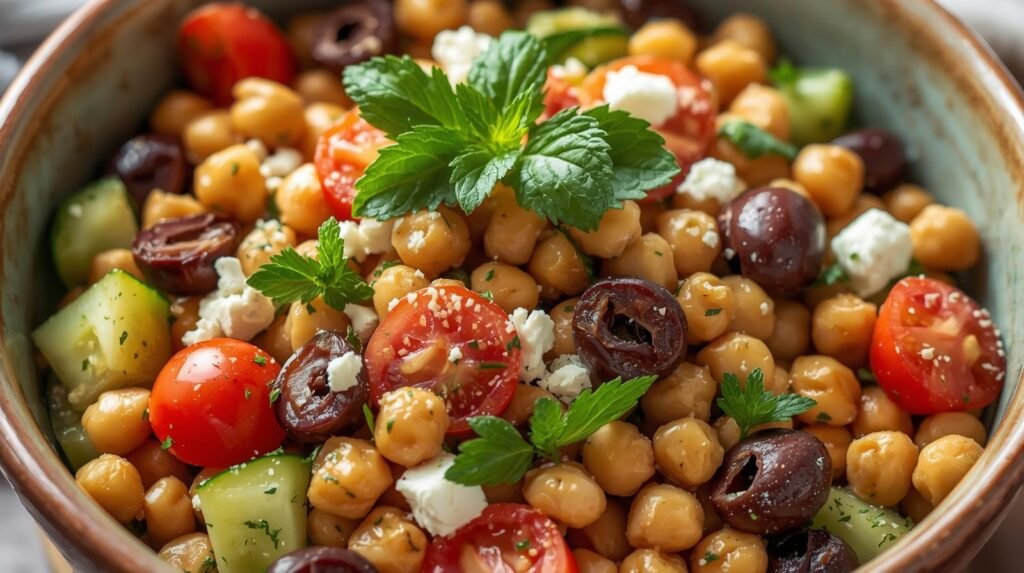
Why it works
Chickpeas add plant protein + fiber.
Olive oil + veggies = Mediterranean style, which is linked with heart and metabolic benefits.
Ingredients (2 servings)
1½ cups cooked chickpeas (~250 g, rinsed if canned)
1 cup cucumber, diced
1 cup cherry tomatoes, halved
¼ cup red onion, finely chopped
¼ cup chopped parsley
2 tbsp feta cheese, crumbled (optional)
Dressing
2 tbsp extra virgin olive oil
1½ tbsp lemon juice
½ tsp dried oregano
Salt and black pepper to taste
Step-by-step
Prep veggies: Chop cucumber, tomatoes, onion and parsley.
Combine base: In a large bowl, add chickpeas and all vegetables.
Make dressing: Whisk olive oil, lemon juice, oregano, salt and pepper.
Toss: Pour dressing over salad and toss until everything is coated.
Finish: Sprinkle feta on top (optional). Serve immediately or chill 1–2 hours.
Approximate nutrition (per serving)
Calories: 350–400 kcal
Protein: 15–18 g (from chickpeas + feta)
Carbs: 45–50 g
Fat: 14–18 g (mostly unsaturated)
Fiber: 10–12 g
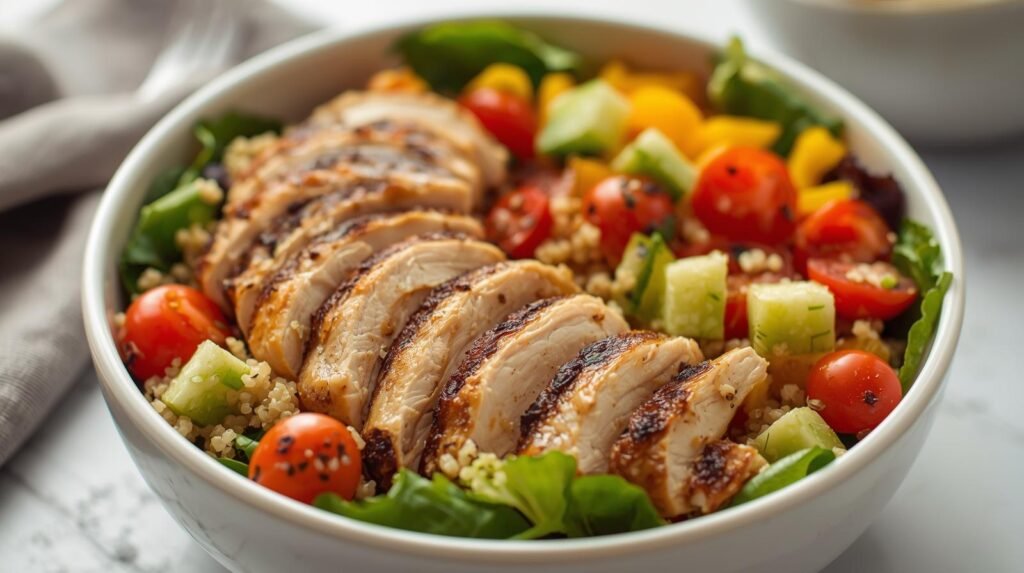
Why it works
Combines lean animal protein (chicken) with whole-grain protein (quinoa).
Quinoa provides all essential amino acids and ~14 g protein per 100 g raw (~4–5 g per 100 g cooked).
Ingredients (2 servings)
200 g cooked chicken breast, sliced or shredded
1 cup cooked quinoa
1 cup mixed salad greens
½ cup cherry tomatoes, halved
½ cup steamed or roasted broccoli florets
¼ avocado, sliced
Dressing
1½ tbsp olive oil
1 tbsp lemon juice or apple cider vinegar
1 tsp Dijon mustard
Salt, pepper, and a pinch of garlic powder
Step-by-step
Cook quinoa: Rinse and cook according to package instructions; cool slightly.
Prep chicken: Use leftover grilled/baked chicken or cook a fresh breast with salt, pepper and a little oil, then slice.
Assemble bowls: Divide greens, quinoa, tomatoes and broccoli between two bowls.
Top with protein: Add chicken and avocado slices.
Dress: Whisk dressing ingredients and drizzle over each bowl before serving.
Approximate nutrition (per serving)
Calories: 500–550 kcal
Protein: 32–38 g
Carbs: 40–45 g
Fat: 18–22 g
Fiber: 7–9 g
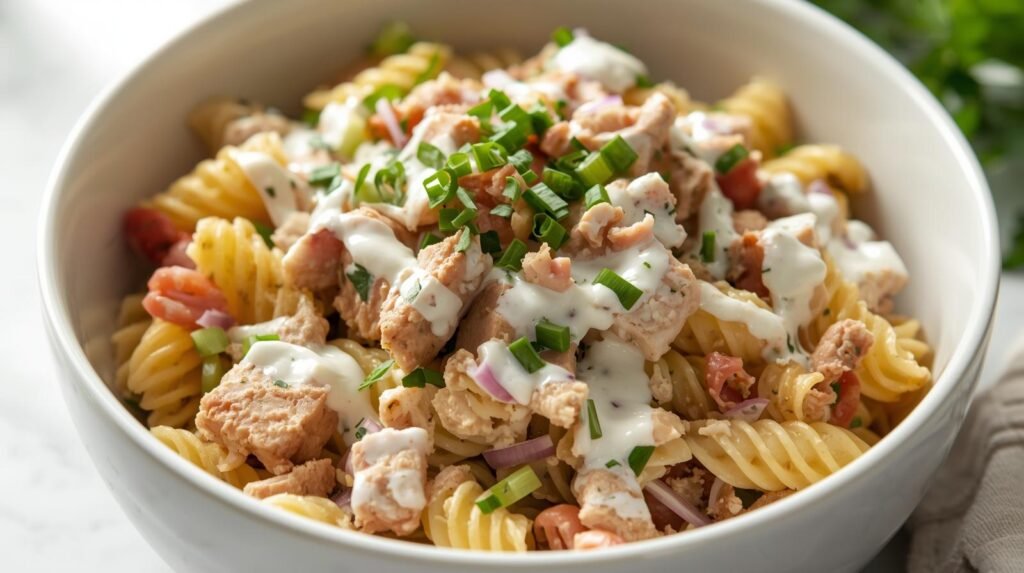
Why it works
Whole-wheat pasta adds complex carbs and extra protein (~5–7 g per 100 g cooked).
Canned tuna is a lean, high-protein and omega-3 source.
Greek yogurt dressing brings creaminess with more protein and less saturated fat than mayo.
Ingredients (2 servings)
2 cups cooked whole-wheat pasta (~200–220 g cooked)
1 can tuna in water (~120 g drained)
½ cup plain Greek yogurt
1 tbsp olive oil
1 tbsp lemon juice
1 tsp Dijon mustard
½ cup diced cucumber
½ cup diced bell pepper
¼ cup sweetcorn (optional)
2 tbsp chopped red onion
Salt, pepper, and dried dill or parsley
Step-by-step
Cook pasta: Boil whole-wheat pasta until al dente; drain and cool.
Make dressing: In a bowl, mix Greek yogurt, olive oil, lemon juice, mustard, salt, pepper and herbs.
Prep mix-ins: Dice cucumber, pepper, onion; drain tuna and corn.
Combine: In a large bowl, add pasta, tuna and vegetables. Pour over dressing and toss well.
Chill: Refrigerate at least 30 minutes for flavours to meld.
Approximate nutrition (per serving)
Calories: 380–430 kcal
Protein: 24–28 g
Carbs: 40–45 g
Fat: 10–14 g
Fiber: 6–8 g
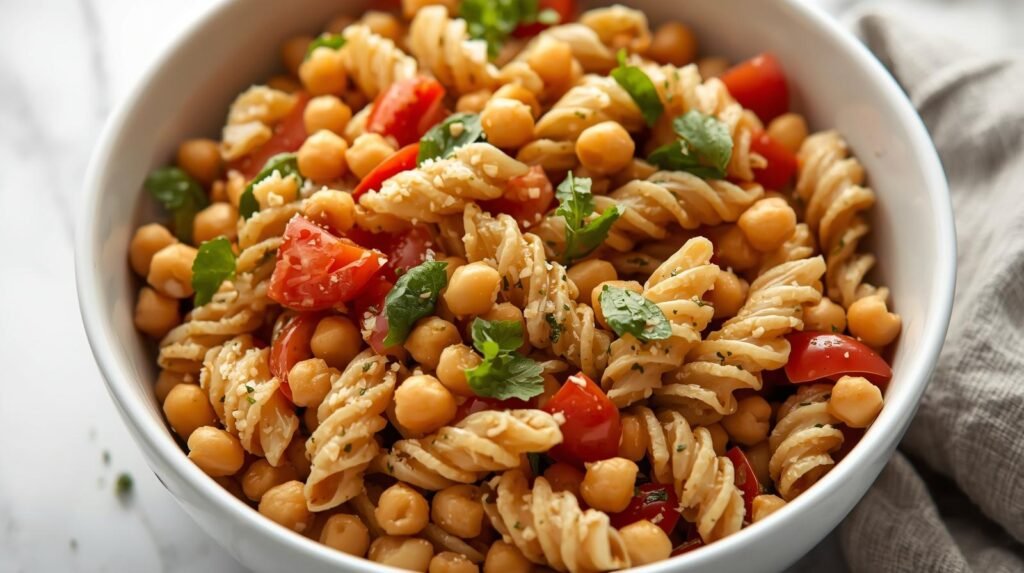
Why it works
Combines chickpeas (~8–9 g protein/100 g cooked) with whole-wheat pasta (~5–7 g protein/100 g cooked) for a surprisingly high-protein vegetarian pasta salad.
Lots of vegetables add fiber, volume and micronutrients.
Ingredients (2 servings)
1½ cups cooked whole-wheat pasta
1 cup cooked chickpeas
1 cup cherry tomatoes, halved
½ cup diced cucumber
½ cup baby spinach, roughly chopped
2 tbsp grated parmesan or crumbled feta (optional)
Lemon-herb dressing
2 tbsp olive oil
1½ tbsp lemon juice
1 tsp honey or maple syrup (optional)
½ tsp dried Italian herbs
Salt and pepper
Step-by-step
Cook pasta: Boil whole-wheat pasta, drain and cool.
Prep vegetables: Halve tomatoes, dice cucumber, chop spinach.
Make dressing: Whisk olive oil, lemon juice, herbs, salt, pepper and honey if using.
Combine: In a salad bowl, add pasta, chickpeas and vegetables.
Dress & finish: Toss with dressing and top with parmesan/feta.
Approximate nutrition (per serving)
Calories: 380–420 kcal
Protein: 18–22 g
Carbs: 50–55 g
Fat: 10–14 g
Fiber: 8–10 g
1. How much protein should a protein salad have?
Yes—if you:
Use whole-wheat or legume-based pasta
Add tuna, chicken, eggs, tofu, or beans
Swap heavy mayo for Greek yogurt or lighter dressings
The tuna and chickpea pasta salads above are good examples of pasta salad protein done right.
2. Can pasta salad be high in protein?
They can be. High-protein meals improve fullness and can help people naturally eat fewer calories later, especially when combined with fiber-rich veggies and whole grains.
Just watch high-calorie add-ons (cheese, creamy dressings, big amounts of nuts).
3. Are protein salads good for weight loss?
Most protein salads and pasta salads keep 3–4 days in an airtight container in the fridge, especially if:
You keep dressing separate until serving or
Use sturdy ingredients (cabbage, chickpeas, pasta) rather than delicate leafy greens.
Leave a Reply