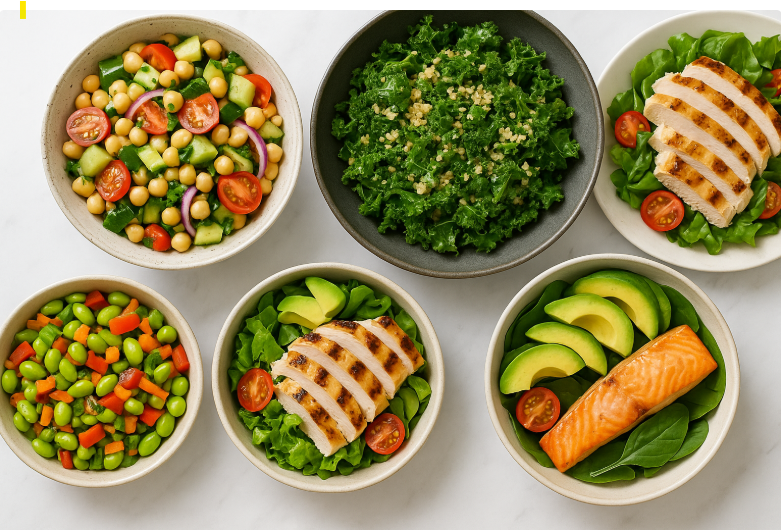
Why Healthy Salads and Dressings Are Game-Changers
Starting a meal with healthy salad and dressing recipes can transform how you eat. Not only do salads boost your veggie intake, but research shows that eating vegetables with healthy fats improves absorption of fat-soluble vitamins like A, D, E, and K.
According to the CDC, only 1 in 10 adults in the U.S. meets the recommended daily vegetable intake. Adding fresh salads topped with homemade dressings is one of the simplest ways to close that gap while keeping meals flavorful and exciting.
The good news? You don’t need restaurant-level skills. With the right combos, you can whip up nutrient-dense salads and pair them with homemade dressings that avoid the excess sugars and preservatives often found in store-bought bottles.
Key Components of a Healthy Salad
A salad is only as healthy as the ingredients you use. Follow this formula to make balanced, filling salads at home:
- Base: Leafy greens (spinach, kale, arugula, romaine).
- Protein: Grilled chicken, tofu, beans, lentils, or salmon.
- Fiber & crunch: Colorful veggies, nuts, seeds.
- Healthy fats: Olive oil, avocado, or nuts.
- Flavor boost: Herbs, spices, citrus.
Pro tip: Studies suggest that adding 1–2 tablespoons of olive oil to salads increases antioxidant absorption by up to 80%.
5 Healthy Salad and Dressing Recipes
1. Mediterranean Chickpea Salad with Lemon-Olive Oil Dressing
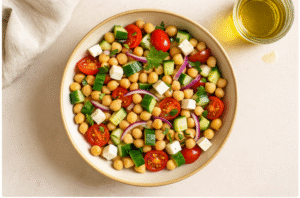
- Why it’s healthy: Chickpeas provide plant-based protein and fiber, while olive oil adds heart-healthy fats.
- Ingredients:
- 1 can chickpeas (drained)
- Cherry tomatoes, cucumber, red onion, parsley
- Dressing: 2 tbsp olive oil + juice of 1 lemon + oregano
- Nutrition per serving: 12 g protein, 10 g fiber, 350 calories
2. Kale and Quinoa Superfood Salad with Tahini Dressing
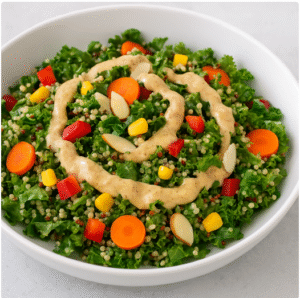
- Why it’s healthy: Quinoa is a complete protein. Kale adds antioxidants like lutein and vitamin C.
- Ingredients:
- 2 cups kale (massaged)
- 1 cup cooked quinoa
- Carrots, cranberries, pumpkin seeds
- Dressing: 2 tbsp tahini + 1 tbsp lemon juice + garlic + water to thin
- Nutrition per serving: 14 g protein, 9 g fiber, 420 calories
3. Grilled Chicken Caesar Salad with Greek Yogurt Dressing
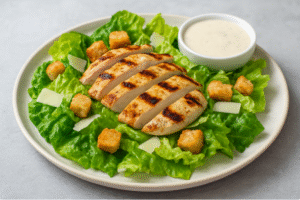
- Why it’s healthy: A lighter spin on Caesar. Greek yogurt boosts protein without the heavy cream.
- Ingredients:
- Grilled chicken breast (sliced)
- Romaine lettuce + whole-grain croutons
- Dressing: ½ cup Greek yogurt + Dijon mustard + lemon juice + garlic + anchovy paste (optional)
- Nutrition per serving: ~30 g protein, 6 g fiber, 400 calories
4. Asian-Inspired Edamame Salad with Sesame-Ginger Dressing
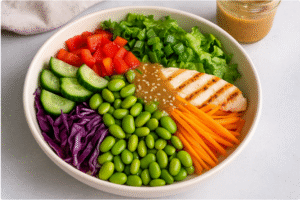
- Why it’s healthy: Edamame packs plant protein; sesame oil provides anti-inflammatory compounds.
- Ingredients:
- 1 cup edamame (shelled)
- Shredded cabbage, carrots, scallions
- Dressing: 1 tbsp sesame oil + soy sauce + rice vinegar + grated ginger
- Nutrition per serving: ~17 g protein, 8 g fiber, 300 calories
5. Salmon and Avocado Spinach Salad with Honey-Mustard Dressing
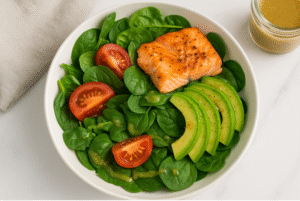
- Why it’s healthy: Salmon offers omega-3s for heart health. Avocado adds potassium and creamy texture.
- Ingredients:
- 1 cup spinach leaves
- 4 oz grilled salmon
- ½ avocado, sliced
- Dressing: 1 tsp honey + 1 tbsp Dijon mustard + 1 tbsp olive oil
- Nutrition per serving: ~28 g protein, 7 g fiber, 420 calories
Comparison Table: Salad Recipes & Nutrition
Salad Recipe
Protein (g)
Fiber (g)
Calories
Highlight Benefit
Mediterranean Chickpea + Lemon Dressing
12
10
350
Kale & Quinoa + Tahini Dressing
14
9
320
30
6
400
Edamame + Sesame-Ginger Dressing
17
8
300
20gSalmon & Avocado + Honey Mustard Dressing
28
7
420
Expert Tips for Building Healthy Salads
- Keep dressings simple. A base of olive oil, vinegar, or citrus works for nearly every salad.
- Prioritize colors. A variety of colors = a variety of nutrients.
- Batch-prep your dressings. Homemade dressings store well for 5–7 days in the fridge.
- Balance macros. Always include a protein + healthy fat + fiber for satiety.
- Watch store-bought dressings. Many contain hidden sugars and sodium. Homemade is healthier and cheaper.
FAQs: Healthy Salad and Dressing Recipes
Q1: What is the healthiest salad dressing to make at home?
Olive oil with lemon juice is one of the healthiest dressings, rich in heart-healthy fats and vitamin C.
Q2: Can healthy salad recipes help with weight loss?
Yes. Salads high in protein and fiber keep you full longer, helping you eat fewer calories overall.
Q3: How can I make my salads more filling?
Add protein sources like chicken, beans, or quinoa and healthy fats like avocado or nuts.
Q4: Are store-bought salad dressings unhealthy?
Many are. They often contain added sugars, sodium, and preservatives. Making your own ensures healthier ingredients.
Q5: Can I meal-prep salads for the week?
Yes. Store greens and toppings separately. Add dressing just before eating to keep salads crisp.
Leave a Reply to The Best Homemade Healthy Dressings: Full Recipes for Fresh Salads – Cancel reply