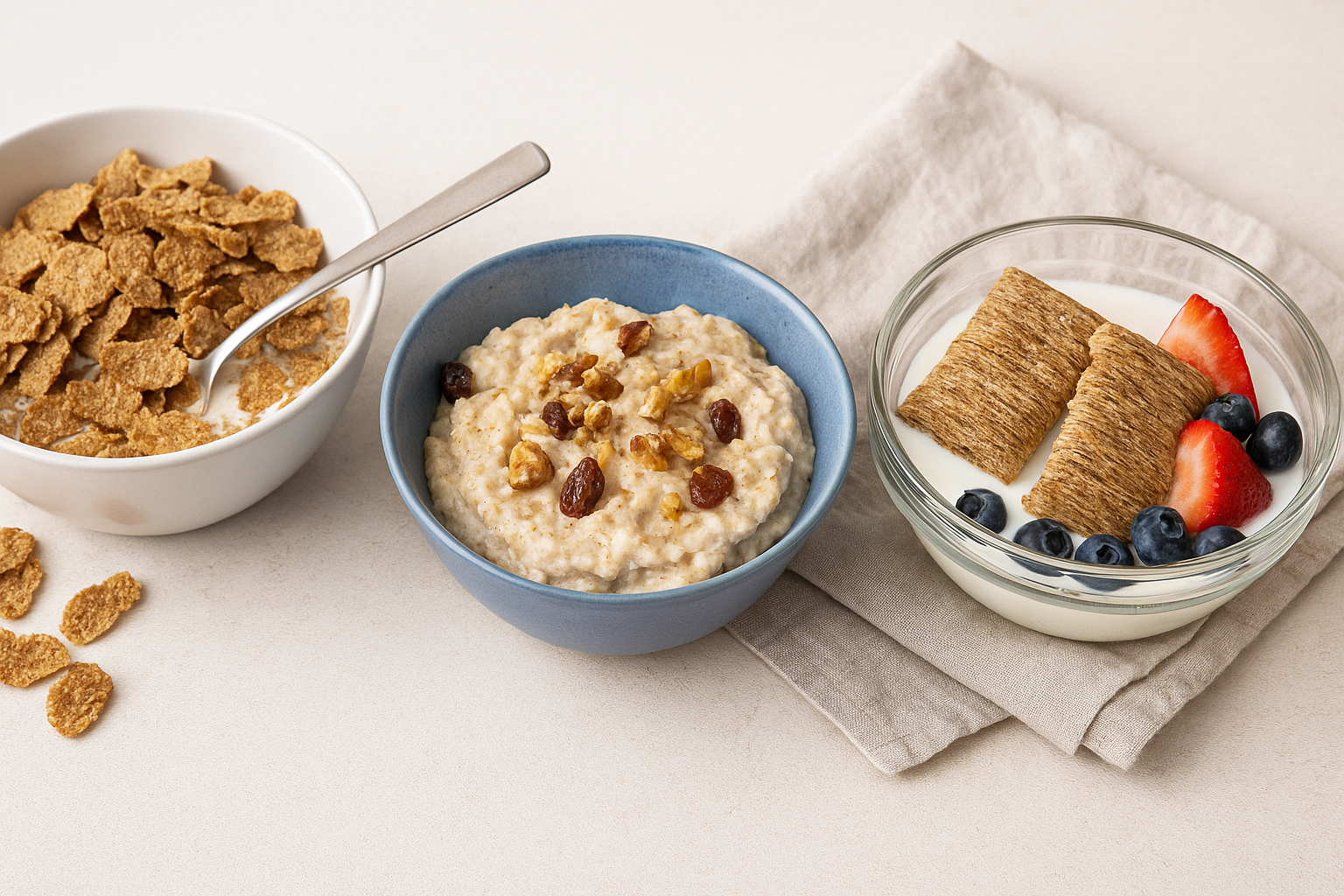
High fibre cereals in breakfast can be the simplest habit that moves the needle on appetite, energy, and fat loss. If you’re hunting for the best cereal for weight loss, think less “sweet crunch” and more “whole-grain fibre + protein” that keeps you full until lunch.
Why fibre at breakfast changes the day
Fibre acts like a built-in portion control. It slows digestion, steadies energy, and helps you feel satisfied on fewer calories, exactly what you want from a weekday breakfast. U.S. guidance pegs fibre needs at about 14 g per 1,000 kcal (25 g/day women, 38 g/day men), yet most people only get 15 g/day, so breakfast is prime time to close that gap.
There’s also strong evidence that simply increasing daily fibre can drive meaningful weight loss (and is as doable as it gets). In a 12-month randomized trial, people told only to “eat ≥30 g fibre/day” lost weight comparably to those following a more complex cardiac diet—proof that a simple fibre target works.
The cereal aisle, decoded (in 30 seconds)
Here’s your “best cereal for fat loss” checklist:
- ≥8 g fibre per serving (10–14 g is gold).
- ≤6 g added sugar (0–3 g is ideal).
- ≥4–6 g protein (or add yogurt/milk to boost).
- Whole grain named first (wheat, oats, rye, barley, bran).
- Short ingredient list (skip candy bits, syrups).
The “Added Sugars” line on Nutrition Facts makes this easy—look for “Includes X g Added Sugars.” That’s your red-flag number.
What the science says
Oats increase fullness: Multiple controlled trials show oatmeal (β-glucan) breakfasts boost satiety and reduce subsequent calorie intake compared with many ready-to-eat cereals (RTEC). The viscosity of oat β-glucan is the secret.
Cereal fibre helps control appetite: A recent systematic review concludes higher cereal-fibre intake improves satiety measures vs. low-fibre controls.
More fibre → lower weight over time: Higher fibre intakes are consistently linked with favorable weight outcomes; practical programs that push whole, high-fibre foods deliver real-world loss.
The winners: high-fibre cereal types that fit a weight-loss plan
You don’t need brand loyalty—shop by type and numbers:
- Shredded wheat / wheat biscuits (plain)
Naturally 0 g added sugar, often 6–9 g fibre. Add milk or Greek yogurt for protein. - Bran cereals (wheat bran, bran buds, bran flakes, unsweetened or low-sugar)
Some options deliver 12–18 g fibre in a small serving. Watch added sugar; pick the lowest. - Oat bran or old-fashioned oats
Hot cereal counts. β-glucan supports fullness and heart health; dress with spices, nuts, berries. - Muesli / sprouted whole-grain blends (unsweetened)
Look for no added sugar versions and add your own fruit. Great texture + minerals. - High-protein, high-fibre blends
A few modern cereals combine 8–12 g fibre with 9–15 g protein and little or no sugar. They’re handy on rushed mornings.
Tip: If your favourite cereal is low in fibre (≤3 g), mix half-and-half with a high-fibre base (bran or shredded wheat). You’ll double fibre and slash sugar without feeling deprived.
Build a better bowl (3 done-for-you combos)
1) Crunchy Bran Power Bowl
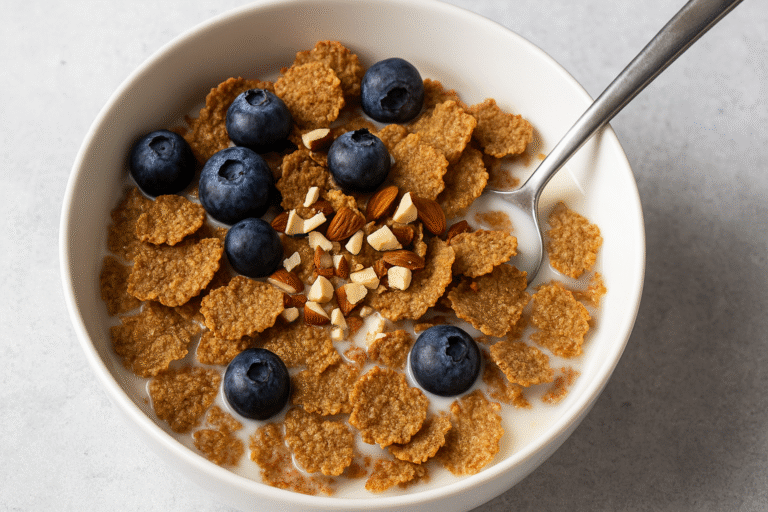
- 1 cup plain bran cereal (≥12 g fibre), ¾ cup high-protein milk or Greek yogurt, ¼ cup blueberries, 1 tbsp chopped almonds, cinnamon.
- Why it works: 12–15 g fibre + protein keeps you full for hours.
2) Oat Bran “Cookie Dough” Porridge
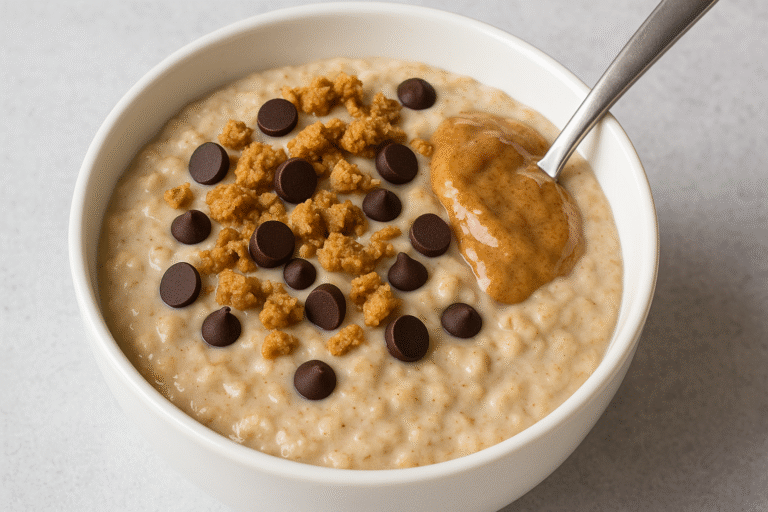
- ½ cup oat bran simmered in 1 cup milk (or soy), pinch salt + vanilla, 1 tbsp peanut butter, 1 tbsp ground flax, ½ diced pear.
- Why it works: β-glucan + healthy fats = creamy, satisfying, no sugar needed.
3) Shredded Wheat Yogurt Bowl
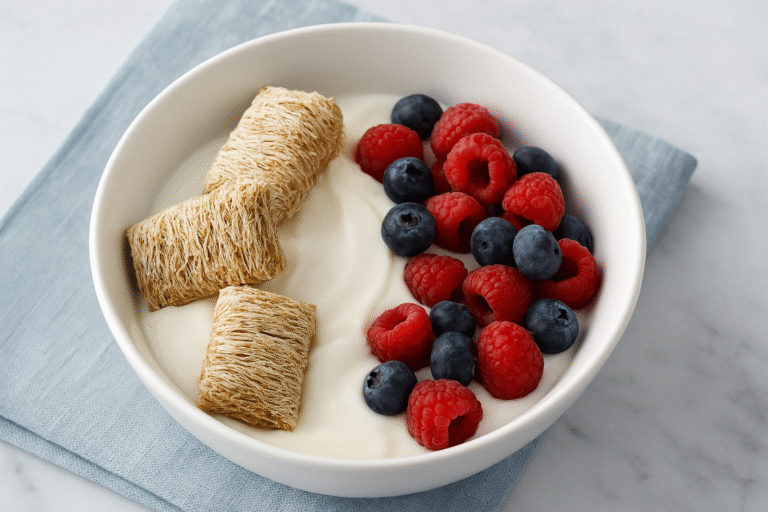
- 1–1½ cups plain shredded wheat, ½–¾ cup plain Greek yogurt, ½ banana, 1 tbsp chia seeds, nutmeg.
- Why it works: Easy 10 g fibre + 20–25 g protein with zero added sugar.
Label landmines: where added sugar hides
- “Honey,” “maple,” “agave,” “brown rice syrup,” and ingredients ending in -ose are added sugars.
- Fruit-juice concentrates count as added sugar when used to sweeten. The FDA’s updated label rules make this explicit.
- For everyday limits, the AHA suggests keeping added sugar under ~6 tsp/day for women and ~9 tsp/day for men—breakfast can blow this in one bowl if you’re not careful.
FAQs
What is the best cereal for weight loss and gut health?
Look for ≥8 g fibre, ≤6 g added sugar, whole grain first, and ≥4–6 g protein. Plain bran, shredded wheat, and oat bran consistently fit the bill.
Are high fibre cereals in breakfast okay if I’m sensitive to gluten?
Choose gluten-free oats/oat bran, brown-rice flakes, or certified GF high-fibre blends. Always check for cross-contamination if you have celiac disease.
How much fibre should I get at breakfast?
Aim for 8–12 g at breakfast to meaningfully move your daily total toward 25–38 g. Combine cereal fibre with seeds, fruit, and yogurt.
Is “no sugar added” cereal always healthy?
Not automatically, some are low in sugar but low in fibre too. Use the checklist (fibre first, sugar low, whole grains up front).
Oatmeal vs cold cereal: which is better for fullness?
Studies show oatmeal often beats some ready-to-eat cereals for satiety thanks to β-glucan’s viscosity, great if mid-morning hunger is your issue.

Leave a Reply to Natacha Tutoky Cancel reply