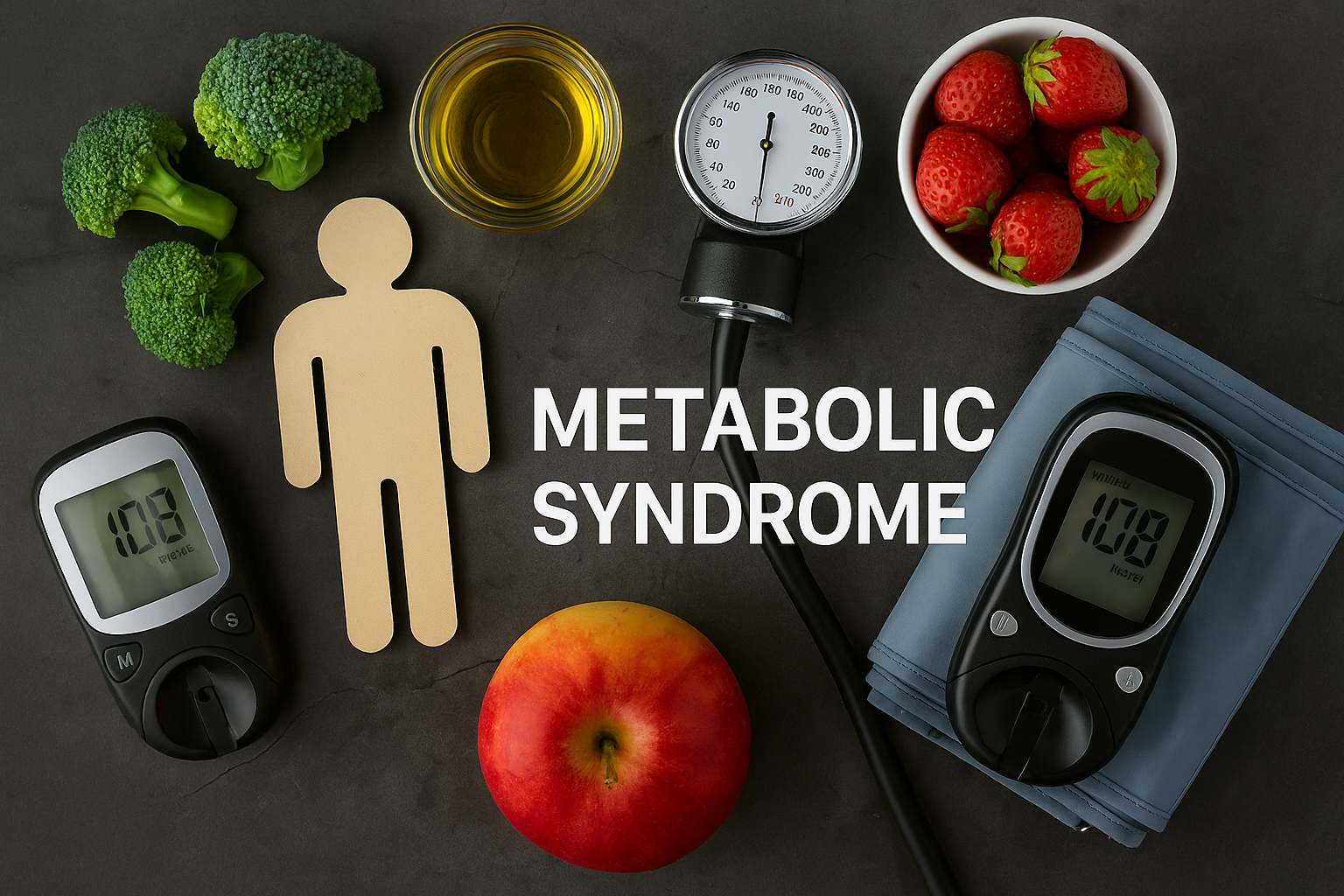
Metabolic syndrome syndrome x is the cluster of risks that quietly drives heart disease and type 2 diabetes. If you’ve searched “syndrome x metabolic” or “syndrome x metabolic syndrome,” this guide translates the science into simple steps you can start today.
What exactly is Metabolic Syndrome (aka Syndrome X)?

“Metabolic syndrome” (often called Syndrome X) isn’t one disease—it’s a bundle of five measurable risks. Meet any 3 of 5 and you likely have it:
- Large waist (population-/sex-specific cutoffs)
- Triglycerides ≥150 mg/dL
- HDL cholesterol low (<40 mg/dL men, <50 mg/dL women)
- Blood pressure ≥130/85 mmHg
- Fasting glucose ≥100 mg/dL
These unified (“harmonized”) criteria come from a joint statement by major societies (AHA/NHLBI, IDF, etc.).
Why you should care: In recent U.S. data, an estimated ~42% of adults met criteria in 2017–2018, up from ~38% in 2011–2012—driven in part by rising elevated glucose.
Big picture: what actually improves it?
You don’t need a complicated protocol. The most reliable wins are:
- Lose 5–10% body weight if you carry excess—this alone improves insulin sensitivity, triglycerides, and glucose.
- Move 150+ min/week (plus 2 strength days). It’s protective even before you lose weight.
- Eat Mediterranean-style: extra-virgin olive oil, nuts, legumes, fish, veg, whole grains. In randomized trials, this pattern helped people revert out of metabolic syndrome and improved vascular health.
Step-by-step plan
Step 1 — Get your numbers (baseline)
Step 2 — Build your “MetS” plate (80/20 rule)
- Half plate veg (leafy greens, broccoli, peppers, tomatoes).
- Quarter plate protein (fish, tofu/tempeh, skinless chicken, lentils).
- Quarter plate smart carbs (oats, quinoa, beans, potatoes with skin).
- Olive oil + nuts for fats; fruit for dessert.
This is the Mediterranean playbook shown to improve MetS status.
Step 3 — Hit weekly activity minimums
Step 4 — Targeted swaps (from “risk-raising” to “risk-lowering”)
- Sugary drinks → water/unsweetened tea/coffee
- Refined snacks → nuts/fruit/Greek yogurt
- Processed meats → fish/beans
- Butter/cream sauces → olive-oil vinaigrettes
- Late-night grazing → protein-forward dinner + herbal tea
Step 5 — Sleep & stress (the quiet multipliers)
- 7–9 hours/night; consistent schedule.
- Add 5–10 minutes/day of box breathing or a short walk after meals.
A 14-day reset (food you’ll actually eat)
Breakfast (choose 1)
- Oatmeal + Greek yogurt + berries + walnuts
- Egg scramble with spinach + whole-grain toast + avocado
- Overnight oats with chia + soy milk + cinnamon
Lunch (choose 1)
- Lentil-quinoa bowl (roasted veg, olive oil, lemon)
- Tuna or chickpea salad (olive-oil vinaigrette) in a grain bowl
- Chicken + bean chili (top with yogurt, herbs)
Dinner (choose 1)
- Salmon + roasted potatoes (cooled) + big salad
- Tofu–vegetable stir-fry + brown rice
- Mediterranean sheet-pan (chicken, peppers, onions, olives), whole-grain pita
Snacks (as needed)
- Apple + 10–12 almonds
- Carrots + hummus
- Cottage cheese or plain yogurt with cinnamon
Why these work: they target triglycerides (less added sugar/refined starch), raise HDL (olive oil, nuts), tame BP (more potassium-rich plants, less sodium), and help shrink waist with steady-state satiety. Evidence shows the Mediterranean pattern improves multiple MetS components and overall vascular function.
Troubleshooting common roadblocks
“I’m hungry at night.” Add 20–30 g protein at dinner (fish, tofu, legumes) and 6–10 g fiber across the evening (veg + beans). Protein distribution across the day helps satiety and glucose control.
“Time is tight.” Roast a sheet pan of veg + protein twice weekly; cook a pot of oats/beans on Sunday.
“Cravings.” Start with a protein + fiber breakfast (oats + yogurt/nuts) to flatten glucose swings.
What progress looks like (realistic timeline)
2–4 weeks: lower fasting/post-meal spikes, fewer cravings, small waist change.
8–12 weeks: meaningful dips in triglycerides, BP, and fasting glucose with ~5–10% weight loss (if indicated) and regular activity.
FAQs
What is Syndrome X vs. metabolic syndrome—are they the same?
Yes. Syndrome X is an older name for metabolic syndrome, diagnosed when you meet ≥3 of 5 standardized risk factors (waist, triglycerides, HDL, BP, glucose).
Can metabolic syndrome be reversed?
Often, yes. Trials show 5–10% weight loss, a Mediterranean-style diet, and 150+ min/week activity can move multiple markers back toward normal.
What’s the best diet for Syndrome X?
Mediterranean/DASH-leaning patterns (vegetables, legumes, whole grains, fish, olive oil) have the strongest evidence for improving MetS components and vascular health.
Which tests should I ask my doctor for?
Waist circumference, fasting lipid panel, fasting glucose or A1C, and BP—the five diagnostic pieces. Recheck after ~12 weeks of lifestyle change.
Leave a Reply to Visceral Belly Fat: What It Is, Why It Matters, and How to Lose It – Cancel reply