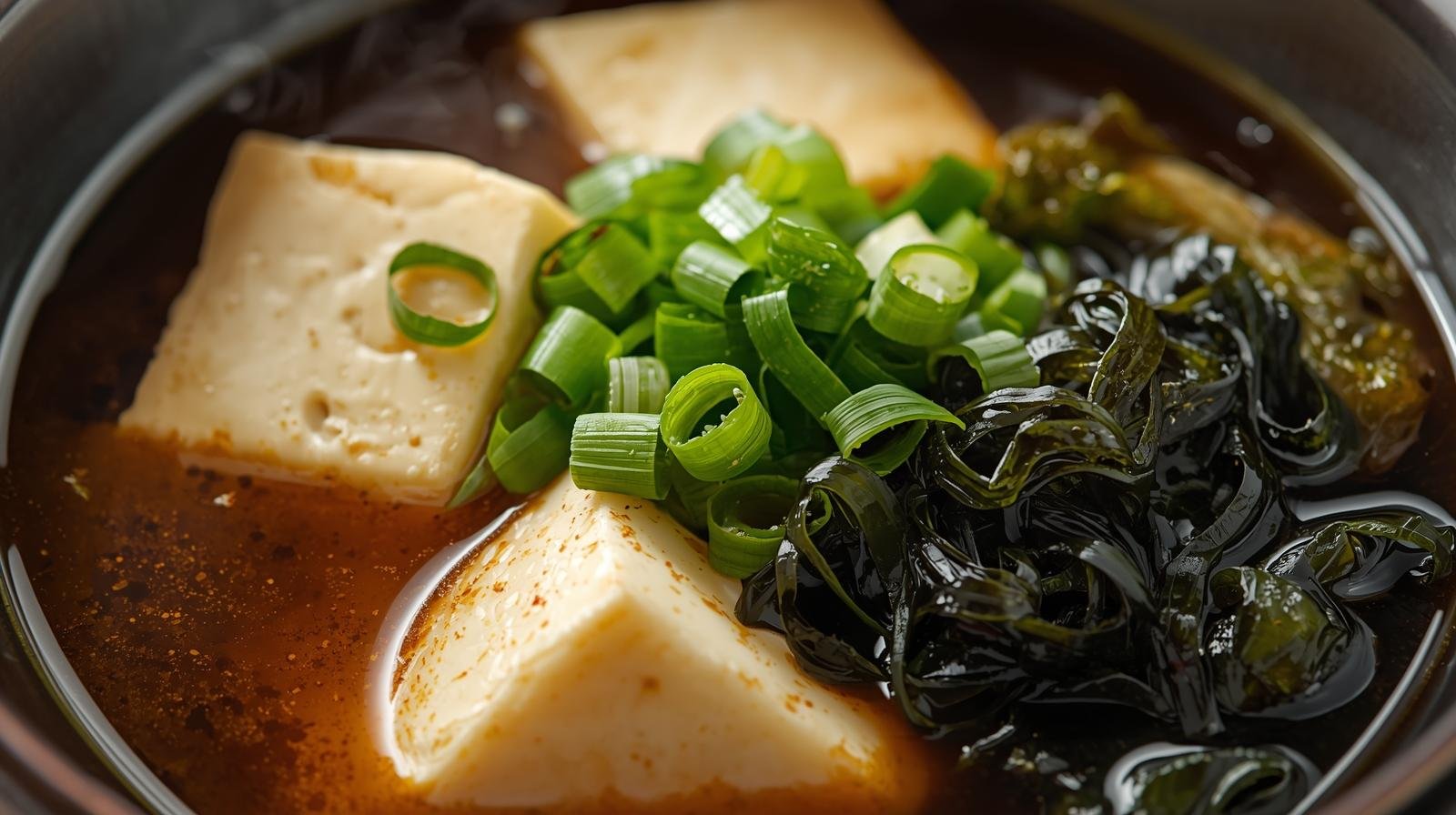
Nutrition miso soup is more than a starter, it’s a smart, mineral-rich bowl you can tailor for protein, fiber, and lower sodium. If you’re researching nutrition miso soup for everyday wellness, this guide shows you how to get the benefits (umami, probiotics, iodine) without the pitfalls (salt overload).
- Fermented miso, umami + live cultures. You’ll keep more beneficial bacteria if you dissolve miso off the heat (very hot liquid can inactivate microbes).
- Sodium awareness: 1 tbsp (17 g) miso, 630–640 mg sodium—about 26–28% DV—so technique (and portioning) matters.
- Iodine from the broth: Kombu (kelp) used for dashi is naturally iodine-dense, great for adequacy, but go easy if you’re sensitive to iodine (thyroid conditions).
- Soup = appetite strategy: Research shows a low-energy-dense soup course can reduce calories eaten at the following meal—handy for weight management.
1) Choose your base (dashi)
- Classic: kombu + katsuobushi (bonito) for glutamate + inosinate “umami synergy.”
- Vegan dashi: kombu + dried shiitake; same technique, great depth.
- Sodium control: start with unsalted water dashi—miso will bring plenty of salt.
2) Pick your miso
- Shiro/white miso (milder, sweeter) for everyday bowls; aka/red miso (saltier, deeper) for hearty versions.
- Start with 1–1½ tsp per 1 cup of broth and taste.
3) Add lean protein + minerals
- Soft tofu (silken or medium-firm) adds protein with almost no sodium. Wakame contributes iodine and potassium with minimal calories.
4) Preserve probiotics, balance salt
- Turn off the heat, ladle hot dashi into a small bowl, whisk in miso to make a slurry, then stir back into the pot at 70–75 °C (158–167 °F) or cooler—do not boil after miso is added.
Bon Appétit
5) Finish fresh
- Add scallions, a few drops of sesame oil (optional), and serve immediately (miso settles if it sits).
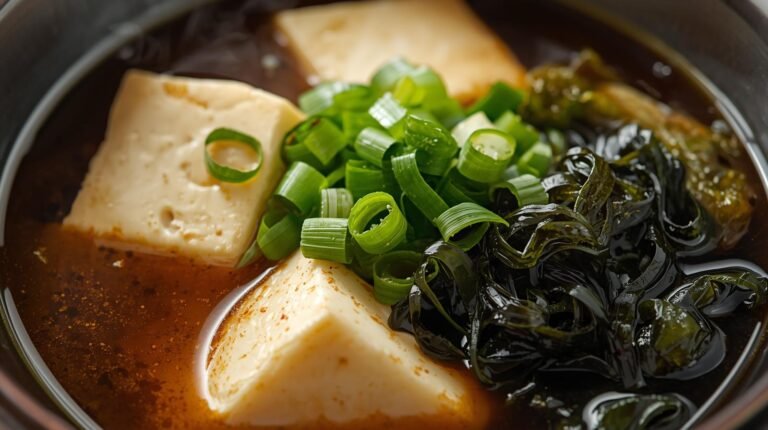
- Dashi: 4 cups (1 L) water, 1 piece kombu (5–6 cm), + 10 g katsuobushi (bonito flakes) or 2 dried shiitake for vegan
- Miso: 3–4 tbsp white (shiro) miso (start with 3; add to taste)
- 150–200 g soft/silken tofu, cut in 1 cm cubes
- 1 tbsp dried wakame, soaked 5 min, drained
- 2 scallions, thinly sliced
- Optional: few drops toasted sesame oil
- Make quick dashi (5–8 min): Put kombu and water in a pot. Heat gently until small bubbles appear (do not boil). Remove kombu. Add bonito, simmer 30–60 s, turn off heat, steep 2–3 min, strain. (Vegan: add shiitake with kombu at the start; remove both before proceeding.)
- Warm the add-ins (2–3 min): Return clear dashi to the pot. Add tofu and soaked wakame; heat gently until just steaming.
- Miso slurry (1–2 min): Ladle some hot dashi into a bowl, whisk in miso until smooth. Turn off the stove. Stir slurry back into the pot. Do not boil after miso goes in.
- Finish & serve: Add scallions (and a drop of sesame oil if you like). Taste; add a little more miso only if needed. Serve immediately.
- Umami synergy from kombu + bonito (or shiitake) means big flavor with minimal calories and added salt.
- Probiotic-friendly step (off-heat miso) preserves more live cultures.
- Iodine awareness from kombu; use modest pieces, especially for daily drinkers.
60–90 kcal • 6–8 g protein • 2–3 g fat • 4–6 g carbs • 630–700 mg sodium (depends on miso brand and amount).
Sodium estimate assumes 1 tbsp miso per bowl; reduce to 2 tsp if you need <500 mg sodium per serving.
1) Is miso soup high in sodium?
It can be. 1 tbsp miso ≈ 630 mg sodium. Keep portions modest, avoid salty bases, and lean on umami dashi + fresh garnishes.
2) How do I keep the “probiotics” in miso soup?
Dissolve miso off heat and don’t re-boil the soup. This preserves more live cultures.
3) Is miso soup gluten-free?
Often, but not always—some miso contains barley/wheat. Choose rice- or soybean-only miso and check labels.
Leave a Reply to The Healthiest Way to Eat Eggs: Science-Backed Guide + 5 Recipes – Pick Healthy Cancel reply